Why we can't get enough of the 80s?
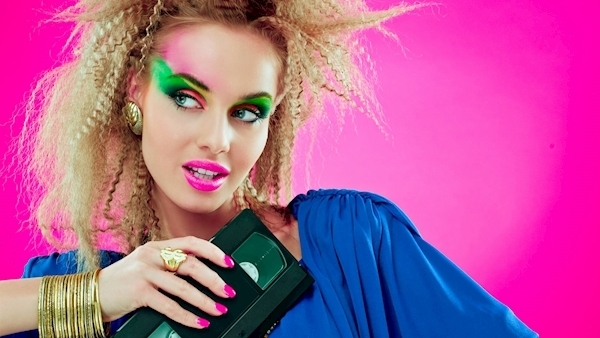
December 31, 1989, marked in theory at least the end of one decade and the beginning of another. But 30 years later, it doesn’t really feel that away. The Eighties are bigger than ever. We are now in the surreal position where Eighties nostalgia has lasted longer than the Eighties themselves.
You can see the evidence everywhere. The major TV event of the summer is the return to Netflix of Stranger Things: a Reagan-era mash-up of Goonies, ET and Stephen King in his early door-stopper era. Catwalks were last year denominated by throwback neon, acid wash jeans and “soft leather” jackets. Donald Trump, a creature of Eighties Manhattan, referenced in Bret Easton Ellis’s American Psycho, sits in the White House.
One of the biggest upcoming live music events meanwhile is the Forever Young retro fest at Palmerstown House in Naas. There, Eighties champs The Human League, Kim Wilde, Midge Ure and others will whisk fans back to the golden days of big hair and even bigger shoulder pads. Meanwhile, many of those planning on travelling to Naas will have seen Bon Jovi at the RDS recently, thrilling to a set dominated by 35-year-old hits.
How has it come to pass that the further we advance from the Eighties, the more the decade seems to pull us in? There are many reasons. The cyclical nature of fashion, for one thing. Not to mention the contemporary entertainment industry’s apparent inability to come up with new ideas.
“No era quite defines the 'more is more' mantra like the `80s. Hair bands, Jane Fonda workouts, salacious soap operas and a taste for consumerism found expression in maximalist style statements,” says Irish Examiner fashion columnist Annmarie O’Connor.
“Bad taste notwithstanding; the era's lack of limitations was matched only by its unerring self-belief. How else could we have pulled off leg warmers, tectonic shoulder pads and ra-ra skirts ? As for removing a lobe-bending chandelier earring before answering the phone, those were the days my friend. Those were the days.” “The Eighties, the more-is-more era, has never left us,” wrote the New York Times in 2016 .
“It’s been a touchstone for fashion, music and popular culture, remembered fondly but with a shudder, as the butt of jokes and youthful indiscretions with hairstyles and shoulder heights. But then, a strange thing has been happening. The formerly irredeemable Eighties, it seems, are creeping back to the fore.” The excess was tinged with innocence, which may also explain the appeal. The Eighties were the last decade before mobile phones, DVDs or the internet. By the end of the Nineties computers were thoroughly embedded in our lives. Hence the panic over the Y2K bug.
That wasn’t at all the case in the decade that preceded it. The Eighties thus represent a lost era before technology took over and swept us off to a present which, from a certain angle, can feel awfully dystopian.
Popular culture has been recycling the past long before the heyday of ZX Spectrums and Cabbage Patch Kids, it’s true. The Seventies were, for instance, dominated by a Fifties revival – Happy Days, Grease etc. And Gen Xers have been looking back wistfully at the Nineties – the heyday of Nirvana, acid house, decent David Fincher movies etc – from the moment they turned 30.

The Eighties are different in that our interest in the decade and its ephemera simply refuses to sputter out or even waver in intensity. It is the revival that will not die. The Breakfast Club remains iconic. The current superhero resurgence in many ways has its roots in the emergence of a new generation of more “mature” graphic novels in the Eighties (Batman: The Dark Knight Returns etc). Transformers toys are a multibillion dollar box office franchise.
So what is fuelling the Eternal Eighties? Everyone and everything, it appears. Those old enough to have been around first time are of course delighted to celebrate the decade that never died. Yet it also exerts a pull over Millennials and Generation Z. It’s a fascination everyone has kept on feeling.
“I think there’s a lot of nostalgia from millennials because, even though we didn’t live it, we experience it all the time,” Shannon Purser, aka Barb from Stranger Things, told New York magazine. “A lot of us watch Eighties movies and listen to Eighties music. We like the strong bonds of friendship that were key in those movies.” “In our heyday people bought physical copies of records,” the Human League’s Susan Ann Sulley told me recently.
“They went out and spent their hard-earned money. And they played those songs over and over and they stuck in their heads. We are now reaping the benefits of that. Those people have had their children, they’ve paid their mortgages – and they’re thinking, ‘let’s go and see the Human League.’” “My belief about the Eighties and why it is so strong is that it has a very strong identity in music and fashion,” says Forever Young founder and promoter Sharon Alston.
It keeps coming back because it was such a defining time for the way that music changed, in particular. In the Sixties and Seventies music was very much based on rock, developing into punk. It was played by people with instruments
“Then music became electronic. You had the electronic alongside rock music played by musicians in a band. That created a whole new sound – a whole new identity that changed the face of music forever.” Alston is by training a vet. She is from the UK but now based in Mallow, Co Cork. One of her motives for Forever Young is to raise funds for the ISPCA. But she’s also just a massive fan of the time and of the music.

“The quality of what came out in the Eighties.. I mean, there’s a huge dollop; of cheese thrown in. That cheese lives on. There were a lot of things at the time [the Eighties] that people thought were fairly naff. Now I look back and the music is strong and vibrant. I’ve seen Duran Duran recently. I’ve seen Tony Hadley from Spandau Ballet countless of times. And the quality of his voice, the brilliance of his songwriting, is forever. These songs are timeless classics.
“The Eighties was quite hedonistic everything was very intense, she continues.
"It was very in your face, very colourful, very vibrant. It packed a punch. We’re basing our festival on the Rewind Festival in the UK – a three-day weekender that has grown into a 20,000 strong family. They dress up and go every year.
It’s about enjoying that vibe, the sense you’re a teenager again. You’re remembering the song you danced to in the school disco, your first kiss with your boyfriend to T'Pau. It’s really for those who lived and breathed that time
https://foreveryoungfestival.ie/
CONNECT WITH US TODAY



Be the first to know the latest news and updates

















