Shane Casey: On the road to somewhere

Billy Murphy and episode on the bus on The Young Offenders made Shane Casey a household name. Now, the actor is determined to give something back to the people of Cork.
joins him at a workshop for youth mental health in the city
A few people don’t get that Shane Casey is not his character Billy Murphy, from The Young Offenders. “I got a call from a student organisation in a college, I won’t mention which one,” he tells me across a table in the foyer of the Opera House.
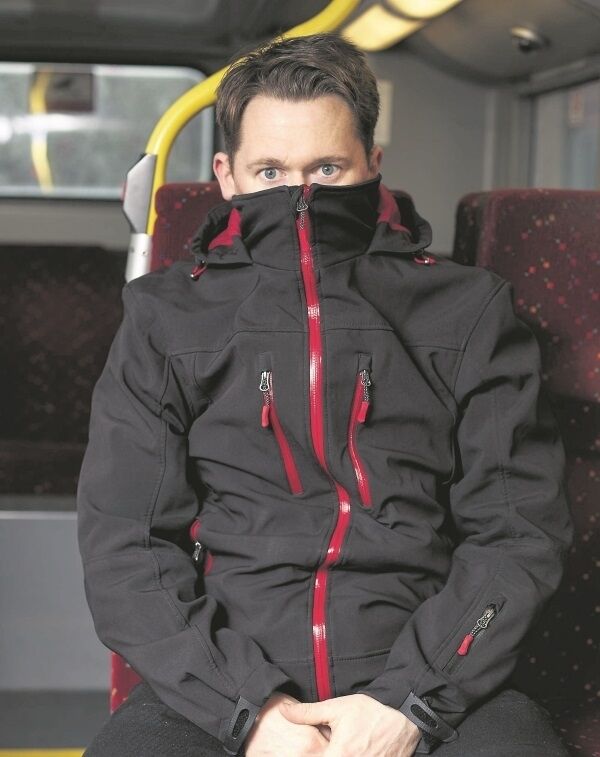
“They said, any chance of doing an appearance as Billy Murphy, you can go out in the vest and run around with the knife? I was like, ‘Sorry, I don’t do that’. Did they expect me to go out for 200 quid and run around as Billy Murphy, with a knife and a fucking t-shirt? I didn’t reply, but I was tempted to say I have a friend that has a Mr Blobby costume, would you prefer that?”
Casey is in fact an actor, playwright, pure Cork Liverpool fan who also works with Graffiti Theatre Company, giving resilience and wellbeing workshops to secondary school students.
So a few days before our sit-down in the Opera House, I’m watching him in front of a class of second years in St Vincent’s Secondary School in Cork city.
There are a few star-struck giggles as he opens up, so he gives them a minute or two about Billy, before asking if they have any questions about The Young Offenders.
A hand goes up in the back. “Can I be in it?” says one of the students, deadly seriously; the room cracks up and it feels like we’re shooting a scene from The Young Offenders. Casey is engaging and funny and deadly serious about his work.
You can see all these aspects when his play, Wet Paint, makes a welcome return to Cork, in the Opera House on March 20-23. It’s based on his years as a painter after he left school, centred on two painter-decorators and their boss in Celtic Tiger Cork. Did his old buddies from the painting days enjoy it when it played the Everyman? “They loved it. One guy loved the trade talk. They knew that I knew the paint business, but they were probably watching the other actors to see if they knew the painting business as well.”
He feels he understands the play better now. “The play was set in 2005, I was trying to capture something, I couldn’t tell you what it was at the time. On reflection now I can see there are themes there about mental health, men talking to each other, and the frustration I have with young people feeing they can’t talk about their problems.”
This frustration fuels his performance as he guides the resilience workshops along with Julie O’Leary from Graffiti Theatre Company. Their pivotal question is, do you have someone you can talk to when times are tough?
He knows from experience why this is pivotal. The workshop starts with a monologue from Casey, explaining why he left school at the age of 16. It’s funny, poignant, and real. One misunderstood quip in class saw him kicked out of maths class — in what he admits now was an over-reaction, he took this as a sign that it was time leave school. He tells the students he wishes he had talked it over with a few people before dropping out, which prompts a discussion on who they might turn to, if there was an issue in their lives.
Himself and Julie don’t necessarily go easy on the kids. “We had another workshop after you left,” Casey tells me later, “and nobody put their hands up to say they had someone to talk to if they had a problem, no one. We flipped the table on them then, and said if someone had a problem, could they talk to you, and they said ya. So, I said, what’s the problem?”
He’s passionate about talking things through. When I mention a project I’m working on, where a family ignores a controversial part of their history, he fires back, “are people still at this not talking to each other”, in a kind of voice that could sound cranky to someone who isn’t from Cork.
Resilience is the other big theme in the workshop. Like any actor/playwright who has to keep on keeping-on, Casey has a few stories to tell about this one as well. He recalls a painful moment when a play he worked on didn’t work out. And there’s the story about moving to Dublin with his then girlfriend (now fiancée), only to get a call a few days later from a filmmaker to say he was shooting something in Cork and would Casey come back down to audition for a part as a policeman.
Following a salty reaction from his girlfriend, they talked about it and agreed he had to give it a go. The audition wasn’t Casey’s finest moment and that would have been that, if the filmmaker hadn’t suggested he try out for another part he had in mind. The filmmaker was Peter Foott, the other part was Billy Murphy in The Young Offenders — you know the rest.
Not that he’s retiring to a big gold house off the back of it. He tells me that having kids is on the long finger for now, because he wants to wait until they can afford a house, so in that sense he has made a big sacrifice for his craft.
If I was to stay with painting and set up my own company, and had three fellas working for me now, it would be a lot better, like.
Any regrets? “No, I have to do this. Acting is a vocation, without it sounding wanky, but I wouldn’t encourage anyone to do it. The rewards are not what you think — you think it’s meeting people and seeing people, but there’s nothing for free. You need to consider the logistics of somebody coming up and interrupting your dinner. I’m not curt with people myself.
Ninety-nine times out of 100 it’s brilliant, if someone goes to me, ‘will you send a message to my nephew, he thinks you’re great?’, not a bother, it makes that kid’s day. “So, it doesn’t affect me but it affects my friends when they go out with me, they think it’s great for the first half-hour, and then they think, ‘fuck this’.”
So where does the buzz come from? “Success is having Wet Paint in here [Opera House], and having people enjoy the play. It’s not the clap at the end, it’s me being off stage and hearing the other actors fulfilling the potential of what was there 10 years ago inside in a rehearsal room. It’s hearing people laugh at something that is universal, but focused here in Cork.”
The good news for people outside Cork is that venues around the country have shown an interest and there is talk of a national tour. Casey is also writing a one-man show play, but doesn’t want to share details about it yet “in case someone else runs with it”, as he puts it, only half messing.
He makes sure to name-check people who supported him along the way. Marion Wyatt, who helped him find an outlet for his imagination by pointing him down the acting road; playwright Ray Scannell, who sat him down and gave him a writing workshop; and Pat Talbot for his encouragement and guidance with Wet Paint.
So what about the future? One of Casey’s main ambitions now has nothing to do with his profession — like so many other people of a certain age, all he wants is for Liverpool to win the English Premier League.
I get the sense he wants to continue looking after himself physically as well as mentally. As we’re sitting in the Opera House, Casey mocks his generous belly in an old promotional photo for Wet Paint, as well as talking about going to the gym regularly to “lift weights, punch something, and work off my excess energy”.
In terms of acting, he’s looking forward to future seasons of The Young Offenders (“please God”) and has a few iconic filmmakers in his sights. “I’d love to work with Shane Meadows, the director of This Is England. Also, Ken Loach [who directed him on The Wind That Shakes the Barley] and Mike Lee.”
Whatever way it pans out, things are looking good for Shane Casey at the minute. Just don’t offer him 200 quid to run around a college campus brandishing a knife.

CONNECT WITH US TODAY



Be the first to know the latest news and updates

















