Sean-nós singer Iarla Ó Lionáird in conversation with Hilary Fennell
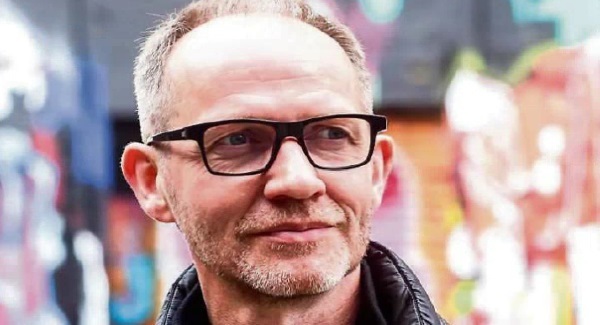
My job as a musician is to feel as much as possible.
My outlook is shaped by that.
My earliest memory of singing in public was when I was a young schoolboy and the teacher hoisted me up onto a desk to perform.
I’ve always been in love with the Irish language. Born and bred in Cúil Aodha, in the belly of the West Cork Gaeltacht, there was no effort on my part to acquire it. On the contrary — it was an effort for me to learn English.
Back then, I was always nervous about performing, but funnily enough, the nerves would leave me when I started singing.
My style of sean-nós singing is quite enclosed. I always feel quite hermetic when I perform.
I did a degree in education and taught for a while, and have always been involved in teaching in one way or another since then. My first job was teaching Irish to adults in Gael Linn in Dublin.
Growing up in West Cork had given me a really grounded sense of self and I was cocksure when I arrived in Dublin initially. But then I found that many of my confidences weren’t applicable to the big city. I was a native Irish speaker and found that some people didn’t like that.
My biggest fault is being impatient — and overthinking things.
The trait I most admire in others is kindness. I admire those that radiate selflessness and goodness.
I met my wife Eimear in the bar of Dublin’s Clarence hotel completely by chance. She had been standing at a bus stop outside when she convinced her friend to step inside for a drink instead.
Now, Eimear is a jewellery designer and we have a son of 18 and two daughters of 15 and 13. They’re all musical, but they’re not into traditional music, which is interesting.
What a privilege to rehearse today for a Tuesday Princeton Sound Kitchen Concert here in Princeton with the extraordinary artist Ellen Fullman and her Long String Instrument for a rendition of Abha an tSuláin with the inimitable Cleek Schrey on Hardanger- a true "River of Sound" pic.twitter.com/GymfX9ystT
— Iarla O'Lionaird (@iarlavox) November 17, 2018
The biggest challenge I’ve had to face so far is the departure of people I love from this life, especially over the last year or so.
I have a scientific bent. Being a pragmatist and yet being involved in making and creating can be a bit of a problem. I’ve trained myself to feel deeply and this can be a challenge, intellectually.
I’m just finishing a new record with The Gloaming. My work is definitely influenced by things that happen in my life. The work seems to find the places where I am shattered. You can’t help mining these things. When you are writing about something, you start releasing emotional energy.
If I could change one thing in our society I’d get rid of nuclear weapons. They can eliminate human life and yet we have become blasé about them.
My idea of misery is travelling overnight on a tour bus, sleeping in a bed with the roof six inches above my face.
That, and milking cows. I was fearful of them when I had to do it. With good reason as they used to kick, and occasionally defecate over, me.
I spend half my year teaching in the music department in Princeton. I miss my wife and children but I do love the work there, advising and supporting students and getting to hang out with talented young composers.
When it comes to physical health I tend to watch what I eat and I cycle a lot, certainly when I’m in the States. Other than that, I go to the movies and read and have learnt how to incorporate my writing into my daily life.
My idea of bliss is cycling downhill on my bike. It makes me feel like I'm 18 again.
Taking part in the film Brooklyn was quite an experience. I was reluctant to take the role at first because I’m not an actor but I decided to accept when I learned that Colm Tóibín, the author of the novel on which the film was based, had asked the film’s director to ask for me specifically.
That sequence (where he plays a poor working man who sings the traditional song ‘Casadh an tSúgáin’) was shot over 11 hours — which was completely different to my previous experiences of working in television.
The best advice I ever received was from my father — to push forward boldly. He was the principal of a secondary school and an extraordinary exemplar to me and my 11 siblings.
So far, the big lesson I’ve learnt is that it’s important to taste life fully in the time we are given.


CONNECT WITH US TODAY



Be the first to know the latest news and updates