Cork sisters’ original score for gothic classic Nosferatu
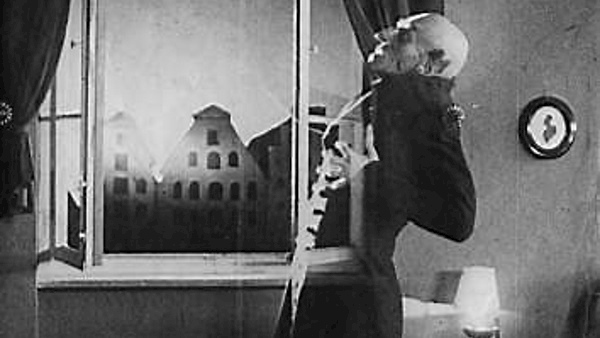
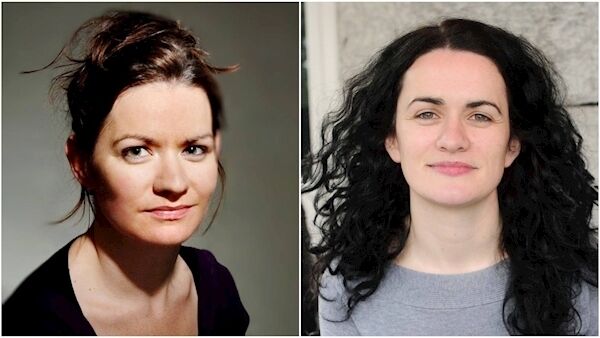
Irene and Linda Buckley have composed a new score which they’ll play live at the screening of silent-era horror Nosferatu at the perfect venue of St Fin Barre’s Cathedral, writes
Artists have many ways of oiling the wheels of the creative process; for Cork-born composers Irene and Linda Buckley, the comforts of home are a big help in summoning the muse. When the sisters were commissioned to compose a live score for FW Murnau’s classic silent horror film Nosferatu, they decamped to the bucolic setting of their family home on the Old Head of Kinsale.
“We have funny memories of our mother bringing us cups of tea and getting a fright when she saw what we were looking at on the screen. She’d be saying, ‘Oh, you’re doing your strange project’,” laughs Linda.
The sisters are the youngest of nine children and both studied music at UCC before going on to write extensively, and to huge acclaim, for orchestra, dance, theatre and film.
The live score for Nosferatu was originally commissioned by the Union Chapel venue in London.
“I wrote another live score for the film The Passion of Joan of Arc, which we performed twice in Union Chapel and the director there, Claire Singer, asked if we would write a new score for its Organ Reframed festival, which focuses on presenting the organ in different ways,” says Irene.
Nosferatu, with its iconic central performance from Max Schreck as the vampire Count Orlok, was an ideal opportunity for the sisters, who are both passionate about writing for film.
“It was a natural fit for us,” says Linda. “As sisters, we understand each other’s music very well and we have long been interested in the gothic. When we were young, Dracula was one of our favourite stories on a cassette tape that we had. Years later, we were very interested in the Francis Ford Coppola version of the film, and the score by Wojciech Kilar which was a big inspiration for us growing up. That element has always been very interesting for us. It was a dream project really.”
Their score, for viola, cello, organ and electronics, is now getting an outing on home ground, with a performance in the suitably gothic surroundings of St Fin Barre’s Cathedral as part of Cork Film Festival.
This also gave the sisters an opportunity to utilise the cathedral’s magnificent organ, which is almost 150 years old, and was restored at a cost of €1.2 million in 2013. Irene has written for organ many times but says the nature of Nosferatu entailed a different approach, one which is suited to the instrument.
“The organ has only a certain way of being presented but it is very versatile. In St Fin Barre’s, there are 4,500 pipes — that is a lot of different colours and tones to work with. I’m pulling the stops up very slowly so the air trickles through gradually, which fluctuates the pitch so it is bending slightly. You get a very creepy tone,” says Irene.
The pipe organ is also one of Linda’s favourite instruments to work with.
“It has such a massive range of pitch — from down in the lowest foot pedals, where you can feel them in the body, up to the very high. As an instrument in itself, that can really evoke terrifying moments and we really use that to great effect.
We have unusual techniques which we wouldn’t normally associate with the organ, so sometimes it doesn’t really sound like the organ any more, it just feels like something pulsing, which is quite good for creating tension in the film and, with viola and cello, it can really feel greater than the sum of its parts. That combination merges really well, especially in the acoustic of somewhere like the cathedral which is so reverberant. And that absolutely suits the kind of music that we write and the music that we are interested in in general,” says Linda.
There is only 15 months between both sisters, with Linda the youngest, and they grew up listening to similar music.
“Our influences are probably closer to non-classical genres than classical,” says Linda. “Our earliest musical experiences would have been hearing electronic music on vinyl that our parents would have randomly picked up in second-hand shops. Electronic music was a big thing for us.”
The sisters are also accomplished in the field of sound design, and are interested in creating atmosphere in their work through the use of non-musical sounds, especially those inspired by nature.
“Coming from where we do, that is a definite thread in what we do — the sound of the sea and connection to landscape. A lot of the music we love is very atmospheric in general; when we were growing up, we would have listened to the Cocteau Twins, and we loved them because they were interested in atmosphere and reverberance, in nonsense syllables and not singing clearly in any language, there was this mystery to what they were doing,” says Linda.
Adds Irene: “There is one section where we are using my voice and whispering but stretching the voice and pitching it low so it is actually Nosferatu’s voice. We like those little touches of sound that aren’t necessarily musical.”
While obviously ground-breaking in its time, it is interesting to note that Nosferatu now carries a PG rating and is relatively tame when compared with modern gorefests. However, the Buckleys say their score enhances the spine-tingling factor.
“It wasn’t a conscious decision but rather a natural flow of our work that we ended up making the film a lot darker. We have added a sense of dread to the film. It’s a fantastic piece, with lots of amazing special effects, it’s wonderful for a film that is almost 100 years old.”
According to Irene, the process of working together runs smoothly and because they know each other’s music so well, the blending of their work is indistinguishable. “Our outlook and our aesthetic is very similar, they merge well together. It’s not like ‘This is Linda and this is Irene’.”
Linda agrees: “There is a shorthand in working with someone that you are related to, of course. A lot of the pieces were written together. Some were written back and forth where I would do a section and Irene would do a section. It was a really enjoyable process.”
The differences in their approaches also work to their advantage, says Irene.
“I would say Linda is great for broad strokes, she gets a lot down quickly where I am very precise, I like detail but that slows me down a lot. I like to focus on a certain area, she likes to move things on. Between us, it is a good mix. We can sculpt the piece and also move forward with it as well.”
Linda, who is now based in Glasgow, where she lectures in composition at the Royal Conservatoire of Scotland, is looking forward to experiencing the performance in St Fin Barre’s, especially as she missed the premiere in London.
“St Fin Barre’s has a huge place in our hearts. I think the last time I performed there was in the choir for Duruflé’s Requiem, which was conducted by John O’Brien. Being there is very special to us in general, having performed there.”
Irene, who is based in Cork and teaches composition under the Composer in the Classroom initiative, is equally excited by the prospect of a home audience experiencing their work.
“I’m so excited because we wrote it two years ago and it could have disappeared into the universe. To have it in the Cork Film Festival is amazing because I have been a big fan for years and it is such an important festival in the city.”


CONNECT WITH US TODAY



Be the first to know the latest news and updates









