How to saddle up safely as cycling deaths hit record high
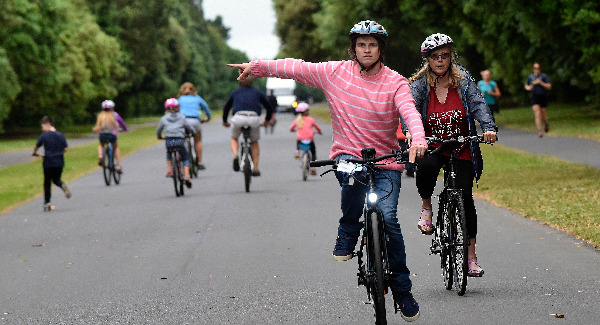
Cycling deaths hit a record high last year, and with more people than ever saddling up, the need for proper safety training has never been greater, writes
Getting knocked off my bike age 11 cast a long shadow over any desire I had to throw my leg over a saddle ever again.
It’s difficult to enjoy riding around on two wheels when, to bastardise Elastica, ‘every shining bonnet, makes me think of my back on it’.
But as one of the three lifelong sports — running and swimming being the others — I’ve long been missing out on the health benefits, including increased cardiovascular fitness, decreased stress levels and decreased body fat, that come with mounting the velocipede.
Since the introduction of the ‘Bike to Work’ scheme in 2009, Ireland has seen an explosion in the number of cyclists on our streets. In the space of its first five years, membership of Cycling Ireland grew from 6,000 to 24,000.
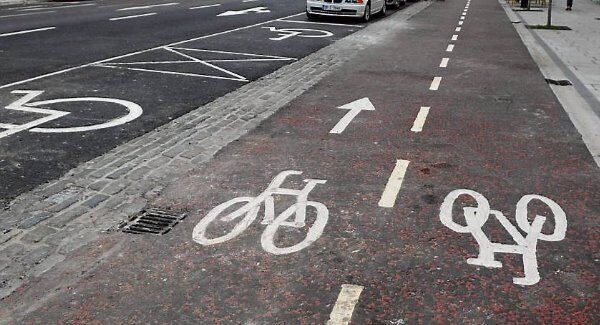
No one can fault its introduction, or its success. But there hasn’t been a matching increase in infrastructure to accommodate it.
Nor has there been an attempt to ensure that all the people on these bikes know how to ride them safely. In 2017, Ireland had its highest number of cycling deaths in a decade, with 2018 giving every indication of following suit.
“When you are cycling a bike, you are effectively piloting a vehicle,” says Michael Breen of the Irish Centre for Cycling.
The rules of the road apply. You should act as the driver of a car does. Take appropriate positions on the road, stop when you are supposed to stop, go when you are supposed to go.
In spite of this, nary a week goes by when I am not nearly knocked off my feet by a cyclist breaking the lights… their profanity-laced roars no panacea for my pain.
“There is a cultural disposition towards learning to drive a car, since you need to have a licence before you get behind the wheel,” says Barbara Connolly, the cycling standards officer of Cycling Ireland.
“To get that licence you have to do a certain amount of lessons. But the public’s perception is that you don’t need that to go on a bike.”
While we could successfully challenge this belief, as we did with seatbelts and drink driving (in all non-Healy-Rae represented constituencies), putting on adult bike classes present other difficulties.
Breen would like to see it become part of the Bike to Work scheme, that HR departments not only paid for the bikes but for organisations like his to come into workplaces and teach the fundamentals.
Barbara concurs.
There is some anecdotal evidence that people go ahead and buy bikes in the same way they do a gym membership. They start off with the best of intentions and then don’t get into the cycling. Having some cycle training as part of that process could actually convert their intention into competence and workplaces will see the benefit in having workers that are healthier, happier and sharper first thing.
Last year, Cycle Ireland launched the Cycle Right programme, to be rolled out in three phases. The first phase focused on primary schools but they recently piloted an adult training programme in Cork, Dublin and Kilkenny.
“We also run the Bike for Life and the Ride Leader programmes, via our 475 clubs around the country,” Heather Boyle, communications officer for Cycling Ireland tells me.
But classes looking specifically at commuting safely solo are rare. “If you came in fit from another sport, we could pair you with another more experienced cyclist, who are really the best people to learn from,” says Boyle. “If you wanted to do it more formally, we could hook you up with our trainers, at the cost of about €30 per hour.”
I meet with Barbara in Dublin’s St Anne’s Park to run through the basics of safe cycling.
First, we conduct the M Check of the wheels, breaks, handlebars, chain, pedals, saddle and gears as nothing puts newbie cyclists off more than being stranded on the side of the street. “If you let your wheels go bald, they will start to lose their grip and you risk a blowout.
You have to make sure the spokes aren’t missing or bent as they will end up buckling the wheel, which can be expensive to fix. The chain shouldn’t be too tight or too loose as it might fall off or break, while the pedals need to move freely.
Apparently, I’ve been braking all wrong, pulling on both brakes at the same time, while closing my eyes and saying a novena.
“You use your back break much more than your front brake. Every time you pull it the wire in the cable minutely stretches. So if you don’t change the cable for a while, the tension between levers will be different and there’s a risk that the front brake will activate first if you pull both simultaneously, possibly sending you over the wheel.”
Instead, Barbara recommends a novice cyclist pull the back brake first and then pull the front brake to bring the vehicle to a complete stop.
My first lesson continues on this path, breaking every step of the journey down to its most basic components. How to mount and dismount my metallic steed, how to correctly check my environment for threats, and how to change lanes so I can make a right turn in traffic without getting myself killed.
A huge part of cycling is anticipation and scanning. Cyclists need to be more aware than anyone else on the road. In a collision, they are going to come off the worst.
Although the biggest danger I faced that day came from toddlers on stabilised bikes who shot out before me, my nerves frequently fry my brain, causing me to forget what I’ve just been taught, then panic and try signalling, checking if there’s anything coming and turning the bike all at the same time, so I end up wearing it like a titanium pashmina.
But like the song suggests, I brush myself off and try again, and before long I’m taking turns with ease. Bug caught, what would future lessons have in store for me?
“What we went through on the day was how manoeuvres were performed,” says Barbara.
“The next stage would be to take the learning out onto the road in an environment with maximum visibility and minimum risk, a continuous route where there are small roundabouts, crossroad junctions, pedestrian crossings and traffic lights.
“Finally, you would go into a more complex environment, with loads of parked cars, multi-lane junctions and roundabouts, focusing on primary and secondary road positioning.”
As eager as I am to fit a morning ride into my routine, the startup costs of cycling can be prohibitive.
As a freelancer, without access to the Bike to Work Scheme, the €400 Anne Bedos of the community bike shop Rothar says is the minimum one should spend on a bike is beyond my means.
Add to that the tutorials on bike maintenance (€50); the price of a good helmet (€40) and a quality lock (€60), before we even begin to look at insurance, rain gear and accessories like Hi-Vis clothing and panniers.
But while images of electric bikes can join the houses on Sorrento Terrace and my matrimony to Donald Glover as fantasies beyond my means, Barbara tells me not to give up hope of possessing two wheels of my own someday.
“It’s taken 18-20 years of evolution to get us to where we are right now. The whole concept of training adults has only really come on the agenda in the last year. Where we have gotten to is quite significant and over time, in association with local organisations, authorities and the RSA there will be a process of building up and developing access.”
www.cycleright.ie

CONNECT WITH US TODAY



Be the first to know the latest news and updates

















