GSOC investigation: As many questions as answers in report

After seven years, the Gsoc report into the handling of the murder of Sophie Toscan du Plantier paints a grim picture of lost evidence and deliberate acts of removing key documents, but falls short of offering any sense of justice, writes .
Lost among the pages of the report by the Garda Síochána Ombudsman Commission into the many complaints made by Ian Bailey, Jules Thomas, and Marie Farrell comes this line: “The Commission has also been informed that the garda investigation into the unlawful death of Ms du Plantier is still open as no one has been charged with her death in this jurisdiction.”
Indeed the investigation into the murder of the French filmmaker on that lonely day more than 20 years ago remains open, but as the Gsoc report illustrates, the string of issues and incidents that enveloped the initial probe has hogged the limelight.
Ian Bailey has always strenuously denied any role in Sophie Toscan du Plantier’s death.
The French authorities have taken the opposing view and all indications are that he will be tried in absentia in France in the early part of next year — a process denounced by both Mr Bailey and his solicitor, Frank Buttimer, as being utterly without merit.
The tone was more measured but not entirely dissimilar when it came to both men’s initial reaction to the Gsoc report, a piece of work seven years in the offing but which ultimately raises as many questions as it answers.
“There is no evidence to suggest that Ian Bailey was ‘framed’ for the murder or that evidence was falsified, forged or fabricated by members of the Garda Síochána,” it states, dealing a blow to Mr Bailey’s long-held and vehemently argued assertion that he was fitted up for the crime.
Gsoc said gardaí had “a reasonable belief” at the time of the arrests that Mr Bailey and his partner Jules Thomas may have been suspects for the killing.
As for the complaint lodged in March 2012 by Marie Farrell that alleged intimidation by certain gardaí pressed her into making false statements against Ian Bailey, Gsoc found no evidence to support it.
Instead, it found that a detective garda on the du Plantier case had a relationship with the key witness that “appears to Gsoc to not have been appropriate at times”.
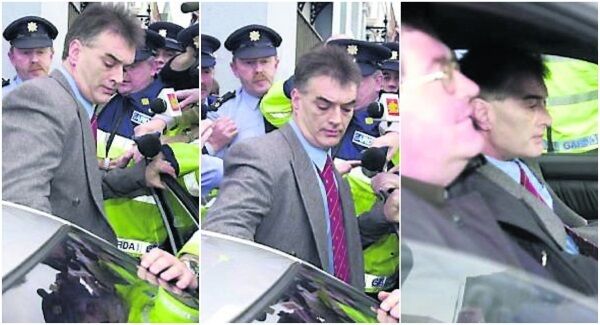
With regard to Jules Thomas and her complaints, Gsoc admitted that some matters complained of could not be fully established because of the non-cooperation of a number of gardaí, mainly from the detective ranks.
Gsoc noted early in the report that it is not possible to bring proceedings under the Garda Discipline Regulations regarding retired members.
Interestingly, the report also refers to another absent voice — a person considered a key witness in the complaint investigation, traced to a location in England and who, in February 2014, met with Gsoc investigators at a pre-arranged appointment with the intention of obtaining a witness statement.
“The witness failed to provide the statement as requested.”
Aside from the missing voices, there are the missing items.
Ian Bailey is nominated as a suspect in Garda Jobs Book 2, page 9.
Yet Gsoc noted that the next two pages of the book were ripped or cut out, leaving a rough torn stub.
Later, it found that five of the suspect files were missing.
Later again, it emerged “an extensive list of significant documents including witness statements and 22 exhibits that had gone missing and could no longer be located by the Garda Síochána”.
That list of missing exhibits includes a blood-spattered gate taken from close to where Ms Toscan du Plantier’s body was found, a French wine bottle found four months after the murder in a field next to the scene, and a black overcoat belonging to Ian Bailey.
In total, 139 original witness statements were either missing or not held by Gardaí.
Audrey Carville’s question to Frank Buttimer on Morning Ireland may yet enter lore: “One might wonder how does one lose a gate?”
How indeed, yet at this stage, it would almost be surprising if anyone was still surprised by any fresh oddities thrown up by this case.
Frank Buttimer, who also maintained that some of the findings in the Gsoc report vindicated some of what his client has been arguing over the years, said the “fade factor” meant that these bizarre instances were not highlighted as much as they would be if they were at play in a contemporary case.
He believes this contributes to “a shameful lack of accountability”.
Gsoc mentioned those missing exhibits and the torn-out Jobs Book pages as being of serious concern but asserts that “a lack of administration and management are the likely explanation for this state of affairs”.
There was “a lack of administration and management of the incident room (even when viewed through the lens of the time) as opposed to clear evidence of malpractice or corruption”.
There was a lack of defined leadership, and a lack of forensic material obtained from the murder scene.
It all paints a grim picture, a scattered mise-en-scene in which something else is also clearly lacking: a sense of justice being delivered, one that people can believe in.
CONNECT WITH US TODAY



Be the first to know the latest news and updates

















