Traditional Irish shopfronts: Signs of times in Irish towns
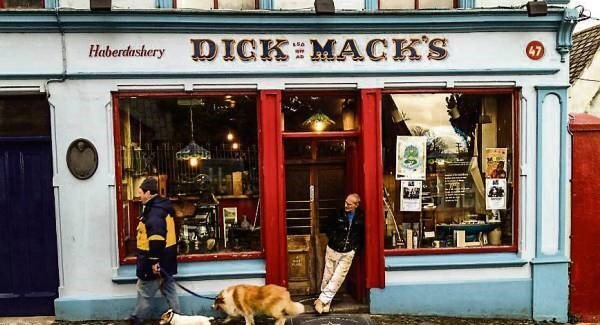
Take a trip around the towns and villages of Ireland and among the fast-food shops and convenience stores, you will see the remnants of shopfronts from a different era, when grocers, ironmongers, victuallers and confectioners plied their trade.
These facades will provoke a moment of reverie for the generations who grew up frequenting such shops, buying everything from penny sweets to pipe tobacco.
Beyond such nostalgia however, Trevor Finnegan is determined that we do not take the design heritage of such facades for granted.
For almost a decade, Finnegan has been travelling around Ireland photographing traditional shopfronts, as a document to our past, and a salutary tale of what we have lost in the rush to embrace consumerism and convenience.
Offaly-born Finnegan began the project when he was studying graphic design at the National College of Art and Design in Dublin.
“I did a project on typography and signage in rural Ireland and started collecting photographs of shopfronts from that,” he says.
“My parents were originally from Sligo so we would have travelled a lot around Ireland when we were younger. My dad is an architect and he used to collect old enamel advertising signs from auctions and places they would have been renovating.
"From an early age, I was very interested in the typography and signage used on those items.”
Finnegan says the traditional shopfronts seen in Ireland are unique to here, and the style varies according to area.

“You don’t see the same kind of style across Europe. There are certain typographies used in different areas of Ireland. You would see a lot of ceramic lettering in the south-west of the country, in Kerry and Clare; around the midlands they have more wooden lettering.
"They are really nice to look at and each one has its own kind of beauty in itself. Also, they bring back a lot of memories for people.”
Finnegan is now based in Dublin, where he has his own company, Revert Design, and his photographic collection of shopfronts is very much a passion project.
“At the weekend, me and my wife hop in the car and drive around, get off the motorway, going through small towns and villages and I take as many photographs as I can. A good number of them have either closed down or been replaced by chains.”
As such, the shopfronts reflect the rapid pace of change in Irish towns and villages in the past few decades, says Finnegan.

“Some of the premises might have been in the family for years but the sons and daughters didn’t want to continue it on and moved to the bigger cities to more prosperous jobs. You find, especially in the midlands, a lot of towns that have been bypassed, all these shops have closed and been boarded up.”
In terms of protecting such shopfronts, while a lot of councils are doing good work in association with their conservation architects, the approach can often be ad hoc.
“It has become a different kind of project in that sense… it is kind of sad to see how they’ve been left. It is a conservation architect’s job to protect certain buildings and a lot of good work has been done in that field.
"But a lot of it is down to the opinion of the conservation architect and is open to interpretation.”
Finnegan also wants to draw attention to less aesthetically pleasing shopfronts that he believes still have architectural and design merit.
“I have also been taking photographs of shops from the 1970s and 1980s, the ones with the tiled shopfronts, that mightn’t be as beautiful as the older ones but they are still very different and unique.

"I think it is important that they should be kept as well. The less plastic and vinyl signage we can have, the better.”
While we are familiar with the concepts of environmental pollution and noise pollution, many would argue there is also a type of visual pollution now at play in our towns and cities.
In this regard, Finnegan believes that a lot of businesses trading today could learn something from the clean and simple design of old shopfronts.
“There’s not enough focus on the signage that’s put up and enough guidance given to shops and new businesses. They are being allowed put up vinyl signs in 20 different colours with pictures. Everything is about the quick sell rather than the longevity of the business.
"In a lot of rural towns now, you have vape shops, ‘buy gold’ shops, all of these shops that are lashing up whatever they can get as cheaply as possible. They don’t care what it looks like.
"The local councils need to control it more. I know people want businesses in towns but they need to be more appealing visually.”
Finnegan’s project has also been a story of survival and transformation.

In many towns and villages, particularly those with a tourist throughput, traditional shops and pubs have survived, or been re-opened and renovated by a new breed of entrepreneur who sees the aesthetic, and financial, benefits in retaining retro facades and fitouts.
“I’m finding that it has almost come full circle in a way. I know a few bar owners from Dublin who are taking over premises in places like Cork, Clare and Galway. They are looking for these premises where everything is still intact — people are appreciating it again, which is good.
"I think people are beginning to respect the heritage and history in some of these places. Even with this project, over the last six to eight months, people are becoming aware of it and starting to recognise the importance of documenting these shopfronts.
“There is an awareness there that wasn’t there three or four years ago. When I started doing this, it was for myself, I didn’t think it was going to become something bigger, something people wanted to talk about or see.”
Finnegan has an exhibition of his prints in Dublin next month and is also working on a book, which will feature some of the stories behind the shopfronts.
“When I take the photographs I knock on the door to chat to the owners and get the little bit of history behind the premises. That is an important part of it, I’m trying to collect as many stories as I can.
"Sometimes they are not open to chatting to a stranger but once you explain why you’re doing it, they are happy to tell their story.”















