Birthing the nation: Three ages of midwifery - from student to staff nurse and matron
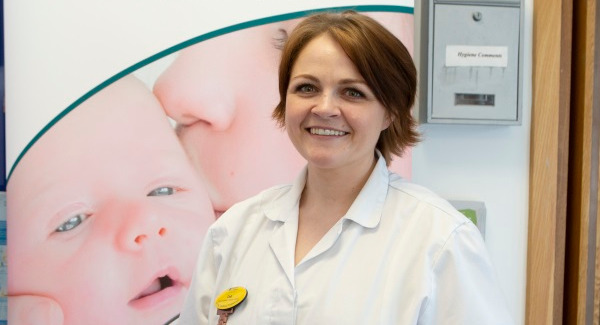
Tomorrow is International Day of the Midwife and to mark it speaks to three Irish midwives about their ever-changing roles
MOST mornings, Deborah Hadley, jumps into her car in Clonmel and drives 85 kilometres to the University of Limerick to follow her passion.
Deborah is finishing her third year of a higher diploma in midwifery and will next year go through her supervised clinical placement on wards. In preparation for that, she is currently in the middle of a 15-week block on the wards “helping the mothers who deliver the babies”, which she describes as “amazing”.
She chose to go into the profession after the homebirth, six years ago, of her third child, Mark whose older sisters Ciara (12) and Ella (14) are a “great help”.
“I had no complaints about the hospital births I’d had,” she says. “I wanted to try it at home and the care was second to none. I felt respected, safe, like I was the only person that mattered and I thought to myself everybody deserves this kind of care so that’s how I got into it.”
Deborah first became a doula, learning what she terms the “emotional side of it” before she moved to Tipperary and took the plunge to midwifery. Given that she was coming from the world of corporate finance it was quite the move.
“It is challenging,” says the Dubliner. “I’m not entitled to any grants and I have to drive to Limerick, so there’s diesel, childcare and the like but there’s an end in site and I’m off in summers so there are upsides.
“It’s also very rewarding. Being with a woman in a moment that’s going to change her forever, there’s something wonderful and humbling about that. There are tough, heartbreaking days but you come home and think what a privilege to get to do that.”
When she graduates and officially joins the ranks of midwifery, Deborah will be one of more than 4,000 midwives currently active in the country. In 2016, 63,897 babies were born in Ireland. Most were delivered in one of the 19 maternity units and/or hospitals dotted around Ireland.
The country has two midwifery-led units and three units which support birth at home through their DOMINO (Domiciliary IN OUT) scheme. Figures for home births are hard to come by, data is not centrally located and five different agencies carry figures, but it is well below 1%, low when compared to the Netherlands where 20% of babies are delivered at home.
In 2015 the Department of Health published a National Maternity Strategy which included promises of proper provision for home birthing and expanded DOMINO schemes. Much of the plan has yet to be implemented.
Birth choices
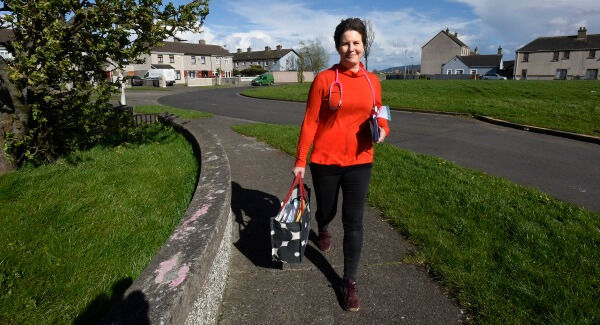
“It’s desperately slow in this country and it’s very frustrating,” says Ali Murphy, community midwife with The Coombe Maternity Hospital. “Birth choices are still very limited for women. Very few women, for example, get to access the DOMINO model of care; that is being cared for by a midwife while pregnant, care during birth and care at home after birth. This should be offered to all healthy Irish women.”
She believes that a history of obstetrician-led births are probably a reason for this. From early on in pregnancy women are sent to GPs. The medical profession gets heavily involved and stays on board all the way through pregnancy. In most cases, the midwife is only introduced when the act of giving birth is already in train.
“It’s still very obstetric led,” says Ali. “And I would prefer to see the word midwife out there more so people know what the role of the midwife is in supporting women and their choices. Rather than them needing a doctor first, midwifery should be the starting point. They can allay fears and calm expectant mothers.
“I’d also love to see continuity of care where women see the same midwife or team of midwives all the time. Women just need midwives in my opinion unless they need special care.
“Irish women are terrified of birth but if they had midwives with them through the whole thing I think their tocophobia would lessen and they would feel so much safer coming meeting someone they knew, someone who has gradually become part of their team.”
Childbirth fear
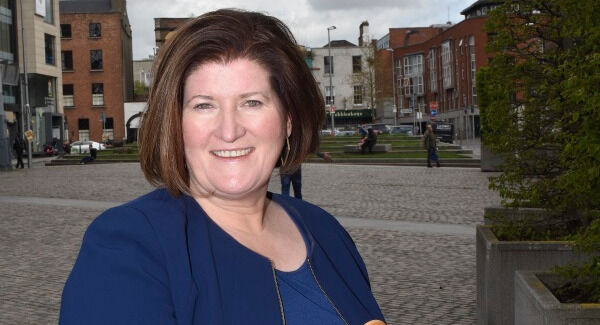
Midwife Patricia Hughes believes there is “a blind loyalty to intervention”.
“There is a normalisation of intervention that is worrying,” she says. “Being able to book in for a cesarean section on a certain day can be damaging for the vast majority of women unless there is a medical reason.
“Magazines or TV programmes like Footballers Wives, where a woman discovers they’re pregnant and books herself in for an intervention in nine months time because their husbands have a big game; that kind of thing is influential and it should not be the first port of call.”
As well as this, Patricia says there is “an inappropriate use of technology for roughly half of those women who would normally be low risk”. She sites the overuse of cardiotocography (CTG) - the technical means of recording the fetal heartbeat and the uterine contractions during pregnancy, as an example.
“If you get a normal CTG you can be pretty sure the baby is well but if you get an abnormal CTG, there’s a percentage of babies who may have something wrong but there’s still a percentage where there’s nothing wrong,” she explains.
“The problem is that once you get an abnormality on CTG you are required to follow through, break the woman’s waters, getting her started in labour and progressing on and on and you may end up with an instrumental birth but when all is said and done you discover the baby was actually fine and now what you’re left with is a woman, a uterus that is not in peak condition for the next time round.
“If you have a woman with risks of course you have to do this but if there is no low risk you should not introduce inherent risks to her.”
Patricia was inspired to become a midwife when as a nursing student in Waterford in 1985, she witnessed a woman giving birth to her thirteenth child.
“She gave birth very quickly and the baby was born in a flat condition, limp and unresponsive and was quite blue in colour,” she recalls. “I was so impressed with the midwife’s actions, her communication and her rapport was gentle, quiet and unobtrusive. She put the mother at ease, cleared the baby’s airwaves, dried the baby and administered oxygen. By the time help arrived the baby was pink, crying and in the arms of her mother. I decided that night that was what I wanted to do.”
Two years later, she qualified as a midwife. She has had an extraordinary career which has included stints in the UK and New Zealand, a year as director of midwifery in Unified Maternity Services Cork and ten years as Director of Midwifery and Nursing in the Coombe Women and Infants University Hospital. In 2016, she established Midwifery and Nursing Expertise, a professional advisory and consultancy service.
In her three decades in the profession, she has seen many changes for the good. She sees the fact that fathers are included in pregnancy and birth as a positive and believes that mothers today are more informed than ever. There are, she believes, more choices for women and on top of that the role of the midwife has become more prominent (albeit it could be more so).
Huge advances in health care mean that babies born at lower gestations survive and have better quality of life than ever before.
That said, she believes there is more to do.
“Obstetricians and midwives are at the pin of their collar,” says Patricia. “They’re over-stretched and there’s a limited amount of time to give to counselling and information and if you couple that fast-paced environment with increased operation rates and those other interventions, it makes for a difficult environment to work in.
“We will look back and ask ourselves ‘why didn’t we stop this train’.”

CONNECT WITH US TODAY



Be the first to know the latest news and updates

















