What it's like to live with Asperger's
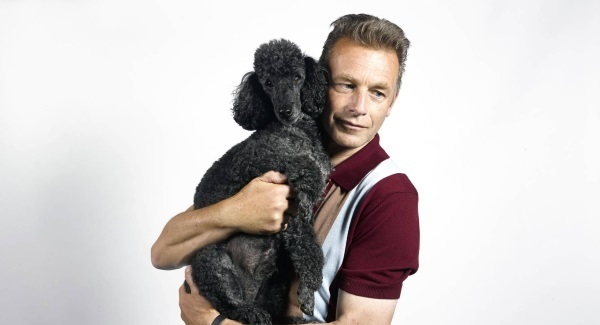
WHEN you have a to-do list as long as Chris Packhamâs, taking a day off can prove something of a rarity.
âI work every day: I work Christmas day, I work my birthday, I just work,â says the naturalist, shaking his head at the mere suggestion of a âbreakâ. âIâve got things to do. I canât stop. I canât stop...
âI was actually forced yesterday to take a couple of hours out,â he adds, almost surprised by his own declaration. âI had a load of work to do, but when I got to the hotel I couldnât check in, so I went to the National Gallery. It was a good couple of hours.â
Packham puts his ability to handle such a gruelling schedule down to his autism, a disorder that in many ways has come to define him.
âSometimes (Iâm doing) two or three jobs a day, so itâs one of those times that the Aspergerâs mind is actually probably the only way it would work,â explains the 56-year-old, who has lent his encyclopaedic knowledge of the natural world to shows such as The Really Wild Show and Springwatch for over three decades.
Diagnosed in his 40s, the presenter â who went public with the condition in his 2016 childhood memoir, Fingers In The Sparkle Jar â is in London to discuss a candid new BBC Two documentary, Chris Packham: Aspergerâs And Me.
In the one-off film, Packham invites viewers into his world to try to show them what itâs really like being him â from the devastating trials of his adolescence and daily struggles in social situations, to his bouts of depression, difficulty forming relationships, and heightened, often overwhelming, senses.
With scientific advances offering new possibilities to treat Aspergerâs, he also travels to the US to witness radical therapies that appear to offer the possibility of eradicating autistic traits entirely. A journey that leaves him questioning whether heâd ever want to be cured himself, or whether, ultimately, Aspergerâs has helped make him who he is today.
Much like everything else in Packhamâs life, he was resolute the show would have a real purpose. âI donât do anything if itâs not going to achieve anything,â says the Southampton-born star.
âI needed to be able to speak about the positive aspects, as I think that autism is generally perceived as something which is entirely negative. And I wanted to be able to articulate how it felt, so that people would have a better understanding of it.â
Itâs about âshouting above the noiseâ, he insists, referring to punk rock band Penetrationâs song lyrics as his âlife anthemâ.
âI have a small voice because I make wildlife programmes and I have to exercise that voice positively â thatâs the purpose of having it.
âI think people that have that voice should do so,â he elaborates. âIf they donât say some things either because theyâve got nothing to say or theyâre too scared to say it â both of these are reprehensible.â
Head down, Packham, who by his own admission calls himself âa little bit weirdâ, moves quickly from subject to subject, glancing up to make eye contact only a handful of times.
Hands tightly clasped on his lap, he talks of his decision to live alone in the middle of the woods with his âbest friendâ, Scratchy the dog, (as opposed to with his long-term
girlfriend Charlotte Corney) as itâs the âonly place I feel normalâ.
âIâm a lot less guarded with people I trust and know â invariably my family have always taken the brunt of that,â he confesses, pinpointing his battle to connect with strangers.
âThere are things I would say spontaneously to them that I wouldnât dare say spontaneously out to anyone else, because I would have to measure what I thought their reaction would be to them.â
I wonder if this show and public diagnosis of sorts will offer him some relief.
âI know other people who I have spoken to you and theyâve said they found it immediately uplifting and empowering and cathartic,â he responds, having revealed in the film heâs spent years employing a range of coping mechanisms to fit in on TV. â(But) it wasnât like that for me, really. I had come to accept it and Iâd certainly been working hard for a long time on managing it independently.â
âThereâs a certain amount of relief because if I make a mistake, people now understand why,â he muses. âThey donât have to just say, âChris is a nuisance weirdoâ.
âThat doesnât, however, mean that I can count on their tolerance,â he quickly adds. âTelevision is very much about effective teamwork and maximising and optimising what the team can achieve and I have to be an effective part of that team.
âI donât want people to make excuses for me,â he finishes. âI canât take my foot off the gas. I mustnât relax. I donât want to be an encumbrance to anyone.â
Chris Packham: Aspergerâs And Me airs on BBC 2 on Tuesday, October 17.














