Poll: Can perks make you enjoy going to work?

It’s almost the weekend, and staff at Dublin’s Facebook HQ are sure to be celebrating as they enjoy a slap-up breakfast this morning or cold beer later on.
The tech giant, in the heart of the city’s so-called Silicon Docks, is just one of the multinational companies offering enviable benefits, from free food to gym membership.
But can perks make you love going to work?
Yes and no, according to human resources experts.
Dr Kara McGann, senior labour market policy executive at Ibec, says the old adage of people being a company’s most valuable asset remains true today and it makes sense to take care of that.
“However, there is not a one-size-fits-all approach to investing in employees, as, today, we have, for the first time ever, four generations in the workplace at the same time, and they have different priorities in their work and non-work lives,” she says.
“For some individuals, the important investment will be in games rooms, gyms, and subsidised canteens, while for others it will be flexible working, career breaks, on-site counsellors, and health insurance.
“Where possible, it is important to ask, solicit feedback, and consider the varied needs of people in the workplace and support them in meeting their goals within and outside the workplace.
“This leads to happier and more motivated people.”

In a recent survey by job site, Indeed, computer technology company, Dell, was crowned by employees the ‘best place to work in the private sector in Ireland’.
The firm, which has sites across Limerick, Cork, and Dublin, offers free food, flexible working hours, and health insurance that includes family members, among other benefits.
Praising the “great” health cover, one anonymous staff member quipped on employer review website, Glassdoor: ‘Coffee is awful, but [company] makes up with amazing cupcakes and pizzas, once in a while’.
Other companies to make the top 10 for perks included Apple, where there’s a staff discount on products like the iPhone; Google, famed for its weekly relaxation massages; and Penneys, whose new international HQ, on Parnell Street, features an on-site gym.
Analysing the survey results, Indeed’s Paul D’Arcy says: “While salary is a major factor in determining workplace satisfaction, it’s only one of a number of criteria on which employees judge their employer.
“Increasingly, we see that the modern workforce optimises for happiness.
“Offering part-time and flexible hours, or even remote working, helps staff to achieve a better work/life balance.”
One British company has announced plans to introduce ‘peternity’ leave for people who have pets.
Pets at Home — a chain of pet stores with 8,200 staff — is offering employees a paid day off when they get a new dog or cat, to help the animal settle into their new surroundings.
Insisting it was “not a gimmick”, boss, Ian Kellett, said that the initiative was designed to “support key events in a colleague’s life”, and even claimed that other such quirky perks — including a “flying the nest day”, when a child leaves home — had slashed the company’s employee turnover rate from 78%, in 2004, to just 20% last year.
Work and organisational psychologist Patricia Murray, of the HSA, which offers employers a free well-being audit tool, called ‘Work Positive’, says that it’s more important for businesses to get the basics right.
“It’s not the remit of an employer to ‘keep employees happy’, but to keep them safe from harm, either physcial harm or psychological harm,” she says.
“No amount of green teas and back massages will alleviate the stress of a bully boss or hours that are way too long, or dangerous work for which you are not protected.
“Real workplace stressors are hidden in how things are done, so the best thing organisational leaders can do is to be open to hearing things they might not like, in order then to try to improve them.
“Once unreasonable demands have been taken out of the picture, then employers can, through managers, ensure that supports are in place for when a person needs an extra resource, and ensure active policies and processes are in place for when things go awry, as they invariably will, at some stage or another.
“After all that, there is time and place for some add-ons, like a social event or a wellbeing initiative, something that lets individuals feel respected, though not some wacky, madcap activity that just makes them feel infantilised.”
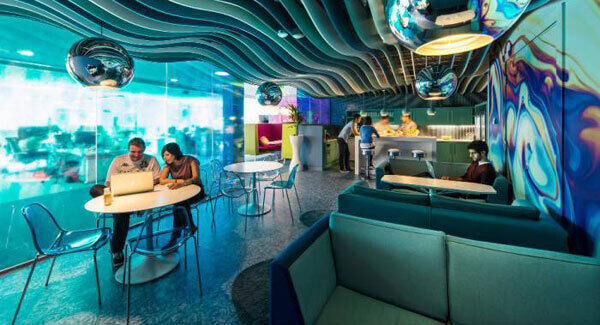
Games consoles and bean bags are great, agrees human resources consultant, Alex Kotsos, but an understanding boss, who allows them to drop everything to take a sick parent or child to the doctor, is better.
“The perks are lovely — the likes of Facebook having all the free food, the games room, it’s great — but it doesn’t create a positive environment,” says the Mumager.ie coach, who hosts workshops to guide women and their employers through the return to work, following maternity leave.
“If you look at why people jump to start-ups and these teeny-weeny companies, they’re not jumping because of the perks, because a lot of them don’t have the money, [they’re jumping] because of the interesting and challenging work, and some really big companies have forgotten that.
“From my perspective, what creates the most beneficial work environment is timely feedback from managers who care, being treated with dignity and respect, flexibility in terms of hours and the way that you work, and being given interesting, challenging work
“For me, things like ‘peternity’ leave does at least show that the company is trying to be inclusive,” she adds.
“Let’s not forget that some people don’t have children — can’t have children, don’t want children — but, for them, their animals are the closest thing they’ve got.
“But, again, I’d like to see it more along the lines of ‘let’s just give flexible time-off for everybody’. I think some of the big things that people can’t afford to pay for, healthcare for themselves, for their families, that’s a huge benefit that people really don’t understand the value of.
“Things like that are far more beneficial than a free bar on a Friday evening.”
As companies across the country improve employee wellbeing by promoting better exercise and nutrition in the workplace, it’s important not to ignore work performance.
“One thing is resoundingly true, regardless of the work type — people need to feel valued and worthy at work,” says Murray.
“When staff feel valued and respected, they will be more committed and engaged. The old basics of reward — praise, if you mean it, or just acknowledgement of work done, and work well done — used regularly is good.
“A dialogue on where that work fits into the bigger picture and how it helps the entire company, setting it within context, adds meaning.”
Dr McGann agrees: “Often, it is not really the specific perks, per se, that impact people’s productivity, but, rather, how the organisational culture that provides them make them feel.
“Research tells us that we are genetically predisposed to belong — we are hardwired to want connection, and it is good for our survival and our success.
“When people feel they belong in the organisation, they feel valued, secure, supported, and respected and this is where the real impact on productivity, trust, and engagement occurs.
“Ultimately, people will vote with their feet, as we recover from the recession and more employment options become available, and they will gravitate towards employers who understand the importance of inclusion.”
* Pimp your work space with photos or other personal item that make you smile as you slave away, but avoid clutter, which can stress you out.
* Make a work buddy — research shows that people who have friends in the office see their work as more enjoyable than those on their tod by the watercolour.
* Smile and say thank you to your co-workers, and they’re more likely to return the favour, creating a more positive atmosphere in the workplace.
* Avoid burning out during the day by taking a quick breather between tasks, even if you do have to pay for your own coffee.
* Stay hydrated, snack smart and take the stairs to help make your nine-to-five less of a headache, body and mind.
CONNECT WITH US TODAY



Be the first to know the latest news and updates

















