New exhibition in Cork looks at relationship between food and feeling
WE ALL use phrases like having a âgut instinctâ about something or experiencing âbutterflies in the tummyâ when nervous. Such descriptions imply a connection between mental states and whatâs going on in our digestive systems. Gut Instinct: Art, Food and Feeling, is the title of an exhibition at UCCâs Glucksman Gallery.
It draws on cutting edge research by John Cryan, professor and chair of anatomy and neuroscience at UCC, exploring how digestion relates to our mental and emotional states.
Director of the Glucksman and one of the curators of the international exhibition, Fiona Kearney, points out how we tend to think of neuroscience as being the study of the brain.
âBut John Cryan and his colleagues are literally turning that upside down. Theyâre saying that the state of your gut affects your state of mind and theyâre finding incredible direct conversations that are almost happening between your mind and your microbiome (the collection of bacteria, viruses and fungi that occupy the human body.)â
Kearney says that the science connecting the gut and the mind is at an early stage. âWhat we wanted to show in the exhibition is the different ways that artists have been interested in these ideas. Artists have always been interested in food and its depiction, in still life, for example.

âArtists have always used food as metaphor for human life. If you think about the memento mori still life paintings of the Dutch era, they are on one level beautiful depictions of what might be eaten at the table. But theyâre also a reflection on mortality and life. So these different ideas can creep into a painting. Itâs the exact same in the works exhibited here at the Glucksman.â
Kearney says the exhibition links the worlds of art and science. âWhat we try to do here is collaborate with our colleagues to understand their research and then look at how those ideas might be explored by contemporary artists.
âItâs interesting because art touches on so many different disciplines and artists are incredibly curious, interested people. A lot of them have a strong research-based practice that involves thinking about the same issues (as scientists, for example) but wonderfully, from a completely different perspective.â
- Gut Instinct continues at the Glucksman until March 19, 2017. See www.glucksman.org
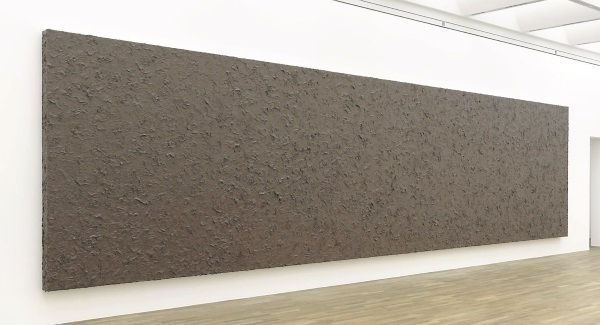
 The talking point of the exhibition is Thomas Rentmeisterâs large untitled work which is a nine metre by three metre piece of chipboard onto which Nutella spread has been painted in swirls. The scale of the work is overwhelming, to say nothing about the sweet cloying odour that assails visitors to the gallery. Rentmeister is influenced by minimalism. Kearney says he is interested in taking the language of minimalism and linking it to more experiential moments. âItâs almost repulsive but when you get over the idea of the substance and its smell, itâs beautiful in the way the Nutella has been applied.â Itâs proving to be a popular back drop for selfies.
 Marina Abramovicâs film, âThe Onionâ, viewed in a dark room in the gallery with a soundtrack of the artist complaining about modern life, is difficult to watch.

Abramovic messily eats a raw onion. Tears flow and the onion is almost capable of being smelled by the viewer. The camera offers an unflinching portrayal of the artistâs discomfort and very obvious disgust. Abramovic is probably the most established artist in the exhibition. She is known for her extreme performances and regularly puts her body in jeopardy. âThe Onionâ film is on the more moderate spectrum of what she has done in the name of art.
 This is the title of one part of Siobhan McGibbonâs exhibit. Itâs a female form, its gender indicated by a pair of womanâs legs which contrast with the more muscular legs of a male close by. But if it wasnât for the legs, these two pieces would be large blobs. The male legs support a mass of what could be a lump of fat while the female legs support what suggests dripping globs of flesh. As Kearney says: âThey become amorphous. Itâs almost like they are brains on legs or guts on legs, a perfect metaphor for the show.â
 The exhibit of a Cork-based collective of artists âMick OâShea, Irene Murphy, and Stephen Brandes â is visceral and repulsive. The artists are in the process of making toothpaste and suppositories. In what looks like a mini-laboratory setting, there are two large glass vessels with tubes coming out of them. Inside the vessels are vegetables fermenting. The artists drop in occasionally to tend them. Their art practice is about pushing the limits of what is possible in terms of the creation and ingestion of food and how that links up with what we think.
 The Northern Ireland-based artistâs portrayal of tins of soup, bottles of ketchup, packets of cake mix, and other food stuffs are reminiscent of Andy Warholâs work, such as his Campbellâs Soup Cans. But while Warhol used brash pop art consumerist language, Shawcrossâs work has an emotional resonance.
Kearney says: âShawcross is recognising the emotional fallout we sometimes have from food. The food (in this exhibit) was meant to be good for us but turned out not to be because itâs very processed. Itâs as if these works are dissolving or kind of crying.â
 The German artist has created work specifically for the Gut Instinct exhibition. Her pieces include three-and-a-half metre high wall drawings.

They are quite beautiful and ârecall the idea of anatomical or figurative drawing,â says Kearney. âThe artist includes elements of popular culture such as emoticons. On one level, itâs very difficult to express our emotions. We tend to simplify them through social media interaction whereas whatâs actually happening is very complex.â Side by side with this is the complex relationship between gut health and mental health. Alhauserâs drawings show people ingesting everything going which leads to chaos internally.














