Womb transplantation offers hope to women who wish to get pregnant
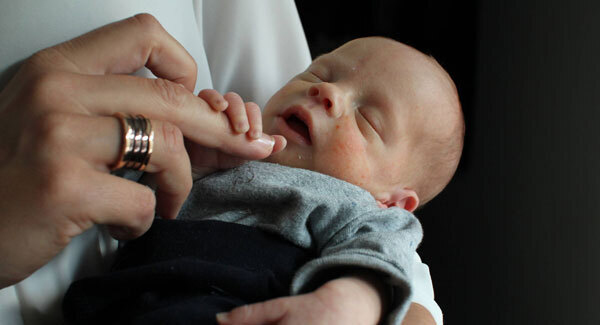
Britain is to trial a human research series that will allow women to receive a donor uterus and ultimately have children, writes Catherine Shanahan.
Womb transplantation offers hope to women who wish to get pregnant

WE’VE all seen it on TV: Transplant surgery that’s dramatic, complex and tense; flesh carved to the sound of Beethoven’s electrifying 5th; scalpel and clamps passed like love notes to the hospital’s hottest doctor.

On screen, it’s a world of glamour. Off screen, there’s no razzle-dazzle.

Transplant surgery is a life-and-death matter, including for the recipients of 266 vital organ transplants in Ireland last year.

This millennium has also seen the first reproductive organ transplants, including a penis in China, removed 15 days later because of severe psychological trauma for recipient and spouse.

In Missouri, doctors carried out the first ovary transplant involving twin sisters. The recipient, Susanne Butscher, gave birth a year later.

The first attempted uterus transplant took place in 2000 in Saudi Arabia.

However, the uterus, from a living donor, had to be removed 99 days later after the recipient experienced heavy blood clotting.

In 2011, doctors in Turkey transplanted the womb of a deceased donor into a 21-year-old woman born without a uterus. She subsequently became pregnant, but miscarried six weeks later.

Malin Stenberg receiving a womb transplant in 2014.

Finally, in 2014, came a breakthrough: Malin Stenberg, a 36-year-old Swedish woman, born with healthy ovaries but no womb, gave birth to a healthy baby boy after a close family friend, 61-year-old Ewa Rosen, donated her uterus.

This year, the possibility of womb transplant moved closer to these shores, thanks to the pioneering work of J Richard Smith, consultant gynaecological surgeon at the Imperial College London.

Mr Smith addressed a conference in Cork earlier this year in relation to fertility-sparing surgery.

In fact, his early research in this area led to the invention of a procedure that meant women with a certain form of cervical cancer could go on to have a baby.

“It was called abdominal radical trachelectomy and it meant that a woman who had cervical cancer could have the cervix removed and the uterus stitched back onto the vagina and still be able to have a baby.

“It was invented by myself and American Giuseppe del Priore and a Hungarian called Lazlo Unger. It’s an accepted procedure, worldwide, 20 years later,” says Mr Smith.

J Richard Smith, consultant gynaecological surgeon at the West London Gynaecological Cancer Centre, Queen Charlotte’s & Chelsea Hospital, Imperial College London with his daughter Victoria.

His research moved onto the area of womb transplant, a procedure he and his team conducted successfully on a number of animal models.

They have now reached the stage where all they need is official sign-off by NHS Blood and Transplant to begin their human research series.

They’ve already received ethical approval for 10 transplants and Mr Smith says his own feeling is that work will commence next January.

In the past few years, Mr Smith says they were approached by “many hundreds” of women, the majority of whom have Mayer- Rokitansky-Küster-Hauser (MRKH) syndrome — born without a womb — who expressed interest in his research series.

The remainder, approximately 10%, underwent a hysterectomy as a result of a cancer diagnosis, or have Asherman’s Syndrome, where the uterus is sealed over and doesn’t function anymore.

“So, there is a mixture of things, but the vast majority are MRKH,” says Mr Smith.

The number has now been whittled down to 103, but final selection will not take place until after sign-off. The whittling saw a questionnaire given to potential candidates, who were advised that those who already had children were precluded, as was anyone under the age of 24.

“The reason we’ve done that is because many of the women that we see, they are in their 30s and this is their only chance of having children,” says Mr Smith.

To be eligible, you must be an NHS-eligible patient, ie a public patient.

Mr Smith says the procedures will be performed on a cost-neutral basis to the health service “because we have a charity, Womb Transplant UK, which is designed to pay the costs of the transplants”.

The cost, at £50,000 (€59,000) is “quite a lot cheaper” than heart, lung, kidney, or liver transplants, because the amount of immuno-suppressive therapy required afterwards is finite, says Mr Smith.

“With other forms of transplant, it’s not the cost of the operation alone. It’s the cost of the ongoing immune-suppressive therapy, but in this case, the therapy is only going to be until a woman has one or two babies [the maximum permitted] and then she will have a completion hysterectomy, so she won’t need the therapy anymore,” says Mr Smith.

Mr Smith’s research series is expected to take four years in total: Two to recruit the patients and give them their new uterus; a year of observation; then embryo transfer [involving traditional IVF], nine months of pregnancy; then birth.

Six months after the baby is delivered, the women will have a choice: One more baby or a completion hysterectomy.

A number of successes with a similar programme in Sweden have boosted interest in the British series.

Mr Smith said both teams worked in tandem until about four years ago, when the Swedish group moved ahead.

There are no sour grapes he says “because we are trying to do something different”.

While the Swedish programme involves living donors, the British series is cadaveric.

“So why are we going this route? If we use live donation, the live donor is having a bigger operation than the woman receiving the transplant. The operations to retrieve the uterus in the Swedish series range from six to 11 hours.

"The donors are altruistic donors and there is nothing unethical about this at all — it’s a perfectly reasonable thing to do — but they are at risk of major surgical complications,” says Mr Smith.

The cadavers in the British series will be heart-beating and brain-dead, with Mr Smith saying they are “young women who are in intensive care units, maybe following a road traffic accident, who have been diagnosed as brain dead, but are still heart-beating, so that the organ retrieval process is the same as with live donors.”

The Swedish programme, led by Professor Mats Brönnström, University of Gothenburg, has had reasonable success and involves nine women.

Mr Smith says while one woman had a hysterectomy for sepsis and another for thrombosis within three months of transplant, four have had babies, a fifth is trying for a second baby, one got pregnant, miscarried, and is trying again, and another is yet to try to get pregnant.

So beyond Britain and Sweden, are there opportunities for women living elsewhere?

Mr Smith says there are “a couple of centres in America. The French are trying to get up and going. The Spanish, too. The Belgians have a programme. The Australians have — everyone is trying to get galvanised”.

And for Irish women born without a uterus ?

“From the point of view of our programme, you have to be NHS eligible, which means women in Northern Ireland are. But, four years from now, if our series is successful, things may open out,” says Mr Smith.

Feelgood asked the Health Service Executive (HSE) if womb transplant was a procedure a woman could apply for under the Treatment Abroad Scheme (TAS), given it is not available here.

In response, the HSE said eligibility under the TAS “is specific to proven treatments, which are provided for under current health legislation”.

The HSE confirmed no Irish person had applied for this treatment, to date.

Dr Moya McMenamin, a consultant in reproductive medicine and gynaecologist at Cork University Maternity Hospital and Cork Fertility Centre, said an estimated 150 women of reproductive age (20-40 years) in Ireland have no uterus and others may lose it through cancer or haemorrhage at time of delivery, with a devastating impact on fertility.

She said, to date, the reproductive options for these women “included childlessness, adoption, or surrogacy” (for which there is no legislation in Ireland).

Against this backdrop, Dr McMenamin said: “Obviously the trials in uterine transplantation offer hope to these women, who ultimately wish to carry a pregnancy themselves.”

However, despite the Swedish successes, Dr McMenamin said the surgery was “still regarded as experimental, very expensive, and carries a high morbidity for both donor and recipient in terms of peri-operative risk, infection risk, and risk of organ rejection”.

Dr McMenamin does not think it likely that uterine transplantation will become available in Ireland due to our small population.

In any event, she feels surgery this complex should be carried out in specialist centres with high throughput of cases to ensure the best surgical outcomes.

Dr McMenamin said her suggestion was that women of reproductive age without a uterus “either congenitally or through medical intervention” should seek advice from a specialist in reproductive medicine to explore their options.

“They may be suitable candidates for uterine transplantation and can be referred onwards by their fertility doctor,” she said.

THE STATS

Who can a womb transplant help?

The procedure is an option for the 3% to 5% of women who have uterine factor infertility. These women may have suffered irreversible uterine damage or had their uterus removed or they were born without the organ, a condition called Mayer-Rokitansky-KĂĽster-Hauser syndrome, which affects about one in 4,500 newborn girls.

What are the risks?

One of the primary concerns is rejection, which occurs when the recipient’s immune system attacks the foreign tissue that’s implanted.

Does it matter how old the donor is?

No, as long as the uterus is not diseased.

* For more information see www.wombtransplantuk.org

x

More in this section

Cookie Policy Privacy Policy Brand Safety FAQ Help Contact Us Terms and Conditions

© Examiner Echo Group Limited










