FIRST THOUGHTS: Family that symbolised Civil War division
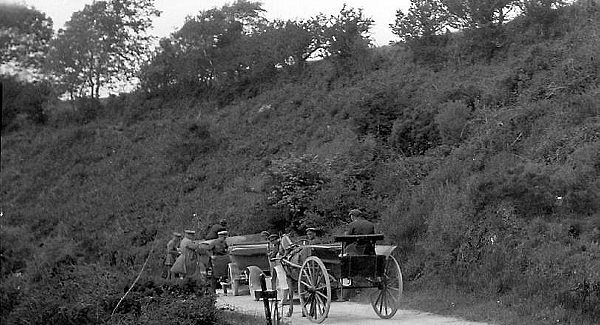
The first of those incidents was the role of Tom Hales in organising the ambush at Béal na Bláth in which Michael Collins in August 1922.
Although the ambush had been set up to attack Collins, it was called off after it was assumed that he had returned to Cork City by a different route.
When the Free State convoy arrived on the scene, the first shots fired were just a warning for the remaining Republicans at the scene.
Those involved in the ambush had no idea that they killed Michael Collins.

“They knew that had killed an officer of very high rank with one of the last shots fired but they had no idea who that office was,” Tom Hales recalled.
The second incident involving the Hales, little over three months later, was the assassination of Tom’s brother, Seán, in Dublin.
He was a Dáil deputy who was supposedly targeted for supporting the Special Powers legislation making the possession of a gun a capital offence.
Although Seán Hales did support the Free State regime, he was not in the Dáil on the day the legislation was passed.
He was targeted anyway by the Republicans.
The Free State government retaliated on December 8, 1922, the day of his inquest.
Four prominent prisoners, one from each province — Rory O’Connor, Liam Mellows, Joe McKelvey, and Richard Barrett — were executed in Mountjoy Jail as an official reprisal.
The Civil War divided not only the country but also communities, friends and even families.
Kevin O’Higgins, the Minister for Justice, was widely blamed for the executions of December 8, but he only went along reluctantly. O’Connor, one of those executed, had been the best man at O’Higgins’s wedding little over a year earlier.
“One of these men was a friend of mine,’’ O’Higgins told the Dáil next day and burst into tears.
The Hales family came to symbolise the division of the Civil war, because the brothers were on both sides of the conflict, which turned even more nasty than the war with the Black and Tans.
The Hales were active going back to 1916. Three of the brothers were interned in Frongoch after the Easter Rebellion. Although 12 years younger than Seán Hales, his brother Tom was the officer commanding the local brigade which grew from 24 men in 1916 to almost a thousand during the War of Independence.
Tom Hales and Pat Harte were taken prisoners and tortured by the Black and Tans, who pulled out Tom’s nails with pincers. Harte suffered a mental breakdown.
Hales had an account of their ill-treatment smuggled out to Michael Collins.
“I was with Collins when he received the message,” Piaras Beaslaí recalled. “He was beside himself with rage and pity, and, as he told me afterwards, could not sleep that night for thinking of it.”
The whole episode was something “that no civilised nation can let pass unchallenged,” Collins wrote.
It was therefore ironic that Tom Hales later organised the ambush in which Collins was killed.
Although Seán Hales was shot by the Republicans during the Civil war, there is some absurd contradictory speculation that they had “not intended to shoot Hales at the time”.
According to the author, “the intention was only to wound him”.
He does not explain how they intended to wound him without shooting him.
In addition there is the suggestion that Free State elements may have targeted him because he was demanding a full investigation into Collins’s death.















