Rehearsal for Murder director Roy Marsden on why murder mysteries still endure
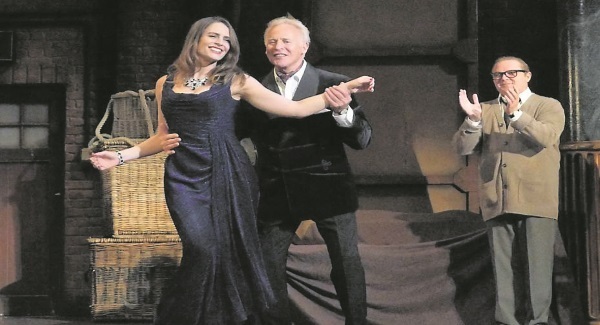
WHAT is it about Agatha Christie? Born when Victoria was on the throne, died more than 40 years ago, chronicler par excellence of past manners and past standards, her books are always in print, she holds the Guinness record for the best-selling novelist of all time, and always draws the crowds to her plays.
“Believe me, if I could pin down the essential germ of her genius, I’d have made my own fortune years ago,” grins Christie-theatre-expert Roy Marsden, who directs Rehearsal for Murder, opening at Dublin’s Bord Gáis Energy Theatre next Monday.
As an actor, Marsden will be familiar to TV viewers as PD James’ Inspector Adam Dalgleish, a character he played for 15 years, but directing has long been his first love. In 2010, he directed A Daughter’s a Daughter by Agatha Christie (written under the name of Mary Westmacott) at the Trafalgar Theatre, and reopened the Repertory Theatre in New Orleans after the disaster with a new version of Macbeth. He was the artistic director of the Mermaid Theatre and continues to be a director of the Bruvvers Theatre Company, Newcastle, but putting drama onstage, especially crime thrillers, has long been a passion of his, and most of all those of Dame Agatha.

Even the Christie well has to run dry eventually, though, so what do you do then? Well if you’re practical, you work out from that successful base, and create a TV series with characters made famous by the original writer.
That’s what the American team, Levinson and Link did, with the hugely popular Murder She Wrote, starring Angela Lansbury as Miss Marple. Then they penned Rehearsal for Murder, totally in the Christie style, and that is the one which Marsden is now directing for one of the UK’s biggest theatre producers, Bill Kenwright.
Following his success with the Agatha Christie Theatre Company, Kenwright created The Classic Thriller Theatre Company and chose Rehearsal for Murder as its very first production.
The plot? It’s one of those marvellous play-within-a-play-within-a-play scenarios. A writer is devastated when his leading lady (and fiancée) apparently commits suicide after opening night. On the first anniversary of her death, he gathers the cast and crew from that ill-fated evening in the very same theatre, ostensibly to read a new play he is working on, a mystery in which a famous actress is killed.
As the reading progresses, the scenes seem to the cast to be uncomfortably close to actual events. Pure Christie, and Marsden knew he was on to something good. A real thriller should always observe the unities laid down by Aristotle: time, place, and action. Hold your characters in one location, concentrate on one theme, let the story progress in actual time. It never fails to grip.
“Of course changes needed to be made,” explains Marsden.
“Levinson and Link naturally set it on Broadway, with all that New York atmosphere and background. I wanted to bring it very much back into the world of Christie with which we’re familiar here, with English ways and mannerisms and those slightly old-fashioned ways of behaving that make her plays so irresistible.”
And, as always, the audience will be wondering constantly who could have done it, and, more importantly, why. The motive is always what you’re searching for in a classic thriller, which is why it appeals to true theatregoers so much. You don’t get blood and gore onstage (try the Royal Shakespeare or prime-time TV for that), you get psychological drama.
“Agatha Christie is not lightweight, she appeals to the sensibilities, and that is what we have brought to Rehearsal for Murder.”












