Why images of perfect post-baby bodies are not what new mums need
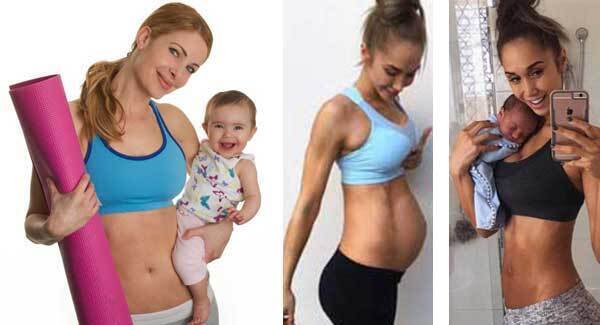
THESE days, it’s hard to log on to Facebook, Twitter or Instagram without seeing a string of women celebrating their baby weight loss by posting weekly selfies.
From women who continue to keep up their Cross Fit training at nine months pregnant, to those who document their weight loss via photomontage, social media is a veritable shaming ground for those who prefer to relax with a packet of chocolate biscuits while breastfeeding.
Instagram in particular, is rife with women who are documenting their journey back to their pre-baby weight, with some extreme results.
Earlier this year, fitness model Chontel Duncan garnered headlines around the world as she documented her rock hard abs at 39 weeks pregnant via Instagram.
The former Miss Universe Australia finalist wrote that she had started her pregnancy at 73kg and added 14.5kg to her frame during the following nine months, much of which she attributed to water weight in the last few weeks.

Just 11 days after giving birth to her son via caesarean section, she was back at her pre-baby weight.
Search #byebyebabyweight on Instagram, and it brings up over 22,000 posts. There is no question that business of baby weight, and losing it — is booming.
Steph Sinnott, a fitness instructor and mum of two based in Dublin, founded Baby Body Fit in 2010 with the aim of helping women get through the maternity cycle while maintaining a level of fitness and staying healthy.
Baby Body Fit has expanded to include classes in Cork and Galway, proving that demand for post-partum fitness classes is on the rise.
Sinnott believes that the pressure on women to lose weight after pregnancy is immense.

“Women need to remember that weight loss is gradual. There is no quick fix and no magic cure,” she says.
“Following a healthy lifestyle has to be something that can be applied to real life, and a very restricted diet and hardcore training regime is just not realistic for most mothers.”
She points to Instagram in particular as a huge problem in the postpartum fitness arena.
“The trends we see across social media really influence people.
"The explosion of people documenting their baby weight-loss on Instagram means that people who don’t necessarily have adequate training are finding themselves in a very influential position.”
Sinnott believes that to achieve fitness in a sustainable way, it is important to work with a qualified trainer.
“Instagram can be an excellent motivational tool,” she says.
“But particularly during the postpartum period, it is essential to consult with trained experts when it comes to exercise.”
For example, Sinnott trained in pre and postnatal exercise techniques from the National Training Centre and the American College of Exercise, considered to be a world leader in the field.
“There are so many issues that can affect a woman in the postpartum stages, like diastasis recti, where the abdominal muscles split, or weakened pelvic floor muscles, that have to be approached with caution.”

Without professional supervision, from health and fitness professionals, a woman can end up doing serious damage to her body.
“I recommend that women wait until they are six weeks after a normal delivery or 10 weeks post section to begin an exercise routine, and I apply that rule to my postnatal exercise classes,” she says.
“Women who are breastfeeding still have the relaxin hor mone in their bodies, so it’s very easy to pull a muscle.
"It’s a great idea to start walking soon after a normal delivery, but essential to wait until your body has had time to recover before attempting anything more strenuous.”
Dr Giles Warrington, senior lecturer in sport and exercise physiology at DCU, says the expectations put on women via social media are worrying: “During pregnancy, there is going to be a period of de-training.
"Even if you were very physically active prior to pregnancy, you’re not going to be able to maintain the same activity levels during the pregnancy, particularly during the later stages.”

Gentle exercise soon after a normal delivery is fine, he says, but all exercise and diet changes should be made with the consultation of your doctor.
This slow-and-steady approach is very different to what’s presented by the self-styled post-pregnancy fitness experts.
“I am a scientist, and every finding that I make is rooted in data. A lot of these people [online] are promoting something that has no data or facts to back it up, and that is putting unrealistic pressure on women.”
Warrington says that exercising in the postpartum months has lots of benefits and should be promoted, but that the key is slow progress.
“Exercise programmes should be introduced gradually and progressively but current scientific evidence suggests that in the absence of medical complications such activities have not been shown to have any adverse effects.
"Specifically, aerobic activities and pelvic floor exercises should form part of a balanced exercise programme.”

Tracey Quinn, a mum from Dublin who blogs at Love Of Living ( http://love-of-living.blogspot.ie ) knows how hard it can be to bounce back after pregnancy.
In the year following the birth of her son, she found herself battling weight gain, and as he turned one, she knew that it was finally time to change.
Ten months ago, she joined her local Slimming World and has lost 47lbs.
“It sounds dramatic but I feel comfortable in my own skin and it has attracted so many other positives in my life too.
“I now work for Channel Mum making YouTube videos as well as writing content for Family Friendly HQ Website. I also have my own blog and write for Easy Parenting Magazine.”
Did she feel under pressure to keep up with the super-fit new mums on social media?
“There are lots of beauty and fashion bloggers who are naturally very slim,” she says.
“They may have genuinely just bounced back to their old figure in a matter of weeks.
"These are the photos that set the standard and it is the reason why ordinary girls feel as though they are doing something wrong. The reality is that most women struggle to lose the baby weight.”

Steph Sinnott knows that in order for women to be successful in their journey towards fitness, it needs to be a realistic regime.
“Like me, my clients at Baby Body Fit exercise so that they can have a glass of wine at the weekend and not feel guilty about it.
"There are a lot of so-called fitness gurus putting meals up on Instagram at the moment and it’s just a dry grilled chicken breast — and I don’t want to live like that. Neither do my clients.
“Mums want to have a normal lifestyle, who can look good, feel good about themselves but still live their lives.”
Sinnott will be launching an online fitness course in the coming months for mothers who want to follow a fitness regime, but can’t commit to going to a gym.
“The idea is you can work out along to our home routines, with your baby beside you, and follow our healthy eating meal plans.
“The workout routines are broken down into sections for mums who have had a normal delivery six to 10 weeks ago, mums who have had a C-section 10-16 weeks ago, and then plans progress with you as your baby grows and you become fitter and stronger.”
This concept fits in well with Sinnott’s core belief that in order for a healthy lifestyle to be sustainable, it has to fit in with the busy lives of today’s mothers.
Giles Warrington agrees.
“The pressure on women today is unrealistic. The science of weight loss has not changed. Follow a healthy lifestyle and exercise regime and you will achieve weight loss that will last.”
A celebrity mum who has ‘bounced back’ a few weeks after giving birth more than likely has professional support and time to work out on a daily basis, says Sinnott.
More important is knowing your body.
“Use social media as a motivator, but inform yourself about your own body,” she says.
“Respect the fact that you have just given birth, take it slowly, and most importantly, follow the advice of your healthcare professionals before proceeding with any kind of strenuous exercise regime.”
7 benefits of postnatal exercise:
* Restores muscle strength to your body.
* Raises energy levels and promotes wellbeing.
* Helps weight loss.
* Enhances stamina levels.
* Promotes a healthy mind with the release of endorphins.
* Conditions abdominal muscles.
* Releases stress.














