Smooth return for Britpop legends Suede
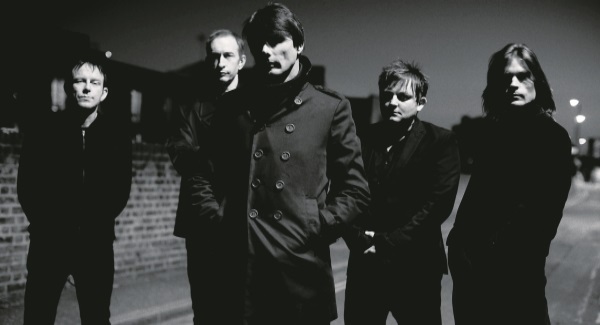
Suede were neither the biggest nor most notorious Britpop band. They did, however, leave arguably the richest musical legacy. With hits such as 1993’s Animal Nitrate, the Londoners pressed reset on UK guitar music, restoring a movement thoroughly defenestrated by the American grunge invasion.
Moreover, their songs conveyed a glitteringly delinquent world view, singer Brett Anderson chronicling life in the gutter even as he gazed at the stars.
“It was our first time doing everything – our first time travelling, our first time with any money. Naturally you go nuts,” recalls bassist Mat Osman. “It’s basically like being on an art-themed stag weekend for 18 months at a time.”
“Did it get dark? A little. But it is one of the great ways to spend your days – I’d recommend everyone try it at some point. There’s nothing quite like swooping into town with 20 or so of your friends and having people cheer you for doing it. Yeah there’s a downside. Working in an office has a downside too.”
A new chapter was opened in the Suede story in 2010 as they returned from a seven-year hiatus. The group had initially reconvened for a one-off charity gig in London. But they were surprised to find the old chemistry endured and have recorded two new albums, most recently this year’s dark and ruminative ‘Night Thoughts’.
“We were taking baby-steps,” says Osman, speaking ahead of a greatly-anticipated Galway Arts Festival show next week. “We had no idea whether the first gig was going to be a one-off. But we were enjoying it and thought, well there’s no point being in a band unless you are writing. Bands are like sharks – they have to keep moving or they die.”
They got there in the end but initially coming up with new material was a chore.
“It’s so seductive,” says Osman, who, since Suede finished for the first time, moved into publishing and journalism. “You come back and you’re playing 20 of the best songs you have written in your entire life. People are glad to see you. You think, ‘oh well, we’ll just write 10 more songs like that - everything will be fine.” “But it gets hard and harder. That first record we did after coming back, we really difficult – we almost gave up. It was as hard a record as we’re ever made. Of course it should be — making a record ought to be hard work.”
Suede’s rise was one of the more meteoric in British music. In the early 90s,the London rock press still had it in its gift to make or break new artists and, in achieving the April 1992 cover of the Melody Maker before having even released their first single, Suede were an instant sensation.
“The best new band in Britain” proclaimed the Melody Maker headline – and that was just the beginning of the hyperbole. Twelve months later they were on the front of Select, soon to become Britpop’s in-house newsletter, under a headline that screamed “Yanks Go Home!”.
Suede were appalled at the jingoism.
“That was nothing to do with me. Select didn’t come to me and say, we want to do a photograph of you in front of a Union Jack,” Anderson told me in 2011. “If they had I’d have told them to fuck off probably. I had no desire to become a nationalist pin-up. You could do a lot with Photoshop, even in 1993.
“Historically you can see the first Suede album as also the first Britpop album. We initiated it. And I was kind of offered this thing – ‘do you want to wave a Union Jack and pretend to be this boring Carry On Figure, going on about corduroy trousers and fish and chips and stuff like that?’ That never appealed to me. “
“It’s true that a lot of people probably read about us before they saw us,” says Osman of the early hype. “But we’d spent years being bloody awful with nobody paying any attention. All these other bands were getting lots of exposure and we weren’t. It was frustrating. So the whole thing didn’t feel overnight for us. Whereas nowadays bands are exposed overnight, which I’m not sure does them any good.”
With success came pressure and, weeks after the release of their 1994 masterpiece ‘Dog Man Star’, the departure of guitarist Bernard Butler. He’s stayed away ever since and the present line-up includes his replacement guitar Richard Oakes. Though Butler’s departure was obviously a blow – an existential crisis in fact – in the long term there’s a sense that it was probably for the best. When he exited, the internal dynamic within Suede became more straightforward.
“To be honest, since Bernard, we’ve not really had any drama, “says Osman.”One of the things that made it easy to get back together was that we hadn’t split because we weren’t getting on. We split because we weren’t making very good music. It wasn’t as if we needed separate studios.” As cocky young men, Suede sang about sex, love, the frustrations of youth. In their late forties, how do they tap those same energies?
“The funny thing is that even the early songs were about the big universal things,” says Osman. “Love, loss, paranoia – anyone who thinks you get to your forties and don’t go through those extreme emotions is in for a big shock.” On Night Thoughts, especially, the group delve into the dark side of adulthood.
“Brett said he wanted to write an album about being a father,” says Osman. “My heart sank a bit. When musicians write about having kids, the results tend not to be very good. He managed to wring the fear and paranoia that results from the pressure of being a parent. Trust him to unearth the dread that comes with huge responsibility.”
- Night Thoughts is out now. Suede play Galway International Arts Festival Saturday July 23

CONNECT WITH US TODAY



Be the first to know the latest news and updates

















