How young girls can fight back against everyday sexism
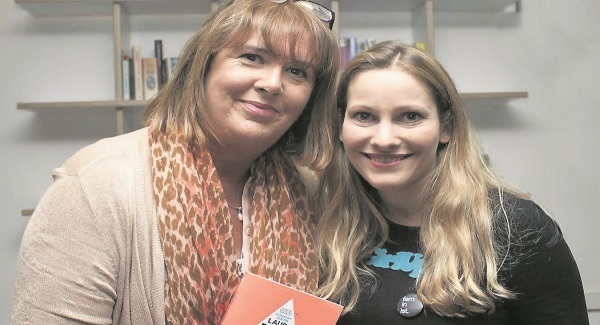
Laura Bates is the founder of the Everyday Sexism Project, a website which logs womenâs experiences of everyday sexism in order to illustrate that sexism is alive and well (everydaysexism.com) and she has just written her second book, Girl Up.
Although I didnât know it, Girl Up is the book that I have been waiting for. It is a manifesto, an instruction book, and a call to arms for our girls and young women. But it is also vital reading for parents of teenagers especially girls.
However, be warned, this book will make you angry, because Laura knows what she is talking about when it comes to the sexist bullshit that girls have to put up with today. Girl Up is a wake-up call to recognise the normalisation of sexism which renders it invisible and insidious. But the bookâs brilliance lies in the fact that Bates also offers practical tools that girls can use effectively to counter the said bullshit.
Laura was in Ireland recently on her book tour and, having read the book, I was very keen to have a word with her.
I began by asking her about female role models â something that I have often thought seem to be in short supply today. In the chapter Donât be Shy, Aim High, Laura lists lots of examples of âkickass womenâ, most of whom I hadnât heard of, except for Malala Yousafzai, who is also the only one my teenage daughters had heard of. So are we short of positive female role models?
âI think that if we are, itâs not the fault of women and girls not being out there doing stuff; its more the fault of what gets covered in the mediaâ says Laura. âI do think that the media still highlights women based on their looks in a depressing two dimensional way.â
Bates goes on to recount seeing a spread in a newspaper just before the last Olympics where male athletes were photographed in the heat of action and were asked about their chosen sport. The female athletes were put in ball gowns and asked about pre-race beauty regimes. âSo even when we have incredible role models, the media has a tendency to reduce them to their looks, which is so frustrating. There are lots of role models out there for young women and I hope I will introduce them to more through this book.â
One of the greatest bars to gender equality must be the appalling lack of womenâs voices and womenâs stories on our broadcast media. Latest research in Ireland showed that 72% of the voices we hear on air are male. And even when panels include women, they get far less time than the men. So, I was interested to read that Laura says women âare trained not to use our voicesâ and note that she makes that an active statement â not that we arenât being trained to use our voices but that we are trained NOT to.
So how do we change that? Should public speaking be mandatory in all girlâs schools? âI think it would help because when girls do get involved in debating, especially on the university circuit, they are certainly outnumbered.â
Laura tells me about an Everyday Sexism entry from a girl who was studying âA Levelâ politics and on a debating team with two boys. During a competition that she had prepared really hard for, while she was in the middle of delivering her speech, her teacher interrupted and asked the boys âare you going to let the woman do all the talking?â
âSo I think we send the message that these arenas, whether politics or student debating, are a manâs world. We teach girls that it is acceptable to be compliant, quiet, gentle, sweet, kind, and persuasive, and we teach boys that itâs impressive and manly for them to be strong and aggressive.â
Laura also finds the argument that more women in politics would get rid of the Punch-and-Judy style of politics very maddening.
She says she understands where the argument comes from and certainly understands the desire to get away from that kind of politics, but also baulks at the suggestion that women are naturally conciliatory and have a softer style.
She says: âI think there are probably men who would be great at that style but who are dissuaded out of arguing and debating in that way because they get the message too that itâs not manly and therefore not the thing to do.â
Girl Up explores so many of the issues facing our girls today, from body confidence to porn to social media. What, I wonder, is the single biggest challenge facing our girls?
Laura is very clear that all of these issues are related, intrinsically linked. They are all part of the problem of sexism. However, she does say the normalisation of sexism against women is the most dangerous thing of all.
âNormalisation of online porn suggesting that its normal for women to be crying and hurting during sex, the normalisation of a media sending a message that itâs OK to ask a girl what she was wearing when she was raped. The normalisation of reducing our female politicians to their breasts and their clothes. The normalisation of all of these things is so that we donât stop to think about them.â
She continues: âI think itâs really true of body image as well. Girls donât sit there thinking, âI am my body; I need to be really thin because the world will judge me on my thinness.â Itâs so normalised that the conversation is internalised. They just completely believe it because we present them with this from such a young age.â
Girl Up is a timely, well written, funny, straight-talking, practical guide for girls today.
My copy is now with my daughters but I am glad that I read it too because sometimes even an old feminist like me misses some of the insidious ways in which the world undermines both me and my daughters. Laura Bates has shone a bright light for all of us.
SOME OTHER FEMINIST BOOKS TO READ:














