Sugarhill Gang defined the hip hop genre
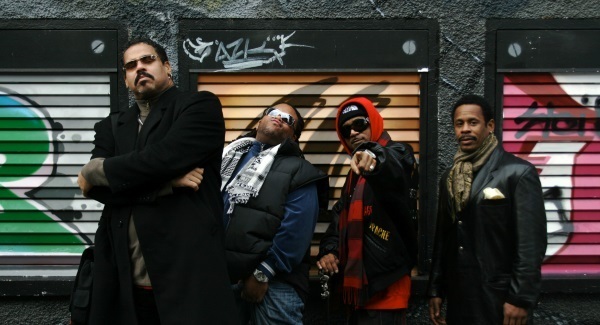
KANYE West experienced a rare and presumably disorientating moment of humility when he bumped into iconic rap troupe the Sugarhill Gang backstage at a festival several years ago. He pulled the trio aside and confessed his life-long fandom. Then he started bowing.
âHe gave us the upmost compliments,â says Henry Williams, aka rhymer Hendogg. âHe was like, âI know who you guys are â much respect, itâs truly a privilege.ââ
The Sugarhill Gang hear that a lot. In 1979, they introduced the then-nascent genre of hip hop to the mainstream with their single âRapperâs Delightâ, three minutes and 55 seconds of beats and word-play that changed music forever.
âYouâve got to remember that back then hip hop hadnât really gotten out of New York, much less overseas,â says Williams.
âThe first time we played the song back [Sugarhill Gang founder member] Wonder Mike thought it was going to be a hit. Master G [the third of the crew] thought it would be a local hit â just around New York.
âWhen I first heard it I knew it was special. We had no idea it would become the phenomenon it did. You have to understand that rap at that time only existed in New York. It was in the basement parties and in the clubs out in the park. â
The Sugarhill Gang didnât invent rap. From Englewood, New Jersey, they were one step removed from the crucible of hip hop, in the South Bronx. However, they went where none of their predecessors had gone by cracking the Billboard 100, selling eight million copies of âRapperâs Delightâ (which cheekily lifted the break from Chicâs âGood Timesâ).
Thus they introduced rap to America and, eventually, the world (at the height of its popularity, the single was moving 25,000 units per day). Indeed, even the etymology of the scene flows from âRapperâs Delightâ, with the term âhip hopâ derived from the opening verse: âI said a hip, hop, the hippie, the hippie...â
However, success, which may have seemed preordained in hindsight, had not come easily. The recordâs producer Sylvia Robinson â early hip hopâs very own Simon Cowell â shopped âRapperâs Delightâ to every label in Manhattan . They all turned her down (perhaps put off by the initial 14 minutes run time), so she put it out herself.
âShe doesnât get enough credit,â says Williams, last to join the group. âShe put the idea out there and everyone told her she was crazy. They said nobody would be interested in someone talking rhythmically on top of music â which is how they referred to rap back then. They thought it would never work. Without her energy none of it would have happened. She pushed and pushed. Really, it was down to her.â
Robinsonâs contribution went beyond merely establishing a record label. A veteran disco producer,she had discovered hip hop at a birthday party in Harlem and was immediately convinced it was the future (âA spirit said to me, âPut a concept like that on a record and it will be the biggest thing you ever hadâ.â)
To that end, she assembled the Sugarhill Gang boy-band style, recruiting three local rappers from her native Englewood (who had never previous met and were employed in odd jobs around the town). With the single a success, they were put to work touring â though, as no other rap groups were on the road at that time, this presented its own challenges. Audiences loved what they heard. Yet bookers, venue owners, even other artists, were leery. Nobody took rap seriously as an art form. It was assumed to be a passing trend, musicâs answer to hula hoops or space hoppers.
âEveryone thought it was a fad,â says Williams. âThere was no blue-print. We were sent out with blues singers, rânâb acts, country acts. George Clinton was good to us. But it was tough on a lot of those artists and on us too. Many of them didnât respect us â they couldnât understand rap and they couldnât accept it. They thought it was here today and would be gone tomorrow.
âNo one new it would become the phenomenon it is today. Itâs in everything, the shoes we wear, the cars we drive, the language we use. It has become world culture. You name it.â
âRapperâs Delightâ has stood the test of time, too. âA couple of years ago it was inducted into the Library of Congress. A million years from now, after weâve all passed on, someone will be able to go to the Library of Congress, pull up âRapperâs Delightâ and listen to it.â
The band werenât necessarily beloved by fellow rappers. Many in Bronx and Harlem dismissed them as carpet-baggers who had repackaged the music of the street for a mass audience. Their biggest challenge, though, came as it emerged they did not have the rights to the Sugarhill Gang name and were required to tour as Rapperâs Delight.
However, in 2015 they were able to reclaim the moniker following the death of Joey Robinson Jr, son of Sylvia and, as owner of Sugarhill Records, legal custodian of the name. âWe kept pushing and pushing,â says Williams. âTo be able to get our name back was truly a blessing.â
The Sugarhill Gang are unashamedly romantic about late 1970sâ New York. True, the city was violent, bankrupt and seemingly ungovernable. However, it crackled with artistic energy â a creative spark they would like to think they have channeled into their music.
âIt was really exciting,â says Williams. âWhat you have to remember was that back then, New York was the trend setter for America. If something happened in New York then it was the hip thing to do. Where New York led everywhere else followed.â















