Theatre review - Driving Miss Daisy at the Gaiety, Dublin
The Hollywood adaptation of the Alfred Uhry’s 1988 play could have remained a well-liked, harmless little movie. Instead, it is best remembered as the blandest film ever to win a Best Picture Oscar.
But one thing the film did have was a strong sense of time and place, and, indeed, of time passing.
This, it turns out, is easier achieved on the movie screen than on the stage of a big old Victorian theatre; in this case, the Gaiety, where a production directed by John P Kelly is currently running.
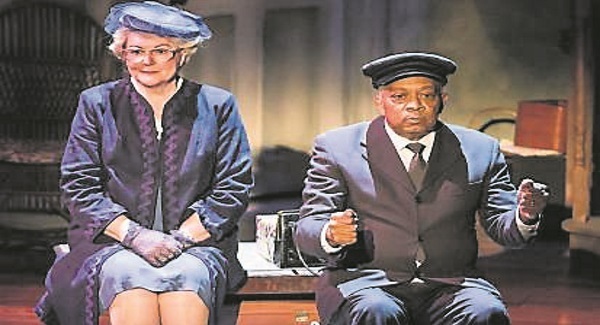
Although the play takes us across 25 years, from the late 1940s to the mid-1970s, the civil rights movement is barely perceptible, even when Martin Luther King is directly mentioned. Instead, the play is mostly a compact two-hander, charting the relationship of the titular Daisy Werthan (Gwen Taylor), an ageing Georgia Jew, and Hoke (Ernest Perry Jr), the driver hired by her son Boolie (Simon Delaney) after she crashes her car.
Almost too fleeting in its 90-minute running time, the play is made feel slighter still by the brevity of its scenes, each a sketch confined to displaying one aspect of the central relationship: here tetchiness, there sadness; here suspicion, there friendship and the solidarity of outsiders (Daisy is Jewish after all).
Hoke is a tricky proposition: veering very close to the caricature of the bluff, dignified black southerner. And he hollers, or as Uhry would have him say, hollas, his lines out.
But Perry Jr’s display is warm and funny. Delaney is assured and energetic, even if the accent constricts his vocal range somewhat. Taylor, meanwhile, convinces as a woman struggling to come to terms with ageing and its loss of control and autonomy.
It all comes straight from a peculiarly American school of unchallenging sentimentality, one that allows audiences indulge the fiction that things are so much better now. Perhaps that explains its popularity.
CONNECT WITH US TODAY



Be the first to know the latest news and updates

















