Birthday boy David Attenborough is still the king of wildlife
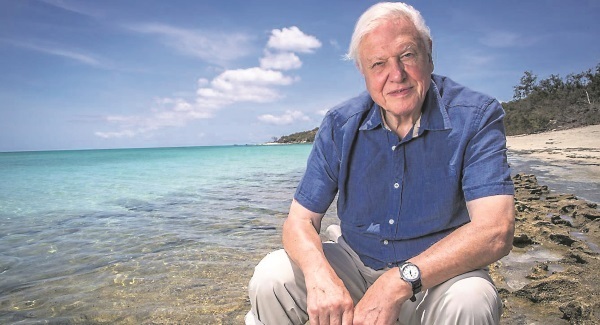
EACHING the grand old age of 90 is a huge milestone by anyone’s standards but when you’re David Attenborough, the celebrations and encomiums are on a different level.
Words such as legendary, renowned, and iconic abound in the tributes to the broadcaster and naturalist pouring in from around the world ahead of his landmark birthday this Sunday.
His influence has been far-reaching, and he has served as an inspiration to a huge number of people working in the field of nature and wildlife broadcasting today.
One of those people is Irish wildlife broadcaster Colin Stafford-Johnson, who has worked on several productions with Attenborough and credits him with changing the course of his life.
“He is the reason I left college and went travelling around the world. I was doing science in Maynooth and one evening I was sitting in a pub there, I was 19, and I was watching The Living Planet; I think it was 1984. I suddenly thought ‘What am I doing, sitting here on a bar stool, I have no reason to be here.’ I literally made up my mind there and then to leave college.

“It was the best thing I ever did — nothing against Maynooth, it just wasn’t right for me. I just wanted to travel the world really — that is what he inspired me to do.”
For Stafford-Johnson to then work with Attenborough was a huge privilege. “It was great years later to go out and make films and have him narrate them. I spent a lot of time out in the field as a cameraman filming material; then when his voice goes on it, it gives it an air of authenticity. He is such a trusted voice that everyone listens to him. His voice is so familiar, the more you are exposed to it, the more you come to trust him.”
DULCET TONES
For biologist and wildlife expert Eanna Ní Lamhna, Attenborough’s dulcet tones are key to his appeal.
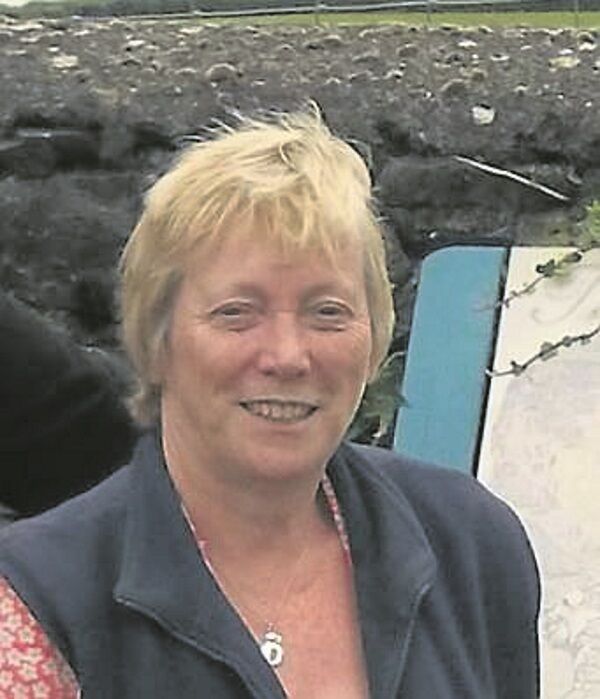
“I love the way he gets breathless with enthusiasm. He has such awe and wonder in his voice, he can really communicate his passion. He could be standing on a ladder in his back garden and he would make it sound wonderful.”
Ní Lamhna had the pleasure of meeting Attenborough on another auspicious occasion.
“I met him on his 80th birthday; he came into the [RTÉ] studio for an interview for Mooney Goes Wild and it was absolutely marvellous to get to speak to the man himself. He is one of my big heroes. He was hugely influential in making wildlife interesting to the world at large. He wasn’t a presenter the way other people would be, reading a script or whatever, he really knew zoology. He actually discovered things that people didn’t know before.”
Like many others, it was Attenborough’s groundbreaking television series Life on Earth which made an indelible impression on Stafford-Johnson.
“No natural history programme made today has anything like the buzz that series had; it was an absolute game-changer. It told an extraordinary story about the evolution of life and people who would never have thought about things like that before had that coming into their living rooms.
“That was a really special thing which will never be surpassed.”
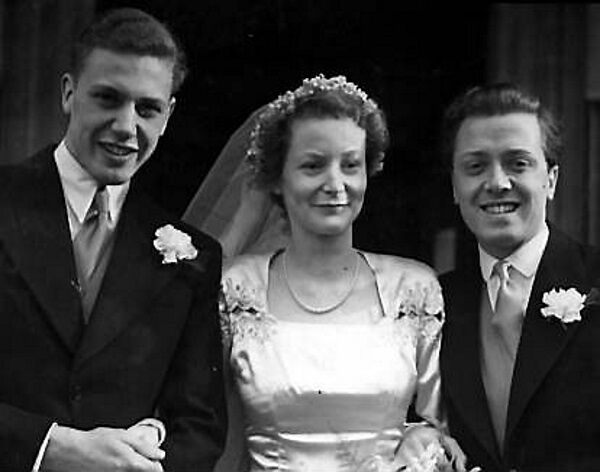
Life on Earth was also hugely significant for John Murray of Crossing the Line films, which has been responsible for award-winning wildlife productions such as Broken Tail and The Secret Life of the Shannon. He went on to study zoology and became a wildlife cameraman and director.
“I remember when Life on Earth came out, it was event viewing. Obviously today, with the multitude of channels, that doesn’t happen any more. It was extraordinary for the scientific/natural history approach it took. He had a massive influence on me and the people we work with internationally and in Ireland.”
MENTORING ROLE
Stafford-Johnson also points to Attenborough’s role as a mentor and patron to people working in the wildlife broadcasting industry.
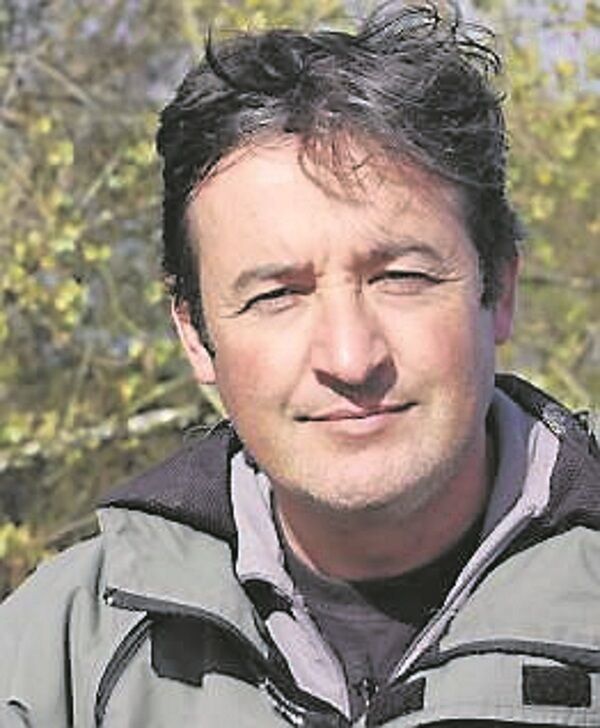
“I know one of the reasons he is still in the industry is that he knows he has got so many people into it that he feels a sense of responsibility to keep people in work. If you go to the BBC natural history unit and you talk to people, so many of them were inspired by him. He knows if he attaches his name to a project, there is more work for people who have worked with him over the years. He is endlessly hard-working, curious and creative, he’s not someone who rests on his laurels, and maybe that is why he is in such good health at the age of 90.”
One of the classic moments cited by Attenborough fans is in Life on Earth when he encounters some mountain gorillas in Rwanda who begin to groom and play with him. While the ‘aww’ factor in this encounter is significant, Ní Lamhna points to it more as an example of Attenborough’s courage.
“That wasn’t choreographed; the gorillas just went up to him. It was very brave of him, as gorillas are huge creatures and extremely strong. There was no second take, he just did it. The cameraman couldn’t have saved him if something did go wrong.”
Ní Lamhna said the Mooney Goes Wild team pondered some profound questions with Attenborough when he visited.
“We asked him about all that he had seen and how it related to his view of a maker. He said what he had seen made it hard for him to believe; that he didn’t believe any just God could create a parasite that lived in the eyes of children and made them blind.
“We asked him about going back to places and seeing the impact of climate change. He said he could see all the devastation and removal of habitat. He said when there were fewer cameras and technology, it was easier to find wildlife. He has travelled the world hundreds of times over and been everywhere from the Arctic to the bottom of the sea to the tops of the mountains. You’d think he was dead now the way we are talking about him but it’s lovely to hear all the tributes.”
IMPOSSIBLE TO BEAT
According to John Murray, it would be nigh on impossible for anyone to match up to Attenborough as a standard-bearer for wildlife programming.
“For many people now, the natural world is not to be taken seriously, it’s seen as a place where Bear Grylls runs around chopping the heads off snakes and things. Attenborough is an intelligent, thoughtful man, he is not an adrenaline junkie running around after bears. When he is passionate, you take him seriously. It is massively important today because we are literally at an end game — we are devastating the planet we live on and wiping out the other animals that live with us on it.”
For Stafford-Johnson, it doesn’t make sense to even talk of a replacement for the man.
“You don’t really succeed someone like David Attenborough; other people come along. There are other great presenters out there, but he has his own style and that incredible longevity.
“You don’t replace someone like that, and I wouldn’t think of it in those terms. Of course there will never be another David Attenborough.”
MAGIC MOMENTS
Filmed almost 40 years ago in Rwanda, Attenborough lies alongside a huge male silverback gorilla, as two infants attempt to remove his shoes. In his memoirs, Attenborough described it as “one of the most exciting encounters of my life”.
Almost 40 years after he first dived in the Great Barrier Reef, an 89-year-old Attenborough showed he was still up for an adventure, returning to plunge 1,000ft beneath the sea in a tiny submarine, coming face to face with a curious green turtle on a night dive.
“It’s one animal that I don’t need sneak up upon,” intones Attenborough in his inimitable style as he climbs a tree to deliver a gentle ‘boo’ to an unimpressed-looking sloth.
A male capercaillie gets frisky with Attenborough in the pine forests of Scotland, knocking the laughing presenter off his feet as the bird defends his breeding ground.
Attenborough sits next to a female orangutan washing socks on a pontoon in Borneo as if it’s the most natural thing in the world; he then watches in awe as another female does a spot of DIY, sawing through a plank of wood while cradling an infant.
CONNECT WITH US TODAY



Be the first to know the latest news and updates

















