Bees! A Musical is a fun experience for children with a serious message
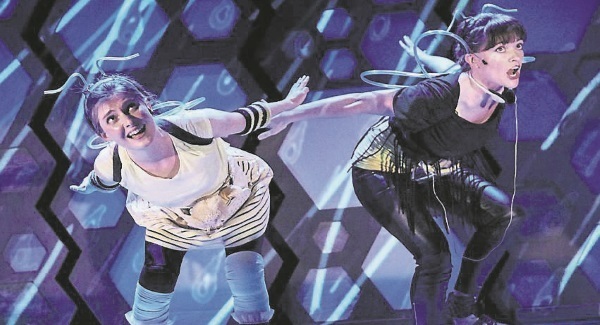
MOTOWN flowers, a reggae bumblebee, and a solitary bee influenced by Portishead: Bees! A Musical is creative childrenâs theatre that comes with a serious message about the plight of Irish bees.
The All-Ireland Pollinator Plan was launched last year in light of research that shows that over a third of Irish bee species are at risk of extinction. This year a companion programme aimed at children has been launched to coincide with a month-long run of WillFredd Theatre Companyâs at The Ark childrenâs theatre in Temple Bar, Dublin.
Bridging the gap between arts and sciences, WillFredd Theatreâs methods uniquely positioned them to take on the challenge of making this particular piece of educational theatre for children. They specialise in working with interest groups; other projects have seen them work with palliative care workers, the deaf community, and racehorse trainers.
WillFreddâs co-director Sophie Motley directed Bees, which is aimed at children over six. âWhen we work with people we spend a long time getting to know what they do and why and how they do it; often that really understanding the science behind it. Our ethos is that the work needs to be factually accurate,â she said.
Motley had been aware of the plight of pollinators since working with an urban beekeeper for another WillFredd production, , and was keen to team up with entomologists for a project on bees. âItâs a big issue, but once you get into rehearsal you canât think about the issue because itâs all about the characters and the songs. It has to be great fun and allow a seven-year-old to understand something as complex as the science behind pollination, so I suppose we had a bit of a challenge.â
âWe were funded by the Science Foundation Ireland and by the Wellcome Trust. That was really important for us as artists because it meant we really had to connect with the science.â
Motley and scriptwriter Mark Doherty worked closely with scientific advisers, including Professor Jane Stout, a Trinity College botanist with a special interest in pollinators.
Lovely audiences today for the first performances for the 2016 run of #BEES A Musical. More 2mrw & all mid-term! pic.twitter.com/g761zOWDAc
— The Ark Dublin (@TheArkDublin) February 13, 2016
Bringing the bee story to fruition while remaining scientifically accurate was not without its moments of hilarity: âI had a really funny conversation with Mark where he had phoned up Jane Stout to ask her if it was feasible for a seagull to pee on a bee in mid-flight. She said itâs not impossible, so from my point of view as a theatre-maker itâs allowed; itâs in!â
Prof Stout says thereâs no doubt about Irelandâs pollinator crisis and, as a botanist, sheâs keen to emphasise the effect on the human food-chain. âBees and other pollinating insects are essential to the production of some crops,â she says. âThink of things like apples and strawberries that we grow in Ireland; without pollinators you simply donât get any yield.â
Professor Stout saw when it was staged at Dublin Theatre Festival last September, and was very impressed with WillFreddâs interpretation of her field of study. âIt was absolutely brilliant,â she says. âI was grinning from ear to ear all the way through. I nit-picked at the script all along, but itâs incredibly scientifically accurate, which is really pleasing for a bee nerd like me.â
Sophie Motley hopes her audience of children, like pollinators themselves, will spread the conservation message of the musical into their schools and homes. With a capacity of 4,000 seats over the course of the month-long run at The Ark, the showâs message, as well as the packets of pollinator-friendly seeds handed out at the end of the performance, have the potential to spread far.
âThe performance is a catalyst for the dissemination of knowledge,â Motley says. âIâm so proud of it; I think itâs the most important thing that WillFredd have done. Hopefully weâre leaving something tangible behind that will continue to affect the lives of children and the lives of pollinators for the future.â














