Forget low-carb, gluten-free diets, praise the loaf and celebrate National Bread Week
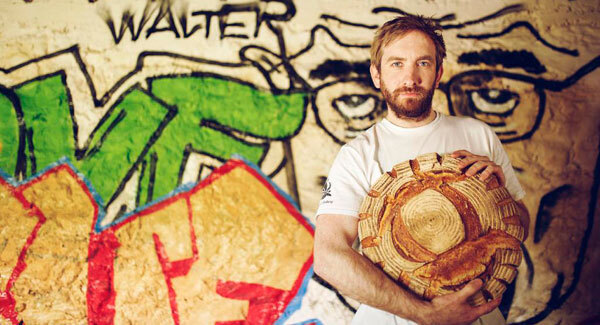
According to an amateur social theorist of my acquaintance, the reason supermarkets flogged so many bread machines during the Celtic Tiger was not to satisfy the homemaking whims of a time-starved nation but because nothing sells a house like the smell of fresh baked bread, the enticing aromas triggering associations with âhomeâ in potential purchasers.
Supermarkets have long tapped into breadâs olfactory potential, sometimes even piping baking smells around the store.
All entirely plausible, for our relationship with bread is quite primal; it has been one of mankindâs staple foods for millennia, the staff of life itself, and itâs a rare bird who fails to be seduced by the crunch of a fresh crust, the delicious yeasty aromas of a warm loaf.
This month saw another National Bread Week come and go, a promotional campaign by Irelandâs mainstream baking industry, yet there is a growing body of baking professionals and consumers concerned that, over the last half-century, we have fundamentally changed the nature of a product hitherto unaltered for almost its entire 10,000-year history.
Last January, six of Irelandâs foremost craft bakers gathered in Kilkenny for the inaugural meeting of a new organisation, Real Bread Ireland (RBI); nine months later, there are over 30 professional baker members throughout the 32 counties.
âThere has been a great movement in Irish food over the last couple of decades,â says Patrick Ryan (Firehouse Bakery), ânew restaurants and chefs and a whole new respect for Irish produce but bread didnât evolve at the same pace.
"The standard in this country is still very low, possibly because of the quality of what weâve been subjected to. Like most people, I came to real bread relatively late in life â we all grew up with pre-sliced loaves.â
As RBI first attempted to define âreal breadâ, they were absolutely clear it was not what is known in the trade as âplant breadâ, made using the Chorleywood Bread Process (CBP) and accounting for over 70% of bread sold in Ireland each year.
CBP was devised in 1961 by the British Baking Industries Research Association, in Chorleywood, as a means of making bread using lower-protein wheat, an assortment of additives, and high-speed mixing.
It is the predominant method used today in Britain, Ireland and Australia by the larger manufacturers, enabling a sliced pan to be created from scratch in just over 100 minutes.
Smaller manufacturers employ a similar range of additives and a process called âactivated dough developmentâ; even those ârusticâ breads from the supermarket in-house bakeries derive from that type of process.

âPre-sliced fluffy white loaves that stay soft and âfreshâ for two or three weeks,â says Patrick, âare very far removed from a real loaf of bread.
âIt can be made in an impressively short time, but with about eight times as much yeast as required in a loaf of real bread and it will have additives, dough conditioners, improvers, processing aids (enzymes) which you donât even have to label.â
The process can use so much salt that an individual serving of sliced pan from one of Irelandâs most popular brands was found last year to contain more salt than a packet of crisps.
âThey will argue, that it is nutritionally sound,â says Patrick, âbut they are not talking about bioavailability [nutrition actually available to the system after consumption].
"They pick and choose the info they share. We would like to change that, to share all the information, so people can make their own informed choice, bakers and consumers alike.â
âPlant bread killed the small bakeries, none could compete,â says Declan Ryan (Arbutus Bread), âEverything we do is finished by hand. I have seven bakers; plant bakeries with 20 times my turnover have maybe one or two.â

âWhat we define as âreal breadâ is very simple,â says Patrick, âflour, water, just a pinch of salt and yeast; either bakerâs yeast or wild yeast through natural fermentation.â There is also one other essential ingredient â time.
âAs bread is allowed to prove or ferment,â explains Patrick, âthe protein bonds break down.
"The longer it is allowed to ferment, the more flavour it has and the easier it is to digest. I recently did a demo of three different breads â white sourdough, ciabatta and rustic.
âThey all contained flour, water, yeast or natural fermentation, and salt. The one ingredient that differed was time. Very simply, industrial bakers are trying to speed things up, weâre trying to slow things down.â
The recent rise of genuine artisan/craft bakers in Ireland has introduced the sourdough loaf to the Irish palate.
Produced using naturally occurring lactobacilli and yeasts, it is how bread was made for thousands of years until the introduction of processed yeast in the 19th century.
It begins with the creation of a starter: essentially, water and flour left in a warm place, allowing natural yeasts to grow and is kept alive by regular further âfeedingâ with flour and water.
To make a loaf, a portion of starter is used just as you would use yeast. A starter can theoretically survive forever: Declan Ryanâs Arbutus starter is nearing its 20th birthday but apparently one in the renowned Boudin bakery, in San Francisco, dates back to 1849.

It is the lactic acid, courtesy of the lactobacilli, that gives the bread that faint âsourâ tang. French bakers brought the tradition to America and it sustained many a miner during the California Gold Rush, guarding precious starters inside clothing, next to skin, to protect them from severe winter cold.
Despite its popularity in Ireland, there is a certain perception that âsourdoughâ equals âelitistâ, rather ironic when you consider it was often the only food available to the poor over thousands of years.
It is this perception that inspired Joe Fitzmauriceâs (Riot Rye) âCommon Loafâ, a simple-to-follow recipe for a starter and a âno-kneadingâ bread perfect for even the cheapest oven.
âI really believe as a food producer,â says Joe, âwe have a responsibility to the people who eat our food. Food should not just be a conduit for making money and profit.
"Food is essential for life. People can do it themselves but if we take on that responsibility, we have a duty and those who donât think like that often make bad bread.â
Former BBC Foreign Service Producer Andrew Whitley opened his own artisan bakery in 1976, producing sourdough bread.
His seminal tome, Bread Matters: The State of Modern Bread and a Definitive Guide to Making Your Own (2006) was described as âso revelatory, so shocking, it is likely to change the industryâ and he is co-founder of the British Real Bread Campaign, the inspiration for Real Bread Ireland.
âIâm old enough to pre-date plant bread,â says Andrew, âAt home we would have eaten my motherâs wholemeal bread and I probably tasted white bread from a packet for the first time in someone elseâs house; it was more like a treat but a diet of things which one might regard as treats cease to be treats and donât do you much good if theyâre eaten all the time. â
When Whitley first opened his bakery, he had âhundreds, if not moreâ customers telling him they were no longer able to eat shop-bought bread in Britain yet had no reaction when they tried country bread in France.
Upon returning to Britain, supposedly authentic baguettes made with French flour caused them to âblow up like balloons.
It didnât appear to be the flour or the yeast but something the French bakers did and the British didnât, or vice versaâ.
Whitleyâs investigations led him to conclude heâd found the âperfect stormâ: additives, a change in wheat varieties used and, crucially, fermentation time; or, rather, the lack of it.
Take fermentation time down to zero and the proteins [gluten] in the flour are not broken down.
They become insoluble and create havoc in the lower intestine and in some cases trigger an auto-immune response, where the system begins attacking itself rather than digesting.
âBread is now being made in a form that is much more indigestible than it used to be. We have only been eating wheat for about 10,000 years and people with coeliac disease are casualties of our imperfect ability to digest wheat. We can mask that by fermenting our bread slowly and properly over many hours.
âScientific research in Italy on clinically diagnosed coeliacs has shown if you ferment a bread containing wheat long enough, using the right mix of lactic acid bacteria, then you can get rid of all the toxic proteins that trigger the coeliac response.
âThey had no reaction at all after eating the bread with wheat flour. It was very impressive. This wasnât some trendy bakery but serious scientists conducting a serious scientific test.â
According to the Irish Medical Times, Ireland has the highest rate of coeliac disease in the world but before any sufferers race out to try sourdough, a word of warning: âAnother problem,â says Andrew, âis the industry jumping on the bandwagon, buying dried sourdough powder and adding it to plant breads without undertaking the fermentation.â
Traditional Irish soda bread also uses zero fermentation, only rising courtesy of a chemical, sodium bicarbonate (bread soda). All RBI members at the original meeting were agreed it did not fit their definition of âreal breadâ yet all bar Joe Fitzmaurice still bake it.
They do it because so many customers demand it and RBI members operate commercial enterprises relying on customer support for continued existence.
This intersection of pragmatism and principle reveal RBIâs core ethos: a demand for absolute transparency and that members be completely upfront about their ingredients and baking processes.
âRBI is not looking to pick a row or a fight,â says Patrick, âitâs very important that we donât preach. Itâs about raising standards across the board.
âIf there are small bakers out there who donât make what we would define as âreal breadâ but would like to, then weâd love to help them rather than give out about them.
âAnd with complete transparency, consumers can make a fully-informed choice â if that means continuing to eat plant bread if they want, thatâs fine by us. We want to educate and to encourage more home baking. And if that begins with making soda bread, fine, thatâs a first step.
âWe want to raise the standard of bread-baking, generally.â















