When the game is controlling you
Swimming with dolphins is typically viewed as a serene method of being at one with nature, sharing time and space with a smiley, bottle nosed mammal. Itâs joyful and thrilling. Except, not always.
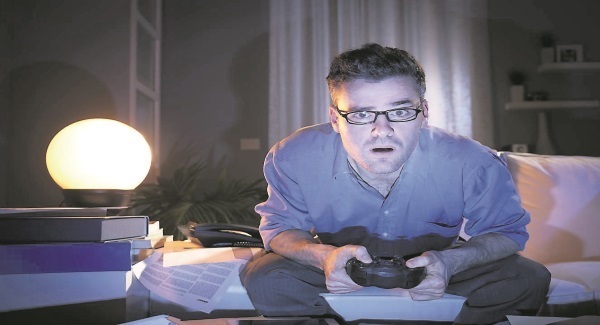
Alright - my dolphin experience isnât quite of the Jacques Cousteau variety. Instead, it was via interminable, thumb-numbing sessions on my Sega Megadrive as I tried and repeatedly failed to finish Ecco the Dolphin, an action-adventure game that often pushed my adolescent blood pressure through the roof. As a relatively mild-mannered teenager more interested in football, music and being routinely ignored by any girls I fancied, the maddening, addictive quality of gaming brought with it the realisation that maybe this wasnât a good relationship. When, in blundering on the penultimate stage of the game for the umpteenth time, I plucked the cartridge from the console and actually starting shouting at it, I realised that I needed to step away.
In a new book, Death By Video Game, author Simon Parkin explores the darker recesses of the gaming world and, as the title suggests, those sad and bewildering cases where the act of the playing the games themselves, often in expansive virtual worlds, push the playersâ real life mortality too far.
Parkin is a longtime gamer and an erudite writer; there are unlikely to be too many books written about computer games that weave both Vladamir Nabakov and Al Qaeda into the narrative, but then, the worlds of gaming have become an alternative universe in themselves.
Video games are the youngest of the dominant cultural strands in the world today, newer than music, novels and cinema, and yet the level of public scorn and distrust thrown in its direction easily outstrips that of the others. When stories reach us of Taiwanese players collapsing and dying in dimly-lit internet cafes having spent the previous hours playing games, they seem strangely familiar.
Take the case of Chen Rong Yu, who died in early 2012 having played League of Legends for 23 hours. âWhen the paramedics lifted Rong Yu from his chair, his rictus hands remained in place, as if clawed atop an invisible mouse and keyboard,â Parkin writes. Yet the case was not unique, as he lists others that have occurred, typically in South East Asia. One man in Taipei had allegedly played a game for five days straight. However, Parkin makes some inquiries and finds that in Chenâs case, he had a recent history of cardiac trouble. A medic also tells him that the are multiple possible factors in these âvideo game deathsâ.
Much of the book simply explores what makes video games so addictive. Parkin writes of âchronoslipâ, where time elides so the player barely notices as the hours churn by. As he explains, gaming is unique because of its participatory aspect. With a book or film, you are the observer, but here you are the player - something which has both positive and negative effects.
Then there is the sheer mind-boggling array and expanse of what is available in the gaming universe. Games are both an escape from reality and a different method of expressing reality. As someone who hasnât picked up a controller on a regular basis for 20 years, I was surprised to learn of the breakthrough lesbian kiss in The Sims, for example, or that there is a game called That Dragon, Cancer, in which the battle for a young life affected by the disease is rendered with heartbreaking detail. One journalist who spent time in Syria designed a roleplaying game called 1,000 Days In Syria because he felt it could more accurately portray what he witnessed in the wartorn nation than he could with reportage.
And then thereâs the bad stuff. It seems computer games have been anchored in violence since the very beginning, but its image wasnât helped when it emerged Anders Behring Breivik, the man behind the 2011 Oslo massacre, had been repeatedly playing Modern Warfare II as a âtrainingâ tool. The two students behind the Columbine massacre were also gamers, and intriguingly, one man designed a historically accurate game called Super Columbine Massacre 2005 as he wanted people to confront what Eric Harris and Dylan Klebold had done in their Colorado school. It received huge negative publicity, yet its creator asks, with some validity, why should a computer game not have the same right to explore an issue as a book or a film?
Hysteria never seems to be too far from the surface when it comes to gaming, alongside fresh controversy. There have been many attempts to control the use of video games, and yet the facts are sometimes skewed. Following the 2012 Sandy Hook killings in America the brother of gunman Adam Lanza was initially wrongly identified on social media as the possible perpetrator. People noticed he had liked a game called Mass Effect. Within hours the gameâs creators were being bombarded with angry messages.
Parkin probably sums it up when he writes that the jury is out on whether games improve or imperil the world. Or maybe Nintendo has the right idea, with its on screen message: âwhy not take a break?â
Games are both an escape from reality and a different method of expressing reality














