VIDEO: Lure of the sea sees non-sailors take part in yacht competition
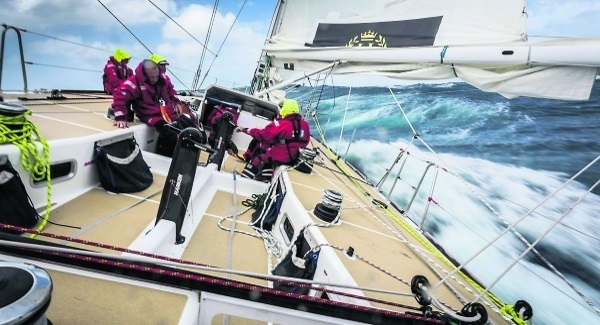
"IT WAS like being the surfer in the Old Spice ad, when the huge wave curls over you, except this time it was curling over our yacht. It was the only time I really thought: ‘I’m gone... and I have a crew down below... and it’s my responsibility.’”
Della Parsons is at the venerable Royal Cork Yachting Club (RCYC) in her role as a recruiter for the Clipper Round the World Yacht Race.
She is recalling her time as circumnavigator in the 2009-10 race, traversing the Pacific and being at the helm with 80ft waves looming all around like massive cloaks. Up went the yacht, climbing vertiginous walls of thundering water, plummeting down the other side. Over and over again, until one wave hit from the side, turning the yacht so it was skimming horizontally across the wave, hence the Old Spice reference.
“With all my strength, I managed to turn it around, but to say it was scary...”
Parsons was talking off-script following her presentation to those who had come to the RCYC on the back of an interest in sailing around the world with strangers for a year.
That’s not to say she is in any way secretive about the perils that will be faced. After all, as much as 40% of those who take part in Clipper Race are novices or have no sailing experience.
In fact, some South African participants this year had never even seen the sea until they arrived in the UK for training. They are among a group of 10 youths selected from across the country and funded by a charity, the Sapinda Rainbow Foundation. The plan is that the race will equip them with skills and experiences that they can bring to bear in their communities.
Parsons stresses that it is the overcoming of such challenges — physical, mental and emotional — that will remain carved in the memories of participants. Far more so than the navigation of perfect seas.
It’s easy to see why the race could be on your bucket list if you have the cash but participants can be put off for the strangest reasons.
“One guy had everything required to be an excellent participant. Unfortunately, he could not face going to the toilet in such close quarters, so he pulled out in the middle of training.”
On Sunday, August 30, however, almost 700 brave adventurers will parade under London’s Tower Bridge in their gleaming vessels, before heading south across the Atlantic for three weeks. They will race via the Doldrums to a carnival welcome in Rio de Janeiro, before crossing east to Cape Town, then Western Australia, through the Southern Ocean to Sydney, Vietnam, China, Seattle, Panama, New York, Derry, the Netherlands and back to the UK.
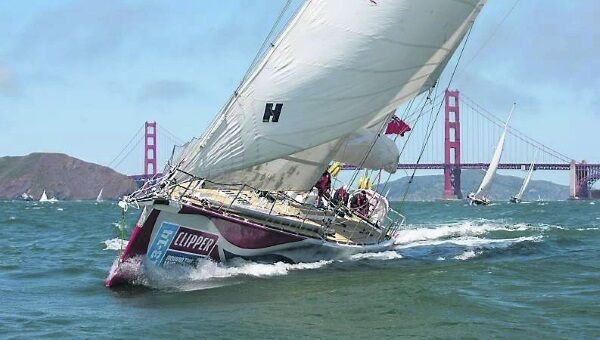
Now in its 19th year, the Clipper Race was founded by legendary sailor Sir Robin Knox-Johnston, the first man to sail single-handedly and non-stop around the world in 1968/9. Twelve 70ft yachts will each cover 40,000 miles by the time the race finishes 11 months later. It is comprised of eight legs and participants can opt to undertake the full experience, or any number of legs. The cost of the full race, including training, is just under €71,000 for the year. The unique challenge brings a range of people, from chief executives to taxi drivers, nurses and firemen, farmers, airline pilots and students, face-to-face with Mother Nature and age is no barrier: The oldest competitor to date was an amazing 73 years, while the youngest was 18.
The route is split into a series of races and points are awarded for each race in descending order of arrival. The team with the highest cumulative points wins the Clipper Race trophy.
Among those setting sail is 30-year-old Robert Ryan from Blackrock in Cork City, where €6million was generated for the economy when the race visited Cork during an eight-day carnival in 2010.
Robert joked that his decision to join the Clipper Race was “an early mid-life crisis”.
“I suppose it did take some time for me to decide to do something like this. I have always done the right thing. My family were big on education, go to college, get a job. The past few years have been difficult during the recession, so I couldn’t put my career on hold, so I’m ticking a number of boxes here, with travel, but mostly it’s the sailing. I love it,” said Robert, who will crew on the Derry-Londonderry-Doire Clipper, the third time the city is represented in the biennial event in which each yacht is sponsored by a company, city, region or country and is led by a professional skipper..
An engineer, Robert is saying goodbye to a job with Arup Consultancy after eight years and saw it as an opportunity to do something memorable: “The furthest I’ve been in my life is south to the Canaries, east to Turkey and west to Canada”
“For me, it’s about being tight with the crew. Having the banter. The thrills and spills of sailing. The warm welcome when we arrive at a destination. I did two summers on the work crew of the Jeannie Johnson. These were some of the happiest days of my life, so I’m looking forward to this.”
There was never a question, but that he would do the full race.
“If you are going to do something, you might as well do it right. My fear, is that if I did one leg, I would have wanted to go on and it would have been a missed opportunity,” said Robert, who has sailed on the Asgard II and joined the Naval reserves.
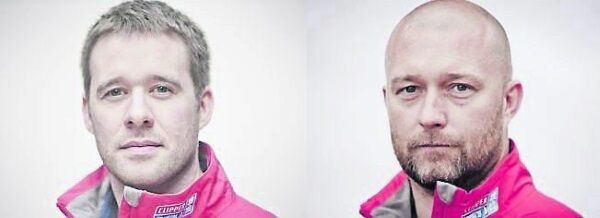
He agrees he is competitive, but with a level-keel personality, which was tested during training for the Clipper Race.
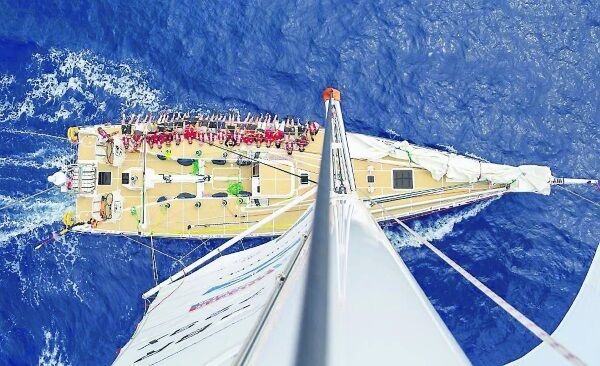
“We had a bit of excitement on level four of training, when we had a spinnaker wrap around the forestay, the cable that holds up the mast. I had to go up to the top of the mast, 95ft. The Jeannie Johnson experience came in handy. The boat is pitching and tossing and you could fall and end up swinging and bashing around like a pendulum. Then again, if you’re the cook, for example, you could burn yourself in the galley with boiling water in high seas. It’s all about managing the risk,” said Robert, who has been designated as the bosun “I do everything from the deck up. Winches, ropes. It’s all about preparedeness, spotting problems before they happen... small things that could develop into a something big for want of an early stitch.”
He has a girlfriend in Dublin and expects to still have one in a year’s time.
“She was absolutely delighted when I told her,” he joked. “No, actually, she’s okay with it. This wouldn’t be her thing. She’s going to join me in Sydney and New York. It’s a good excuse for her to do a bit of shopping.”
With good reason, he’s feeling a degree of anxiety as the start approaches.
“I know that I’m doing something that’s medium risk. We had a guy in training who needed stitches on his head and a girl who broke two ribs. You realise that these things happen, you just hope it’s not you, but, if it is, that it’s minor and will heal.”
“This, really, is my great escape. It’s not about self-promotion and saying: ‘Look at what I’ve done.’ It’s my opportunity to travel the world and indulge my love of sailing, before going back to reality.”
Robert, like all prospective sailors was interviewed after applying for a place. A certain level of fitness is required, but teamwork and technique in handling the yacht are just as important as brute strength. Yachts are stripped down, no luxuries, and the emphasis is on being a team player, someone who is tolerant, forgiving, understanding and supportive. Since its inception, 3,300 participants have achieved this and joining them this year is a former UFC fighter, a 68-year-old American woman, a British woman with no sailing experience, who typed the word “challenge” into Google, a mother and daughter, who will race against each other, sailors from the Lebanon and India, and an entry from Switzerland, which has no coast.
Food is crucial, as participants burn up to 5,000 calories per day. It also plays a vital part in raising morale. As such, when you have just £3.50 to spend per head, per day, those on what’s termed Mother Watch have to be creative. Porridge seems to be popular: In the 2013/14 race, each team consumed approximately 80kg of it.
More people have climbed Everest than have circumnavigated the globe and Kerryman Diarmuid O’Donovan can’t wait to join this elite group.
The 44-year-old, also an engineer, has been allocated the job of caring for the sails.
“I’ll have to learn to sew and use a machine, but that’s not a problem,” says Diarmuid, basically summing up the attitude of participants that any challenge needs to be faced up to.
For Diarmuid, who has also been allocated the ‘tough’ job of dealing with the media for the yacht, the race is the realisation of a life-long dream.
“When you’re younger, you think crossing an ocean would be great; as you get older your horizons expand a bit.
“I’ve been sailing since I was a teen from my home of Tarbert in north Kerry. These days, I often sail on Lough Erne in Enniskillen, Co Fermanagh, and also in Kerry, on smaller boats, 24 to 34ft.
“The race is a viable way for an amateur to sail in a competitive fashion on a round-the-world racing yacht. There’s no other way. Plus, it’s a great way to see the world.
“I originally thought I would do five legs, but as time became available I kept adding more legs,” says Diarmuid, who’s not on a mission to find himself, his primary motivation being more prosaic in that he wants to learn how to handle the massive forces of sailing an ocean-class vessel.
“It’s all about the sailing. I’ve been hanging around water since I was a kid. This is the next progression. I guess it’s the natural thing to do.
“The Clipper training is really good. When the boats get bigger, the forces multiply greatly. The big-boat understanding is very important. Clipper impart enough knowledge to progress you to being ready to sail around the world.
“I’m always up for a challenge and through work I would travel, but all my sailing is racing over weekends, half a week. This is an extremely long-version of what I would typically do in terms of sailing,” said Diarmuid, who admits to a liking for being first across the line.
“I’m certainly competitive, though it’s not the be all and end all. I would like to think I’m calm enough, I will tell you in a year’s time,” jokes Diarmuid.
He doesn’t flinch when asked if fear will feature.“For sure, I will be afraid at times. “It’s something that I won’t have experienced, but these are well-built, well-travelled boats. It’s about getting used to the environment and getting on with it.
“ They say the Southern Ocean is a place all sailors should go, with its 20-metre seas. That will stick in the memory; the funny moments too”.
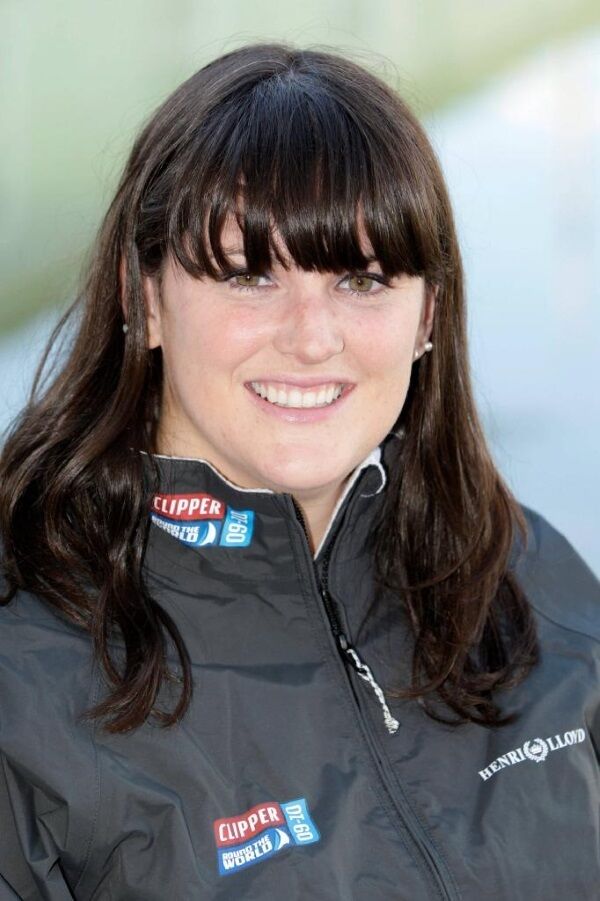
Sarah Boyle, from Blackrock, Cork, took part in five legs of the Clipper Race in 2009/10 and said it certainly lived up to its billing.
“I was paying it off for a long time, but it was worth every penny. I would have been a quiet person, but this made me more confident. When I came back, I had no problem being part of a team, and leading a team. I discovered things about myself, such as that I can handle stress, and work well with other people. I actually enjoy high-pressure situations and that I can be independent,” said the 33-year-old.
Handling stress proved invaluable, as Sarah was on the Cork Clipper that ran aground in the Java Sea in 2010. It was the race’s first loss of a boat in 14 years and more than 2,000,000 miles of racing. Sarah stresses, though, that the crew’s training ensured they were well prepared to handle the crisis.
“I was terrified, initially. It happened in the middle of the night, so we were totally blind. I had done all the sea survival training, so I was prepared as much as you can be for something like that. All I felt was a bang and we knew we had hit something. We were going fast, so it was very sudden, but no one was hurt. We had done hours and hours of emergency training, so we all knew just to follow any instructions we were given.
“We ran into a tiny uncharted reef 400 miles out from shore,” said Sarah. “At sea, you cannot see anything at night that is not lit up. No radar, GPS, etc, will warn you. Initially, we thought we’d hit a shipping container, because there were no rocks in that area, but when we were stuck and not sinking, we knew we had hit something bigger. Until daylight, we didn’t know for sure. At the time it happened, one of the lights from a competitor boat was within sight, so we always knew it was not a serious emergency, because they were so close by. The hardest part was just sitting waiting for daylight, because they couldn’t come and get us, as no one could see what we’d hit. After that, we went into their boat and spent the next few days getting to shore. That was about it, really.”
After running aground, the crew were distributed around the other yachts until they reached Panama, where they received a new yacht. Sarah was allocated a berth on the Australian yacht, which was an eye-opener.
“Among the Irish, it was more about the experience, but the Aussies were more about winning. I got to see where they were coming from and went along with it.”
While a low-point, Sarah firmly believes the bad days are an integral part of the experience, when you learn to dig deep. Also, they put the highs in perspective.
“Some days, sure, I was miserable and asked myself what was I doing here, but I would not have changed a minute of the experience. It was the best thing I have done and, when you are sitting on deck chatting with the others at the equator, with dolphins passing by and a huge ray breaking the waves... it’s amazing,” said Sarah, who keeps in touch on Facebook with former crewmates.
On a 70-foot boat, there is no room for separate cabins. Men and women live bunk-to-bunk. Not a problem, says Sarah.
“You do four hours on and fours off. We got on really well. There were small disagreements and if people don’t do what they are supposed to, it can niggle, as it’s dangerous. But, in the main, people were conscientious, and considerate of others.
“Of course, there’s no such thing as privacy, but it becomes the norm and you don’t even notice anything in terms of, say, personal hygiene.
“I didn’t wash my hair for 35 days. It was a nightmare. Shave your head, that would be my recommendation to anybody taking part,” joked Sarah, whose role involved putting up and down the sails, a job she described as “quite technical”.
“I look back on it with such fond memories. I’ve done nothing as remotely as exciting. Now, sailing in the harbour seems so dull.”
The 70ft Clipper yachts have 95ft masts, sails the size tennis courts and can reach speeds of up to 30 knots (approx 55kph).
Each yacht has 40,856m of rope.
Derry estimated that having a yacht in the race was worth £104m in PR for the city, while generating 8,000 bed nights.
The oldest ever sailor in the race was aged 73, the youngest 18.
Many people envision the inevitable gales, but sailors could also end up sweeping snow from the deck in minus-15 degrees.
A Clipper Race game allows participants to follow the same around-the-world route, plan to negotiate the same weather, etc.
Unicef are racing a yacht this year.

CONNECT WITH US TODAY



Be the first to know the latest news and updates









