Book review: Miss Emily
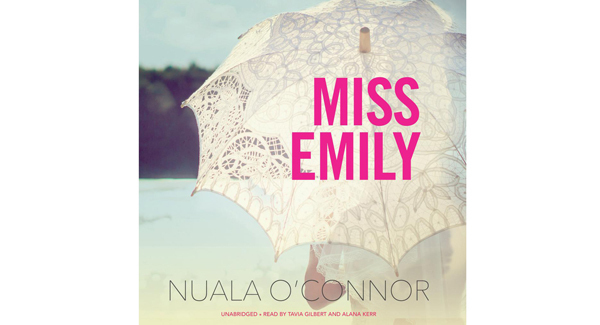
Nuala O’Connor
Sandstone Press €9.99
A friendship blossoms between the pair, who share a December birthday, despite the American poet being twice her age and the disdain her father has at the notion his daughter would become “too friendly with the help”.
Ada, with her dark hair “and icy eyes”, is the eldest of eight daughters. Her story starts in Ireland but the Irish coast cannot disappear fast enough for her, as she sets sail for America.
She leaves a country shorn of men of marrying age who are either dead from “The hunger or gone on the boat” like herself. She’s full of vim and adventure, and is “prone to speech making”, which amuses the eldest daughter of her first employer in America, the reclusive Miss Emily.
O’Connor’s fictional portrayal of the great American poet — whose fame flowered posthumously — is fascinating. Her social circle thinks of her as an eccentric; she prefers the company of her notebooks to their evening salons, and she looks askance at marriage; being in no doubt that she would make “a queer, opinionated wife”.
This dismays her stuffy, unimaginative mother who longs for a daughter “who would crave to be a bride”, but instead gets saddled with two spinster daughters.
Emily bridles at the restraints placed upon her sex, wanting to scream poetry at her married brother, Austin, at one stage: “Amputate my freckled Bosom! Make me bearded like a Man!”
Her relationship with his wife, Sue, and the veiled suggestion that there might be something more than sisterly love between them is one of the engaging currents that run through the novel.
It is Austin, though, who emerges as the most nuanced of the novel’s characters. Once playful and close to Emily, he has become pompous and sober with the advance of middle age.
When speaking to his sisters, he often prefers to address the window and is scornful of his breast-feeding wife for having a big appetite, wishing she would “tackle her silken layer” by eating less.
He pays for a man to take his place on the frontlines during the American civil war, a common practice at the time, and is haughty in declaiming about the differences between his compatriots and the strange, melancholic Irish amongst them.
He takes Ada as being representative of her people: “She is from Ireland and one sure thing about the Irish is that they disdain the truth. They have two, nay, three faces apiece.
Do not be fooled by her mellifluousness — all Irish people lie… You have to understand that there is a certain island madness about the Irish; they are unhinged and vicious.
Oddly, one could say that they display generosity and viciousness in equal measure. But a cataract of lies is all you can expect from them. Truly.”
The novel builds slowly, alternating between chapters told through the eyes of Emily and Ada – and is rendered in the speech and syntax of the Victorian age – until a bomb goes off two- thirds of the way through proceedings that leads to a dramatic climax and denouement.
In ways, O’Connor’s book brings to mind in tone and pace Eugene McCabe’s classic, Death and Nightingales, as well as the Ulsterman’s conjuring of the late 19th century world and the gulfs between life for the ruling classes and their servants at the time.
It is a satisfying read.








