Book review: Tender
Belinda McKeon
Picador, €18.99
I haven’t had a deadline I haven’t missed
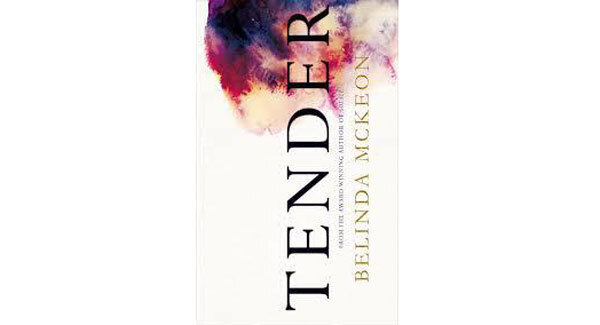
THE publishers who watched one deadline, and then another, pass by as they waited for Belinda McKeon’s new novel might not agree but her tardiness may have been fortuitous on this occasion.
For had she delivered her latest work on time, it would, in Ireland at least, undoubtedly have been cast mainly as a campaign cry for the yes vote in the marriage equality referendum.
Centred on the relationship between a college student and her gay best friend, it is the story of their struggles to come to terms with his sexuality in the Ireland of 1997 when homosexual acts had been decriminalised but not yet destigmatised.
McKeon made no secret of her support for the referendum and travelled back from her home of 10 years in New York to her native Longford to cast her ballot, but as for using her creative talents to fight a sociopolitical battle, her only cry is one of “coincidence”.
“That timing is coincidental and strange just because of how long it took me to finish the book,” she explains.
“The fact that it was out the week of the referendum was really weird, to be honest.”
You have to believe her. She took four-and-a-half years to write Tender, starting when marriage equality was merely a discussion item on the agenda of a not yet convened Constitutional Convention.
The core of the story and her two lead characters were with her much longer than that, 15 years in fact, back to when McKeon herself was a college student coming to terms with the fact that the object of her affection was coming to terms with being gay.
“It is based on my experience so the book is autobiographical partly,” she says. She even dedicated Tender to her old friend, referring to him simply as K to preserve his privacy.
So they remain on good terms and clearly McKeon’s heart, which later fell for another fellow student to whom she’s now married, wasn’t too crushed by the episode.
“Not really, it’s just part of that time in your life. When you’re 19 you take every opportunity for heartbreak that you can get.”
While real life provided the inspiration for the book, McKeon stresses her characters, Catherine and James, are not herself and K, and the story of how their relationship unfolds is fiction.
“I tried to write the events as they happened but they just didn’t work as fiction. Life doesn’t have a shape, fiction has a shape, and if you try to make life fit a shape to make a story work, it just doesn’t.
"Even though it’s real, you’re struggling with the risk of it appearing artificial on the page.”
There are parts of Catherine’s DNA that McKeon is happy to bequeath, however. Just like McKeon, Catherine is from Longford and we meet her in her first year at Trinity studying English, as McKeon did.
The novel has a secondary love affair running through it too — namely McKeon and Catherine’s passion for poetry — and lines of significance to them both run through the main character’s thoughts.
Beyond that, writer and character part company and McKeon makes clear that Catherine’s dreadful act and its awful consequences late in the novel are entirely made up.
McKeon doesn’t spare her character in the build-up to her inglorious moment.
We see Catherine in all her awkwardness, immaturity, and obsessiveness from the start and at times the reader has to remember to be kind towards her, to accept she’s just 18 and trying to hide her insecurities in a college setting where wit and confidence are the key currencies and she’s only got small change.
“Lots of people won’t like her,” says McKeon unapologetically.
“She’s young, she’s very self-absorbed, she’s very self-conscious, and we’re exposed to every moment of that.
“I know that some readers will just find that too much and will find it off-putting but I’m sorry, I don’t care — you have enough slick male narrators to keep us going for the next hundred years.”
McKeon is on to a subject now that’s clearly been given a lot of thought. “There has been a very interesting debate quite recently and it was kind of started by Claire Messud’s book, The Woman Upstairs,” she says.
“It was reviewed in terms of the unlikeability of her character and Messud herself responded by saying, why the hell should she be likeable?
“I feel that that conversation is just at its beginning really and a lot of it has to do with women’s writing, with female characters in particular, where it’s one thing to write a novel from the point of view of a woman but if you make her irritating or self-absorbed or challenging, then you really are taking a further risk. Good — let’s take that risk.”
To be fair to Catherine, McKeon hasn’t pitted her against the great and good because nowhere in the novel is there a beacon of wisdom, genuineness, and generosity by which she can be compared.
The adults, including Catherine and James’s parents, are absorbed by their own anxieties and can’t see, or are unwilling to see, the impact this has on their offspring.
“Part of what I found myself being interested in is this idea of inherited fear. James is part of the first generation after decriminalisation of homosexual acts so in a way he’s free to be himself but he’s not really.
“He’s dealing with and inhaling the inherited fear of everyone around him, looking to the older generation for a cue and getting nothing encouraging.
“I think Catherine too is a product of her time. She’s absorbed the carefulness of her parents. She really wants to be a great friend to James but also she wants to have him for herself.
“She also wants to hide him because for all her excitement at having a gay friend, she’s also nervous for and about him and her instinct is not a good one — it’s to push him slightly back into the closet and to help him to hide.”
McKeon says she dearly hopes that James circa 2015 would be out, accepting of himself and accepted by everyone else but some of the debate preceding the referendum leaves her with doubts.
“Even in an apparently liberal society you can have inherited fear and internalised homophobia. I think the last few months have shown us that it’s still there.”
McKeon has a busy summer ahead with readings here, in the UK and US and then it’s back to Rutgers University where she teaches creative writing several days a week, and back to her third novel on which she has made a start.
She enjoys teaching, though she feels vaguely ridiculous at being called ‘professor’, as is the standard form of address for college lecturers regardless of their academic status. She knows her authority on deadline enforcement with her students is limited.
“I haven’t had a deadline yet that I haven’t missed,” she confesses.
“I’m a procrastinator. I have to frighten the life out of myself to get something done. It’s terrible, I wish I could grow up. I’d love to be a steady deadline-meeting kind of writer but I’m 36 this month and I’m not showing any signs of getting there yet.”














