VIDEO: Kelly O’Brien takes her Chihuahua for some dog training
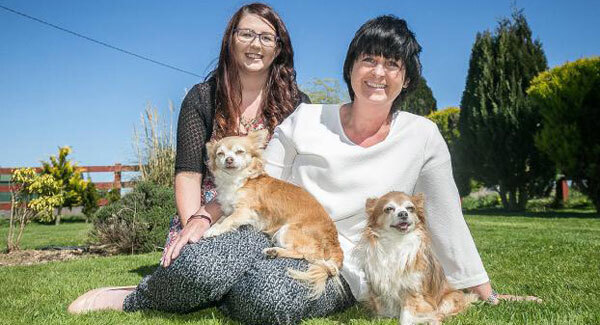
CHI-CHI is a proud Chihuahua, very prim and very proper. He eats when he likes, sleeps when and where he likes, and knows in his heart he owns everything his little paws touch.
So thereâs no way in hell Chi-Chi is going to debase himself by coming when heâs called, sitting when heâs told, or by âgiving the pawâ â whatever that means.
Any time one of these lumbering beasts called humans try to tell him whatâs what, Chi-Chi turns his furry little body and casually trots away.
Holding his head up high, Chi-Chiâs ridiculously hairy tail can regularly be seen bouncing gently into the distance â usually after he has had enough of your embarrassing behaviour and thinks it would be best to have some time apart.
It was a scene such as this one that ended my first brief foray into the tedious world of dog training, brought on by the tempting allure of the Cork Summer Showâs Pet Dog Show.
To be fair, Chi-Chi is no spring chicken, heâs around eight years old. So maybe I was asking too much of him.
A few weeks later, I ran into a woman who works with dogs every single day â I decided to ask for her opinion. Is it really impossible to teach an old dog new tricks or am I doing something wrong?

âYes, it is harder to teach an old dog new tricks but that doesnât mean you canât. Theyâre easier to train when theyâre puppies, but you can train a dog at any age,â said Nanci Creedon from Creedonâs Doggie Day Care in Cork.
Apparently itâs all to do with the brainâs synaptic clefts. In humans and in dogs, the synaptic clefts are extremely active before and during puberty, meaning the brain learns quickly.
After puberty, or when a dog is neutered, this activity slows down and it takes a little longer to learn new behaviours.
âPeople underestimate dogs. Their brains are the same as our brains and they work in the same way.â
And she should know â Nanci has been working with and studying dogs for more than eight years.
Her doggie daycare centre is the longest running one in Ireland and Nanci is one of only two independently certified dog behaviourists in the country.
After explaining my pooch predicament, Nanci urged me to stick with the training and add in a key factor: A copious amount of dog treats.
âThereâs different ways you can train. Things like giving the paw you capture it. Capturing is where you just wait for the dog to offer behaviour and you mark it instantly.
"You say âGood dogâ and thatâs it. But you can use prompting as well which is giving the dog a hint,â she said.
âWith giving the paw, you put a treat in your fist and stick it in front of the dog. The instant they touch your hand with their paw, release the treat.
"Initially you always have the food but then, when they understand the behaviour, you then vary when you give them food. Itâs like gambling. They donât know which time theyâll get rewarded so theyâll do the behaviour every time.â
I gave Chi-Chi another shot but once again he was having none of it. I cut my losses and tried to tempt my younger dog, Chi-Chiâs daughter Titch, into giving the paw.
At first she was wary, unsure of what I was trying to cajole out of her, but after a couple of tries she actually got the hang of it.
Delighted with my newly acquired dog training prowess, I was slightly deflated when my mother told me I was only bribing the poor animals, not teaching them. But according to Nanci this is a common misconception.
âA lot of people feel modern training, with all the treats, is just bribery. But itâs not, itâs working with their brains in a proper scientific way.
âLetâs say, for example, you donât like spiders. First I show you a spider and hand you âŹ50, then I show you a spider and I hand you the keys to a Mercedes, then I show you a spider and give you a trip to France.
"Pretty soon, if I show you a spider youâre not going to think anything other than âWhat am I getting?â Itâs the same when youâre trying to train a dog using treats.â
While going through so much effort just to get your dog to give the paw or roll over might seem a little inane, these small steps keep your dogâs brain active â itâs the gateway to teaching your dog a bit more discipline which can also mean a safer, happier pet.
It can also help avoid trigger stacking, the technical term for the straw that broke the camelâs back.
If, for example, your dog doesnât like strangers, the doorbell, or being patted on the head, but can deal with each situation on its own, eventually all three will happen together, and your dog wonât be able to cope with it â the dog could potentially lash out and bite someone or become chronically stressed which leads to a whole host of health complications and a shorter life span.
âIf thereâs anything that you know your dog doesnât like but puts up with, you need to address that and desensitise your dog to it so they can feel good about it instead. Because when all these triggers are stacked together, it pushes the dog over the edge,â said Nanci.
âIf thereâs something the dogâs afraid of, âIâm afraid youâre going to take my boneâ or âIâm afraid youâre going to come onto my propertyâ or âIâm afraid another dog will hurt meâ, you always want to find a level where the dog is aware of whatever theyâre afraid of, but doesnât feel threatened.â
A growl, apparently, should never, ever be punished. Nanci explains a growl is a dogâs way of letting you know it doesnât feel comfortable.
If you punish a growl, and the dog stops, the growl is muted, but it doesnât stop how the dog feels. So if theyâre not feeling safe, and theyâre not allowed to growl, their last option is to snap or bite.
So while Chi-Chi most certainly isnât a contender for the Cork Summer Show Dog Show, for the moment anyway, at least heâs a fairly calm dog â thereâs no going crazy when the doorbell rings, or getting into a frenzy when a stranger comes around.
A prize-winning dog would have been nice, but a healthy, happy dog is better.
The Cork Summer Show Pet Dog Show has nine categories open to pet and pedigree dogs and will take place Saturday and Sunday, June 20 and 21, at the showgrounds in Curraheen, Co Cork. See www.corksummershow.ie  for more information

As a dog with a job, Harvey has a lot of responsibility on his tiny, furry shoulders. Every day he works hard, sniffing out large amounts of cash and tobacco at ports and airports nationwide. With one of the best noses in the country, nothingâs going to get past him.
The four-and-a-half-year-old Springer Spaniel is one of 17 trained sniffer dogs working for Revenue. Heâs the only cash and tobacco detection dog, so Harvey is in big demand.
The pooch was born and reared in Manchester but, when he was only one-year-old, his family had to move house and were unable to bring Harvey with them.
So they brought the dog to a training school to see if he was suited to a life of service. It turns out Harvey had just the right temperament to make it as a sniffer dog.
It only took around six months for Harvey to be fully trained. He now lives in Cork with his handler Olivia OâConnor and, over the last three years, has had some extremely high-profile finds.
Olivia said Harvey absolutely loves work, and probably wonât retire until heâs around eight- or nine-years-old. He spends his days sniffing baggage and cargo from ships and planes, checking to see if anyone is carrying large amounts of money or tobacco â indicators of what could be illegal activity.
If he finds anything suspicious, Harvey goes very still and lies down next to the suspect item. Olivia will then conduct a search and will reward Harvey with his favourite toy in the entire world â a well chewed up, and much loved, tennis ball.














