New album is a difficult second act for Django Django
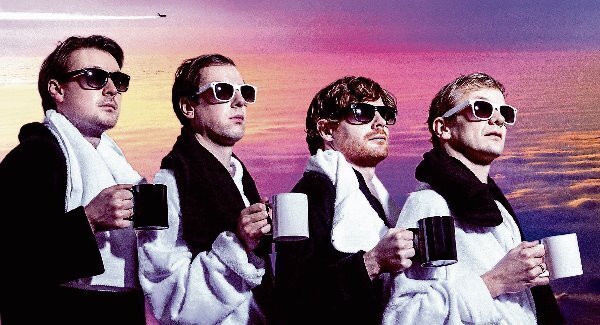
VINCENT Neff isnât worried. Itâs three years since his band, Django Django, released their debut album â a life time in pop music.
Some musicians might fret that their audience had forgotten them. Django Django never expected to be successful in the first place.
âOur first record kind of snowballed,â says Neff, a voluble Derry native based in London.
âIt was quite surreal at moments. A lot of the LP was put together very cheaply in my flat. We did it on an old PC â extremely basic stuff. To go from there to performing in say, Columbus Ohio or Tokyo, was very weird. When we wrote those songs, it never entered our heads weâd cross the world performing them. You would find yourself looking at the crowds thinking âWow, this is oddâ.â
His surprise is understandable. There is little that screams âglobal sensationâ about Django Djangoâs sound: a skittish mash-up of cult â80s bands such as The Smiths and Orange Juice.
Nonetheless the group became a phenomenon in 2012, with multi-platinum sales and headline slots at festivals across Europe.
Now, after an interminable wait, comes a follow-up. Born Under Saturn is a classic second album from a band that has unwittingly struck upon a golden formula â all of Django Djangoâs signature touches are present, albeit with slightly glossier production.
It will delight fans hanging on for new material and may draw in fresh admirers too.
DISCOVER MORE CONTENT LIKE THIS
But though Born Under Saturn radiates effortlessness, a great deal of heartache went into its assembly.
For a while, admits Neff, Django Django feared their golden touch had deserted them. At first the songs would not come; when they finally did they struck the musicians as generic - the work of just any indie band.
With a deadline looming, how could they turn things around?
âAt one point it didnât sound like us at all,â says Neff.
âWe were missing whatever it is that sets us apart. We could have been anyone. So we had to go back in and bring that extra element back â restore those little things that distinguished us. It wasnât an easy thing to do. But we knew we absolutely had to.â
One complicating factor was the decision to record in a Downton Abbey-esque pile outside London.
With Ferraris in the driveway and platinum disks by Jamiroquai lining the walls, the rural studio was in surreal contrast to the bedsit where theyâd put together their debut. Hanging out there was a blast â but it can be argued that the opulent setting had a negative impact on these scrappy underdogs.
âThe keyboardist from Jamiroquai owned the place,â recalls Neff.
âThere were loads of Bentleys and Ferraris outside. Apparently he was the guy who got Jamiroquai [a noted petrol-head] into sports car. We were all thinking⊠âWow, so THIS is what success is likeâ. It certainly puts your own accomplishments into perspective.â
Ireland - New @thedjangos album out Friday now pre-streaming @iTunesmusic. Listen + pre-order http://t.co/BjujDK1NzQ pic.twitter.com/AGoGjamWDK
— Warner Music Ireland (@Warnermusicirl) April 27, 2015
But even had they recorded the LP in more familiar, tumbledown circumstances, it seemed inevitable that there would be an element of struggle.
Django Django could have knocked out a facsimile of their first record â they had no interest in that, however, and so the process took longer than it might have.
âWith a second album you want the sound to evolve,â he says.
âWhich means having to change the way you do things. That can be difficult. Breaking out of your old way of thinking is sometimes problematic. We were also keen to correct aspects of the things about our first album that bothered us â if you listen to back to the recordings you can hear a lot of hiss. We wanted to avoid that second time around.â
Most of their first LP was written by Neff. He would present the songs, more or less finished and the group would arrange them in the studio.
This time, the other musicians were coming up with ideas as well. It was a significant transition as it meant some of the expectation was lifted from the shoulders of the Irishman.
He no longer felt he was carrying the whole concern on his own.
âHaving more writers makes for greater variety,â he says. âEveryone has different strengths in terms of what they do. We were able to build on that.â
There was also the small matter of their record label, Warner, eager to put out fresh product from a rare modern band with the ability to shift units.
But Neff says Warner did not bring any untoward pressure to bear.
âThe pressure came from ourselves,â says Neff, repeating a familiar music industry cliche. âWe have always had very high standards. It was the same with our first record. We didnât want to put out something that was rubbish. Whatâs the point. Given the choice between releasing something that is average and not releasing anything at all, weâd opt for not putting out anything at all.â
Early in their career, Django Django gained a reputation for theatricality.
They would perform dressed as air-line pilots or big game hunters and decorate the stage with venetian blinds and over-sized light-bulbs.
For a young group trying to draw attention to themselves, the benefits of hamming it up are plain.
However, the silliness arguably detracted from the music â they wisely scrapped the OTT affectations just as they started to become a drawback.
The four musicians met at art-college in Glasgow. The fact they had an established friendship before the band took off has proved immensely helpful, says Neff.
Had they been relative strangers, tensions might have manifested during those endless tours.
âWe stayed grounded, which is important,â he says.
âWeâve got the same bunch of mates back home. So if anyone of us had acted like a prima donna, word would have got back. Itâs just as well we are comfortable around one another as we really were in each othersâ pockets. In the same situation, a bunch of people who maybe didnât know one another might have struggled.â















