New documentary shows Kurt Cobain the human, not angst-ridden rock star
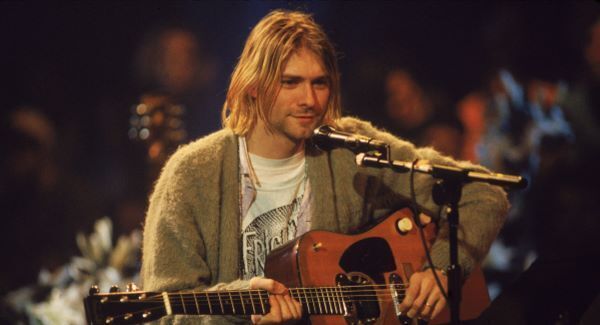
KURT Cobain is rock ânâ rollâs martyr-in-chief. He died young, left a beautiful corpse, and a body of work that speaks to the angsty adolescent within us all.
Even in life, he was mythologised as a tragic figure: the fiercely independent rocker who had stardom thrust upon him and who duly crumpled under the dead weight of public adoration.
This is not the Cobain brought eerily to life in Montage of Heck, a new documentary about the musician by director, Brett Morgen (until now best known, arguably, for The Kid Stays In The Picture, about veteran producer, Robert Evans).
READ NEXT: Â Cork '91 - When Nirvana came to town
Utilising hours of recently discovered home-movie footage and made with the approval of Cobainâs widow, Courtney Love, and his daughter, Frances Bean, the film paints the Nirvana frontman as more complex than tortured superstar.
Here, Cobain is contradictory, given to moments of melancholy, yet also with a witty, joyous side.
âIâm definitely surprised by the level of interest in the film,â says Morgen, a no-nonsense interviewee, not above a stoic silence or one-word answer, if he believes a journalistâs question is leading or unworthy of consideration.
âI spent several years trying to get financing. It was pretty challenging. It wasnât until [his 2012 Rolling Stones documentary] Crossfire Hurricane came out that I was able to secure the money. We knew Kurt was popular. I donât think any of us [really] understood [the extent of his] popularityâŠIâve been surprised at how deep and broad his fan base is.â
Morgan seems ruffled when I inquire as to whether he is a fan of Cobain or of Nirvana.
âI would love to keep the discussion about the actual experience of [making] the movie,â he says.
âI was a fan of the band. I had seen them twice. But I was approached by the family. This wasnât a situation where I was an obsessive fan â harassing them to give me the rights to the film.â
Granted access by Cobainâs family to hours of archive footage, Morgen shaped a rounded portrayal of the future grunge icon. On screen, we see Cobain the human being, not the angst-ridden rock star.
Home movies of the future âvoice of a generationâ â a designation Cobain loathed â as a toddler and young child are gruelling to watch, given that he was hurtling towards a suicide at the age of 27.
âMost of the material we used to make the film has never really been seen or seen rarely,â says Morgen.âIn this footage, I feel Kurt really revealed himself. In a sense, I felt we were [seeing] a side of Kurt that had been missing from the public understanding.â

âI felt the footage of Kurt as a toddler was critical for several reasons. It really shattered the myths that Kurt would present about his own childhood. In interviews, he would talk about how he had a happy childhood before his parents divorce [when he was seven]. In the interviews with Don and Wendy [Cobainâs parents] and in the footageâŠthere is a different storyâŠIt was almost shocking that nobody had seen this footage.â
The documentary makes vividly clear the stark divide between Cobain the rock star and Cobain the son, husband and father.
âIn his public appearances and media interviews, Kurt presented himself as this miserable guy, so itâs not the publicâs fault that they saw him as one,â said Morgen in a recent interview.
âBut the man is so much more endearing than the myth. And I think, when audiences see this film, theyâre going to fall in love with him and that sort of breaks your heart. Because, at the point where you realise how dynamic and funny and wonderful he was, how many great things about Kurt we never got to experience, you also realise that this is itâ.
As has been exhaustively chronicled, Cobain was a Hibernophile. His family had Irish roots and he spoke fondly of a lost afternoon in Cork City, where he visited during Nirvanaâs 1991 co-headline tour with Sonic Youth.
âWhen we toured Ireland, we played in Cork and the entire day I walked around in a daze,â he later said.
âIâd never felt more spiritual in my life. It was the weirdest feeling and I have a friend who was with me who could testify to this. I was almost in tears the whole day. Since that tour, which was about two years ago, Iâve had a sense that I was from Ireland.â

Morgen does not gloss over Cobainâs dark side. His drug use is discussed frankly, though not to the point that Montage of Heck slides towards a polemic.
âI do feel that Kurtâs heroin use has been slightly romanticised,â Morgen said recently, âso thereâs a moment or two in the film where you see the reality of it. Itâs not the point of the film, but Iâm optimistic that there will be certain people who see this film and decide that theyâll never touch heroin.
âAnd I donât know a better legacy for Kurt than to save a life.â
It was at the back of Morgenâs mind that Cobainâs family would have to sit through the film.
He did not allow this to influence his creative decisions, though he was sensitive of the feelings of Frances Bean, not yet two when her father died.

âThe only thing that weighed on my mind was Frances. I was sensitive to how Kurtâs mother would react to certain footage. That did not influence my decisions in any way, shape or formâŠ.I feel I had the advantage that, because I didnât know Kurt in life, I was able to meet [him] through primary sources. In a way, that was quite advantageous,â Morgen says.
Montage of Heck is a portrait of a troubled human being, not the chronicling of a rock starâs tragic waxing and waning.
Says Morgen: âI certainly had no interest in making a âbehind the musicâ [type of movie]. My approach is that each film should be as unique as its subject. The cinematic experience should be an adaptation of the subject. I have no interest in making movies that play out like Wikipedia entries. All of my films are intended to be an experience, an immersion in the subject, so that they are inhabiting their own world.â














