How successful people get ahead of others

SUCCESSFUL people are just born that way — their success is all down to good luck, great genes, or a high IQ.
Not true, say experts, who see successful people getting ahead because they’ve embraced a cocktail of behaviours that keep them mentally strong and winning the game.
Dr Travis Bradberry, co-author of Emotional Intelligence 2.0, asks why people with average IQs outperform those with the highest IQs 70% of the time. He says emotional intelligence is the critical factor that sets star performers apart from the rest of the pack.
“It’s the ‘something’ in each of us that’s a bit intangible. It affects how we manage behaviour, navigate social complexities, and make personal decisions that achieve positive results,” California-based Bradberry tells Feelgood.
President at TalentSmart, a provider of emotional intelligence tests and training, Bradberry says there are certain mistakes successful people don’t make. They don’t die in the fight. They know how important it is to live to fight another day.
“In conflict, unchecked emotion makes you dig your heels in and fight the kind of battle that can leave you severely damaged. When you read and respond to your emotions, you’re able to choose your battles wisely and only stand your ground when the time is right.”
Successful people don’t hang around negative individuals.
“People often feel pressure to listen to complainers because they don’t want to be seen as callous or rude, but there’s a fine line between lending a sympathetic ear and getting sucked into their negative emotional spiral,” says Bradberry.
Avoid getting drawn in by setting limits and distancing yourself when necessary. “If a person were smoking, would you sit there all afternoon inhaling the second-hand smoke? You’d distance yourself — do the same with complainers. A great way to set limits is to ask complainers how they intend to fix a problem.”
Owen Fitzpatrick, psychologist and author of The Charismatic Edge ( www.owenfitzpatrick.com ), says successful people stay mentally strong by practising solution-focused thinking.
“Whenever there’s a problem, their immediate question is: What am I going to do about this? Most people spend a lot of time thinking about problems and how awful they are.”
Another critical difference he sees between people who can and can’t perform effectively is in their relationship with past and future.
“People who aren’t doing well focus on the past and feel scared of the future, whereas people who do well pay attention to the future and focus on it. They enjoy and embrace the present and learn from the past.”
Successful people don’t say yes unless they really want to, says Bradberry. He cites University of California research that finds people who have difficulty saying no are more likely to experience stress, burnout, and depression.
“No is a powerful word that you shouldn’t be afraid to wield. When it’s time to say no, emotionally intelligent people avoid phrases like ‘I don’t think I can’ or ‘I’m not certain’. Saying no to a new commitment honours existing commitments and gives you the opportunity to successfully fulfil them.”
Fitzpatrick agrees that successful people don’t make the mistake of trying to please everyone.
“Every time you say no to someone, you say yes to someone else. It’s about prioritising who you say yes to and who you say no to.”
Successful people know resilience and perseverance pay off.
“Those who try and who fail and then say, ‘Oh I’m not that type of person’, create an identity for themselves, and then fulfil that [negative] identity — whereas you can really become good at something if you practise and get a good education in it,” says Fitzpatrick.
Nor do successful people compare themselves to others, find themselves lacking and decide life’s unfair.
“Would you give up everything that is you to be someone else, with all your talents, personality, and family,” Fitzpatrick asks. Successful people take ownership of their own unique blend of talents and assets and focus on making the best out of those.
We ask some well-known — and successful — Irish people how they stay mentally strong. What are the mistakes they don’t make?
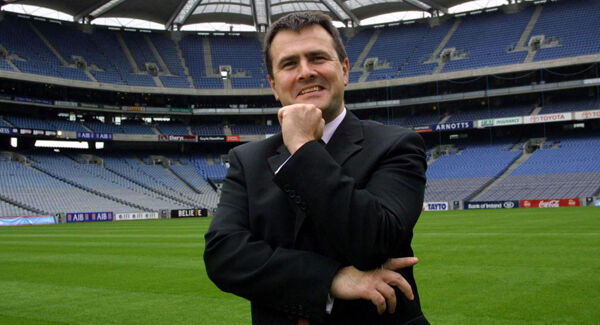
How do you stay mentally strong?
“When an issue happens, I always interrogate the process rather than looking at who’s at fault. I see it as a process that needs to be changed or amended. We all share in the problem — personalising it makes it difficult to get a resolution. Maybe somebody wasn’t properly trained or didn’t have all the information. You’ll be far more successful looking at where the process fell down rather than delving to find a scapegoat.
What are the mistakes you don’t make?
“I remember the Rolling Stones manager saying ‘don’t count other men’s money’ — it’s important to do the deal that’s right for you and not be concerned about what someone else is getting. It’s good to celebrate other people’s success, to say ‘that’s brilliant’ and to see what they did to get there.
“It’s also important not to shy away from change, which is inevitable, and which can be very invigorating — there’s always a better way. And don’t fear taking a calculated risk. It’s an essential part of any business strategy. The word ‘calculated’ is important. To take a risk is no different than gambling — in order to grow, one must take calculated risks. I never give up after a first failure — I reframe it as an ‘unsuccessful attempt’ and go again.
“I don’t fear alone time. You need it to get a good sense of your inner belief, of who you are. I really enjoy my own company.”

How do you stay mentally strong?
“I’m a great believer in exercise. If I’m over-thinking, I walk — I walk every day. I also listen to music. If I do 40 minutes a day switching off, I stay focused and I don’t let things get on top of me. I set goals. I make plans to achieve them and I stick to the plan — I don’t let life derail me.
What are the mistakes you don’t make?
“Many people constantly look at their competitors. I don’t compare myself to others. I try to be the best version of me rather than a lesser version of another person. I don’t focus on things I can’t control. If something’s within my control, I deliver on it. If it isn’t, I let it go.
“I’m not afraid of taking risks. I always weigh up the pros and cons of a particular action. Once I’m comfortable I’ve assessed the risk, I take it — I don’t blindly do it. I definitely don’t give up on the first failure. My life is richer because I’ve failed many times over. Failure has taught me my strongest lessons.
“I don’t shy away from change. Many people feel they enjoy change but they don’t — they get stressed by it. I embrace it. Over the last few years, I’m constantly trying to change, evolve, and transform myself. I’m also very comfortable in my own space — I like spending time with myself.”

How do you stay mentally strong?
“It’s important to find the balance between your work life and your outside office life. Sometimes I don’t get it right. I’m my own boss and people depend on me for their salaries — sometimes things do keep me awake at night. You have to be able to box it off and understand work shouldn’t consume your whole life.
“I’m lucky I’m in a job I love — if I have any weak moments mentally, that’s what I go back to. Sometimes at big events, people ask ‘are you incredibly stressed?’ I say ‘get a life’. Some people, like doctors, make life-and-death decisions most moments of every hour. I don’t. They’re entitled to be stressed.
What are the mistakes you don’t make?
“I’ve made some humdingers of mistakes. I absolutely know I’ve learned from each one. You remember a mistake but you also remember how you fixed it. At a Presence PR event, we never serve chicken wings — I’ve learned from experience that I’ll be pulling them out of potted plants and from behind pillars for an hour after the event is over.
“I celebrate other people’s success. Sometimes, when I see someone come up with a great idea or really turn something around, I’m jealous I didn’t do it first. But there’s a great difference between jealousy and resentment and I never resent anyone’s success. A rising tide floats all boats and if another PR company does a great campaign, it shows people what PR can do — we all benefit.
“I’m in a very social business that’s hugely based on communication. Having quiet time for reflection is important, whether it’s walking the South Wall pier before coming into work or doing Loch Derg every year — for three days, I have no phone and I contemplate the year and myself. A young priest said to me there, ‘Are you the person you want to be and, if not, what are you doing about it?’”
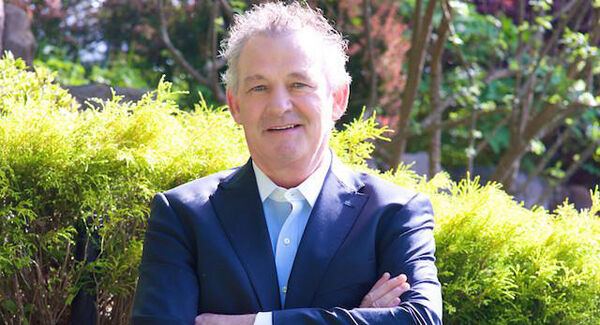
How do you stay mentally strong?
“I’ve always been a glass-half-full person, even when I’ve had setbacks. I try to see every negative as a step towards the next positive. I have five children so I don’t have time to feel sorry for myself.
“I believe I’m good at listening and I don’t sleep too much. Sleep is over-rated. I probably get five-and-a-half hours a night. I don’t fear failure and I don’t worry too much about what other people think of me. My favourite saying is ‘you’d worry less about what other people thought of you if you realised how seldom they do [think about you]’.
What are the mistakes you don’t make?
“The key to being successful is timing — when luck comes your way, you have to recognise it and jump on it. You also have to delegate and trust the people around you — but not until they’ve demonstrated they can handle and are responsible. I hire people who don’t need to be motivated or managed — non-motivated people are exhausting.
“When doing a business plan and thinking about projections, always double your costs and halve your revenues. Define failure — ‘if I don’t hit these goals by this stage, it’s time to bury the project’. Always leave a little bit of gas in the tank — don’t keep going and going.
“I’ve seen so many people on Dragons’ Den where someone should have said a year earlier ‘stop the madness’. Ask: ‘what could cause this to fail?’ Build in a fail-safe mechanism.
“If you’re married or have a partner, have them completely on board. It’s the elephant in the living room. My wife sees all my emails. There will be times when you can’t afford the family holiday or you have to miss the [child’s] Holy Communion because you’ll be in America. A family has to make a lot of sacrifices.”
Peter Casey has recently launched Claddagh RIVS (Recorded Video Interview System) in Donegal.

CONNECT WITH US TODAY



Be the first to know the latest news and updates

















