Corkman's documentary on angling is casting out to film festivals worldwide
A BLACKBIRD singing, the swish of a line being cast, the gentle burbling of a river, and the distinctive ‘plop’ of trout feeding; these are the joys of an evening’s fly fishing.
The lush imagery and mellow pace of Unwinding, Corkman Carl Dixon’s microbudget fly-fishing film, are winning over selection panels at international film festivals.
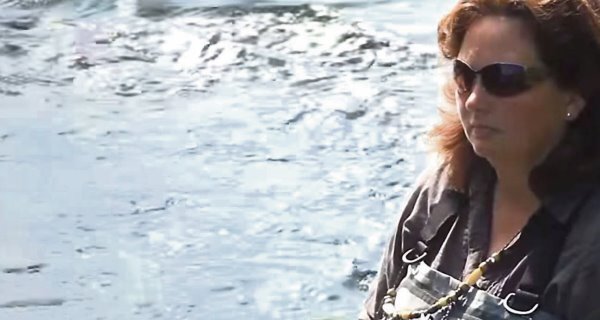
The five-minute documentary, shot on a budget of €800, features former world champion fly fisherwoman, Glenda Powell, angling on the river Blackwater, near Fermoy, and talking about her life and her love of fishing.
Dreamy and slow-paced, the film is saturated with images of nature and uses ingenious sound design to capture the experience of a day on the river.
Dixon’s day job, as an ecologist, is reflected in the film’s appreciation of nature, and Powell is an ideal subject. Dixon wrote an article about Powell in 2011, for The Irish Examiner’s ‘Weekend’ magazine . “When she was telling me the story, it was really one of those interviews that just stayed in mind,” he says.
When Dixon completed a filmmaking course in the Cork Film Centre, he returned to Powell to capture her impressive skills in a different medium. A fly-fisherman himself, Dixon recognises Powell’s talent.
“What she can do with a fly-line is astonishing,” Dixon says.
“In that sense, she’s a world-class athlete. It’s almost balletic, the way she can manoeuvre a fly line and land it 200 yards away. It’s very thrilling to watch.”
Unwinding has been selected for three festivals in the US (in Lake Erie, in Washington and, most recently, for the Sebastopol International Film Festival in California) and Dixon is aware that its appeal to an American audience is partly its romantic depiction of Ireland; lush greens and natural scenery show us a mythologised Ireland.
“It’s not reality, but on your best day ever, that’s the sense of peace and stillness you get out of it. It’s just a snapshot,” he says.
The film has also been screened in Estonia and Cumbria, and is back on home turf again in May, for the Fastnet Short Film Festival in Schull.
To realise his vision for his directorial debut, Dixon needed good sound, and he was lucky to work with Cormac O’Connor: “It’s a very underestimated aspect of film, but good sound design is vital. Cormac could modify individual notes, really construct sounds. The original idea of the film was that it would be very slow and very sound-oriented. We wanted lots of natural sounds in there,” says Dixon.
The film was shot on a Canon DSLR, with underwater sequences filmed using a Gopro.
It was an ambitious project for a novice filmmaker, and presented technical challenges that required Dixon and O’Connor, who also shot parts of the film, to overcome the limitations of their equipment.
“The line is so thin that if you move back too far you lose it, and if you move in too close you don’t see the extent of it or get any sense of the motion,” Dixon says.
“You have to try and figure out how to capture that. A really good sports camera would have helped.”
But the dream of filming Powell catching a salmon remained unrealised.
“We certainly spent half a day going, ‘come on, catch a fish’! Poor Glenda, there’s nothing worse for an angler than a couple of guys just sitting on the bank staring at you,” Dixon says.
The film doesn’t suffer from the lack of a catch, which Dixon says would have made the narrative too tidy.
Instead, we listen to Powell describe a life spent fishing, her reverence for nature, and her decision to retire from competition and focus on teaching others how to fish.
Dixon is doing more than paying homage to the sport and natural world that he loves.
He’s also making a statement about the pace and habits of modern life, gently reminding us of what we’re missing.
“Most of us are inside a lot,” he says. “I’d be no different; watching TV, on my phone all the time. Outside spaces and the natural world are an important element that a lot of people are missing.”
After the unexpected success of his first film, Dixon has plenty of other ideas and a couple of projects in the pipeline. He is in negotiations with someone from Canada to work on a longer and more ambitious film, and is teaming up with O’Connor again to make a film during the summer about his native Beara Peninsula.
“These days, I probably think about fishing, and talk about fishing, and now film fishing, more than I actually get to fish,” Dixon says.















