Raynaud’s - The little-known condition that affects 1 in 10 people
MOST people have cold hands at this time of year. But for those with Raynaud’s — a condition that affects 10% of the Irish population — the cold can linger and be very painful.
Named after a French doctor in 1862, Raynaud’s is a condition where, when exposed to cold temperatures, blood vessels go into temporary spasm, blocking the flow of blood and causing the affected area to turn white – and then blue then red, as the blood flow finally returns.
“This affected area is most commonly the hands,” explains Dr Auldric Ratajczak. “Some sufferers are affected on their feet too, but this is rarer.”
Generally, it’s people with secondary Raynaud’s who’ll notice their toes undergoing this ’blanching’ process, while for those with primary Raynaud’s, it tends to be confined to fingers.
And the difference between this secondary and primary? “It’s simply that primary is when it’s the condition on its own, and not linked to anything else, while secondary is when the Raynaud’s is just one extra symptom from another condition.”
Often, this other condition is an autoimmune disease, like rheumatoid arthritis or lupus, and for that reason, those with secondary Raynaud’s often tend to be diagnosed “later in life”.
“Primary Raynaud’s is more a young women’s disease, though,” Dr Ratajczak notes. “A lot of sufferers are young adults, diagnosed before or around the age of 30.”
The exact reason some people get it is uncertain. Some experts say the condition is more common in slimmer women, and it’s therefore easy to relate it to less body fat and the poor circulation sometimes associated with that. It’s also sometimes believed that it can run in families, or possibly be linked with poor immune function.
But even if the explanation of exactly why it happens is unclear, exactly what happens is this: “The normal reaction to cold is that the arteries and blood vessels constrict,” says Dr Ratajczak. “Raynaud’s is doing this, but then going too far, and cutting off the oxygenated blood supply.”
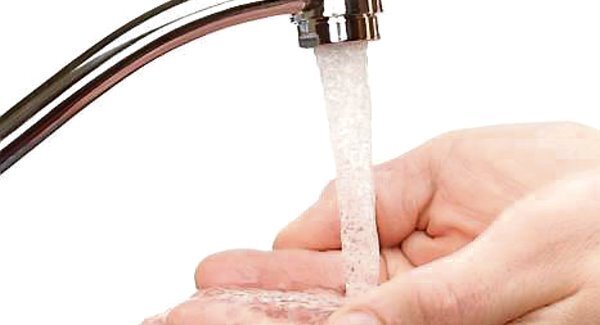
In some more extreme cases, this will happen not just when you step out in cold weather, but when you simply sit under air conditioning, or stick your hand in a fridge, or run it under the cold tap.
The thought of your hands turning white every time you grab some milk sounds infuriating enough, but it’s not just the discolouration you have to face with Raynaud’s.
“There can be excruciating pain too,’ says Dr Ratajczak. ”Not so much when your hands or feet are cut off from the blood flow, but when you warm up again and the blood returns.“
Warming up the extremities, however, by putting on gloves or running them under warm water, is really the only comeback.
As with many conditions, the real answer is about prevention rather than cure.
“Living with Raynaud’s means knowing what your triggers are and then being prepared with gloves and so on,” says Dr Ratajczak. “Smoking, for example, is known to make it worse [due to it narrowing the blood vessels], and for some people, being stressed or anxious is another trigger – if so, learn to manage it with mindfulness.”
Certain migraine and sinus treatments have been linked with an increased severity.
Fish oil, evening primrose oil, ginkgo biloba and ginger help.








