Leo has made it easier for the young LGBT community
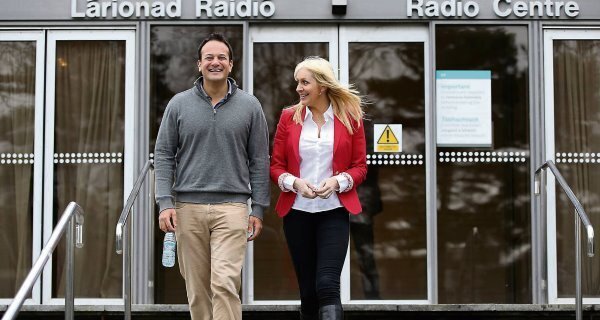
LEO Varadkar came out to the Irish public on his 36th birthday, and he celebrated by surprising the nation. Twitter exploded and the country was in shock. But what do the young lesbian, gay, bisexual, and transgender (LGBT) people of Ireland think?
Owen Murphy is one of the founders of youth group Shout Out. We met in the colourful expanses of Google HQ, where by day Murphy works on the undergraduate awards. By evening, he coordinates Shout Out’s LGBT+ workshops for transition year students.

When Murphy was 15, he had grand ambitions of going into politics, but tells me that because he was gay, and planning to come out at 20, he completely ruled it out. “At the time I thought, I can’t do that. That’s not a path that’s accessible to me.”
Now he presents workshops to 105 schools a year, in 16 counties to 2,500 students.
Despite the impressive numbers, he says there’s still a lot of ignorance, “There was one guy who tried to argue the point that there was nobody LGBT in his county because it was a Dublin thing.”
This sentiment is echoed in the public’s opinions to Varadkar’s coming out. Some view it as a publicity stunt or an aspect of his personality that he shouldn’t have to divulge in public.
One thing Murphy doesn’t tell his students is that coming out isn’t a one-time event. It’s an ongoing struggle. “In reality, you come out 20, 30 and 40 times a year. And it can be in really horrible situations, like in a taxi from the airport with your partner after a holiday or through little things that change how you feel about yourself in that moment.”
There’s still a big fear around coming out. “Young people are afraid of the repercussions and there are some families that will react horrifically.
“It’s still terrifying to expose that part of you because it’s this internalised homophobia or transphobia, where there’s a silence, there’s no talking about it.”
Murphy gives a real-life example of this in the classroom.
“If someone says ‘that’s so gay’, you think that means they hate you. You don’t understand that their words are meaningless. You internalise all these passing remarks that aren’t intended for you, as an attack.”
“Until we get rid of that culture there is always going to be fear, and always going to be prejudice, it’s a really difficult process for people.”
Below are interviews with two young LGBT people as they recount their feelings on coming out.
Larissa Bogdan, 21, DIT Music Student

I’m a lesbian and I’m out about my sexuality to my friends, my college, my mum, but not the rest of my family.
I knew since I was 12 that I was a lesbian, but I was really afraid to come out because my family is Romanian and conservative. My mum reacted very badly when I told her. It was terrible. That was a year ago and it’s still difficult.
I had to come out because I found being a lesbian hard to keep to myself, especially when it’s obvious sometimes.
My dad doesn’t know, nor does the rest of my family because my mum is afraid of what they might think. She puts pressure on me to get a boyfriend and get married, but that’s not me.
Leo Varadkar coming out is good, because the more people who come out, the more normal being gay will be seen. And it’s good to come out anyway as it takes the burden off you.
There’s a big difference between Ireland and Romania. I have Romanian friends in their late 20s who are terrified to come out. They’re more terrified than I am, because I really don’t care at this point what people are saying, even my family.
I’ve also Irish friends in my class that are 18, 19, and 20 who are afraid to come out. They fear being disowned. It’s horrible.
Ellen Tannam, 22, DIT Film and Broadcasting Student

I used to say I was bi’ when I first came out but I’ve decided to lean more toward queer because I feel more comfortable with it, it’s more of an umbrella term.
I’m out to my parents, family, friends, and anyone that knows me.
My Dad found out first, when I was 18. I’d been so hung up about it but one day he was rushed to hospital and I had an epiphany, that’s when I told him and then my family.
I think it’s a great thing that Leo came out. I wouldn’t agree with everything he says as a politician, but to have a public representative say they’re gay is good, especially for younger people who are struggling. Everyone has struggled with it at some point.
Some don’t see why he should have come out. Perhaps those people are in a privileged position where most of around them are straight and they presume sexuality is not a big deal? It might not be a big deal to you personally but there might be someone near you who is struggling and needs to know there are others like them.
I would hope this wouldn’t affect Leo’s career. The people that are a problem are probably a minority at this point.
I try not to think about them or let them affect my life. But it’s going to be really difficult over the next few months with the same sex marriage referendum because they’re going to be constantly in your face.
If you’re struggling with your sexuality and coming out, BelongTo has support services throughout Ireland. Log onto www.belongto.ie
*There is no right or wrong way to come out. It's a lifelong process of being true to yourself and others. Do it in your own way in your own time.
* It's normal to feel scared, vulnerable, exhilirated, confused, relived and uncertain.
* Before you make your decision. Weigh up the benefits such as the fact you will be leading a more open life, you may have more genuine relationships, it will reduce stress and will help build greater self esteem.
* Potential risks include that not everybody will be accepting and understanding, your friends, family and co-workers could be shocked or confused. Some relationships that you have may change afterwards.
* Remember through the whole process that it is you who is in charge. It is up to you to decide who to confide in, how and and when.
*Remember you don't have to be out in all parts of your life and at all times of your times.
* Make a coming out plan. Some people find it organises their thoughts to write out what they want to say.
* Also remember that you could be facing people who have experienced a lifetime of misinformation around LGBT issues. Be forearmed by anticipating possible questions and comments. Be prepared to answer questions.
* You are not alone. Look for help from LGBT helplines, guidance counsellors and other support lines.
* Make sure it's the right time to come. Is this a bad time for the people you want to come out to? Take timing into account.
* Be patient. Some people just need time to re-adjust to what they've just learnt.
The worst homophobia I suffered was from myself








