Fighting fit and healthy over 50
A total of 80% of women aged 55-64 and 68% aged 65-plus, said they exercised to improve their health and fitness, compared to 54%, and 55% of men, in the comparable age categories.
That’s according to the Irish Sports Monitor, the study of sporting participation conducted by the Irish Sports Council which has just been released for 2013.
Other reasons given, for which women outnumbered men, were weight control, relaxation, and social contact with family and friends.
Compared to 2011, when the previous report was carried out, there was a drop in the trend towards personal exercise, such as the gym; use of home exercise machines; use of fitness DVDs and mat exercises, among men and women aged 55-64 but an increase in the 65-plus category.
However general participation in sport was up in all of those categories, except men, again in the 55-64 age group, with a slight dip from 34.4% to 33.3%.
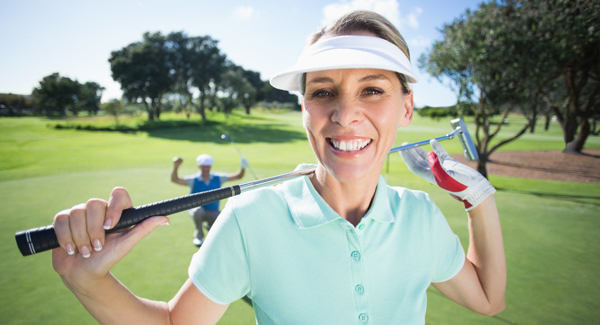
While the perception might be that half the country is out playing golf as we age, in fact 80% of golfers are male, according to the report, and there has been a decline in players, down from 12% to 9.1% among men in the 55-64 age category and 10.8% to 9.2% in the 65-plus category.
Women in the 55-64 age group hold their own but there is a dip from 5.4%to 3% at 65 plus.
However one of the main benefits of golf as outlined by a spokesman for the Irish Golfing Federation is its social aspect: “Golf can be part of an active social life thanks to the atmosphere of the game itself and the readymade social life at the clubhouse. And the regular physical activity, which offers toning and muscle-strengthening benefits as you age, is of the best kind — what we call ‘green exercise’ outside in nature.”
Sinead Heraty, chief executive of the Irish Ladies Golf Union, points out that senior members are the ones with most time to play. “There’s little doubt that people are playing golf into their 80s and with the introduction of buggies and nine-hole competitions this will continue to increase. There are even examples of some people still playing in their 90s,” she says.
Other life-long sporting activities which actually topped the ISM in popularity are swimming and walking.
Aside from the health benefits, it seems older people are enjoying the competitive edge to swimming, according to CEO of Swim Ireland, Sarah Keane. “In 2013 we even had a 76-80 age group in our national championship because of older swimmers enjoying competitive swimming,” she says.
“In fact because there is no ground impact as in other sports, which can be challenging on joints as you age, water activity can be continued for a lifetime. If you check the United States Masters Swimming website for age categories of their competitions you will find a 100-104 age group.”
According to the ISM older people are stepping it out with 63.5% of women in the 55-64 age group and 62.2% in the 65-plus, enjoy walking compared to 74.5% of and 63.1% men in the same categories.
Highly regarded as a means towards keeping older people fit and healthy, an initiative exists to encourage participation called Get Ireland Walking. It is funded by the Irish Sports Council and the HSE, and led by Mountaineering Ireland and supported by, among others, the Irish Heart Foundation, HSE Health Promotion, Age and Opportunity, GAA and Ireland Active.
Project Manager of Get Walking Ireland Grainne Quinn says: “I think that while health reasons are important for older people walking, the social aspect is also a big influence. Local walking groups in particular make it a more sociable activity.”
While road walking is classified as a moderate form of exercise which can reduce risk factors for cardiovascular disease, reduce body weight, and lower resting blood pressure, hillwalking, equally sociable, offers an additional benefit due to the increased work load and aerobic output required in comparison to road walking.
Whichever activity you choose the most important thing is to keep moving. According to the Hello Brain initiative at Trinity College Dublin, increasingly scientists are realising that being physically active is like “a tonic for your brain.” In a study of over 65s, exercising three times a week limited their chances by 38% of developing dementia over a six year period.
Another very good reason to get those bones active.









