Could your baby's crying be caused by a milk allergy?
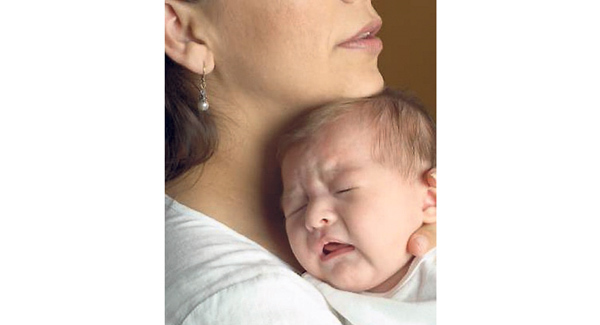
It is one of the most common childhood food allergies in the developed world, affecting 2%-7.5% of under-ones, yet it can be difficult to identify, as symptoms are diverse, ranging from colic and eczema to vomiting and diarrhoea.
More than 90% of mums whose child had cow’s milk allergy knew nothing about the condition before the diagnosis. There are two types of cow’s milk allergy: IgE-mediated and non-IgE-mediated. IgE is an antibody that plays a major role in allergic diseases. In an IgE-mediated allergy, symptoms occur within minutes after eating or drinking anything that contains cow’s milk protein. In a non-IgE-mediated allergy, symptoms may not appear for many hours or for a few days.
In IgE-mediated allergy, symptoms can include rashes or hives, colicky abdominal pain, nausea and vomiting, diarrhoea, hayfever-like symptoms, breathing difficulties or wheezing, and the potentially life-threatening anaphylaxis — although this reaction is extremely rare in infants.
In non-IgE-mediated allergy there may be colic, skin reactions, eczema, reflux, loose stools, abdominal pain, constipation, and failure to thrive.
Dr Adam Fox, a consultant paediatric allergist, says the incidence of both types of milk allergy in children is roughly equal.
“With IgE-mediated reactions, the majority are mild, with only a minority being more significant. With the delayed, non-IgE-mediated allergy, nobody really knows how much there is because it’s difficult to pin down. Where there’s an immediate allergy, you can get a definitive answer by giving a child some milk and seeing if they have an immediate reaction, but with delayed allergy, because the symptoms are so diverse and are things like eczema, colic and reflux, which are very common in babies, it’s much more difficult.”
Dr Fox says to get a clear diagnosis of delayed, non-IgE-mediated allergy, exclude milk from the diet, and reintroduce it a few weeks later to see if the child’s symptoms have improved, and then if they deteriorate when they start consuming milk, or milk products, again. Most children with a milk allergy will show symptoms as soon as it is introduced into their diet, around weaning, says Dr Fox. Some will have symptoms from breastfeeding, from the cow’s milk in their mother’s diet.
“The majority of breastfed children don’t get symptoms. It’s only when they have cows’ milk directly, for the first time, that they get them,” he says. “The more symptoms a child has, and the more different systems those symptoms are in, the more likely it is that there is an underlying allergy. There’s no easy test — the only way you can find out for sure is by cutting milk out and seeing if they get better.”
Parents should keep a strict record of the child’s diet, their symptoms and their duration, to ease diagnosis.
But although the diagnosis and management of the allergy can be difficult, most children with milk allergy outgrow it, says the British Medical Journal, at an average age of five years for IgE-mediated cows’ milk allergy, and an average age of three years for uncomplicated, non-IgE-mediated allergy.

CONNECT WITH US TODAY



Be the first to know the latest news and updates

















