Brendan Gleeson shows his acting range
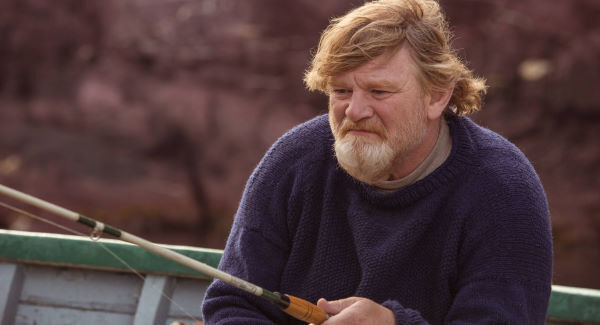
Brendan Gleeson shows his versatility in his latest role as a Canadian rogue, writes Alan O’Riordan

Brendan Gleeson shows his acting range

FRESH from adding a believable, grizzled and nuanced core around which the more cartoonish elements orbited in Calvary, Brendan Gleeson can now be seen adding heft to a Canadian comedy, The Grand Seduction.

It’s a charming, unlikely caper in which a moribund Newfoundland fishing village hopes to save itself from stagnation by getting an oil company’s recycling factory to locate there. The factory contract stipulates a doctor must be resident in the village, and that’s what the title alludes to: the desperate attempts by the locals to convince a cosmopolitan plastic surgeon that Tickle Head harbour is more to his taste than he might think.

In an elaborate ruse hatched by Gleeson’s character, Murray, the whole village is enlisted to convince the doctor that they share his passion for cricket, jazz, and Indian food. The clash-of-cultures farce gives plenty of amusing scenes, set in a pleasingly shabby village around a stunning harbour location. There is much shushing and hushing, racing to and fro, and ingenious subterfuges until the inevitable exposure and a will-he won’t-he climax. Think Waking Ned, set in Canada.

Yet, Gleeson adds another dimension. There’s a sense of a character not just fighting for his village, but for his own sense of himself. “I love the character because he’s such a rogue,” says Gleeson, “but he has fantastic integrity. There’s this duality to him. Liam Cunningham had a lovely expression — he’s a lovely bunch of fellas, and this guy is like that. He’s fascinating.”

The Grand Seduction is based on a Quebec film from 2003, La Grande SĂ©duction and its opening scene has a very Gallic flavour. It’s the 1950s; the men, calloused of hand, briney of beard, are coming home from the boats to dinner on the table. There are ruddy-cheeked children to one side, a handsome wife, generous of bust, at the other. It’s a recipe for not just domestic, but erotic bliss, according to the film, as later a collective post-coital sigh rises with smoke from the village chimneys.

“It’s a very romantic opening and I suppose I thought ‘Don’t go too far with that’. This was a tough life they led, but I think it is a legitimate point,” says Gleeson, a late convert to acting, with plenty of experience of so-called ‘real’ work.

“I do remember working at physical jobs,” he says. “I wasn’t very effective at them, but there is something about being healthily tired. You do sleep in a way that’s different — you do. It’s like you’ve earned your sleep. You’ve earned your repose. You’ve done the best you can for that day.”

This opening scene is Murray’s childhood — and compared to his father, he is a domesticated softee, robbed of the luxury of doing a good day’s work and reduced, like his peers, merely to collecting welfare cheques by a moratorium on cod fishing. Murray doesn’t just want a working harbour back, he wants himself back, too.

“Your sense of yourself, you self esteem. your culture, everything about you becomes legitimised by having a job,” says Gleeson. “My heart goes out to people, particularly in middle age, but even just starting out, where you are so defined by what you do. It’s not even about how other people see you, though that’s rough; it’s about how you see yourself, how you define yourself. how you feel in yourself — are you worthwhile?

“It’s really hard when you’re not working, if you can self-motivate, get into a place where you can do your own thing, that’s a great way to be, but not everyone is capable of this.”

In that sense, The Grand Seduction is very much a film for now, as was Calvary. Where that was in essence a latter-day morality play, it still intelligently explored what it’s like to be a priest in modern-day Ireland, on the one hand blamed for the sins of others, on the other deprived of any authority.

Where Calvary asked what it’s like to be a priest without parishioners, The Grand Seduction asks what it’s like to be a fisherman without fish, but that predicament is equally applicable across a host of blue-collar jobs that have been outsourced, downsized, mechanised or shipped abroad.

Does Gleeson look for films that speak directly to their time? “Well, I’d love to do Shakespeare, but it’s true that almost always, since the time I was doing this full-time, and even before that, with the Passion Machine [theatre company], it was almost always new writing I was doing. I like to see what writers are exploring, so there is bound to be a crossover with the zeitgeist.”

Of course, the breadth of Gleeson’s roles show that new writing does not always tack directly to the present moment. Switching from big Hollywood productions to smaller Irish ones, he has appeared in Braveheart, Troy, the Harry Potter films, The Guard, The General and In Bruges. He played Michael Collins in the RTÉ series The Treaty and, from the other side of that divide, Winston Churchill in HBO’s Into the Void.

The range of roles and the quality of performances are striking, perhaps that’s why Gleeson in person exudes a relaxed, happy, confidence. Or maybe he was always like that. But, whatever it is, he’s in a good place professionally, this former teacher.

“I didn’t give up teaching to do something crap,” he laughs. “I enjoyed teaching those lads, so I didn’t want to give it up for nothing. And now, I suppose I can pick and choose, but you still have to fight for anything that’s worth making.”

The Grand Seduction opens on Friday

x

More in this section

Cookie Policy Privacy Policy Brand Safety FAQ Help Contact Us Terms and Conditions

© Examiner Echo Group Limited













