Branching out was best move for Antlers
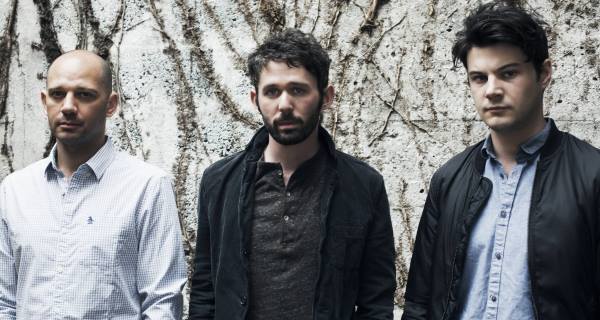
“It was weird — the biggest response I thought I would receive was someone coming up saying ‘Hey man, your record’s kinda cool’,” recalls Silberman, with the hint of a sigh. “All of a sudden I had these people telling me their stories — how Hospice had brought them through a difficult time. When you don’t know them at all, that’s a strange situation.”
Many of the fans who shared their pain were grieving loved ones who had passed away in circumstances similar to those recounted in Hospice (the female protagonist has terminal bone cancer and dies at the conclusion of the album). This threw Silberman for a loop. The LP had painted vivid scenarios with which listeners had empathised — did it matters that the whole thing was fiction? It took a while for him to puzzle through the conundrum. In the end, he decided that what was important above all else was the emotional connection.
One of the incessant rumours that sprang up around Hospice is that it was inspired by cult poet Sylvia Plath, who took her life at age 30. There is a song on the record entitled ‘Sylvia’ and critics have discerned parallels between Silberman’s life and that of Plath, both having moved to New York City after studying in small town liberal art colleges. Moreover Silberman has an arts degree and his mother is a writer, so it is exceedingly plausible that he might have encountered Plath’s work. The clincher, for the conspiracy-minded, was the part in Sylvia where Silberman sings “Get your head out of the oven” (Plath committed suicide by carbon monoxide poisoning).
In fact, he was only vaguely aware of Plath during the writing of Hospice and had not read her seminal work, The Bell Jar.
“A lot of individuals had a very intense experience with that record,” he says. “It surprised me. And it was weird. Someone comes up to you — that’s odd. I was happy for the connection, that the album meant so much.”
The success of Hospice, widely agreed to be a stand-out alternative LP of 2009, prompted a great deal of soul searching on the part of Silberman. It wasn’t simply the fervor with which the music had been received. Another difficulty is that the singer was finding his way as a musician when he wrote the album. The Antlers were widely assumed to be a band. In fact it was just him. He balanced a lot on his frail shoulders.
This was all new to the young songwriter, a native of upstate New York freshly relocated to Brooklyn. He worried whether he could keep the project together on a longterm basis. Hospice was an almost perfectly formed album. Could he make lightning strike twice? Did he even want to try?
Four years later, the answer is unquestionably in the affirmative. Rather than be defined by Hospice, Silberman has used it as a catapult towards greater things. The Antlers truly are a band now, a three-piece that has stepped assuredly outside the shadow of their break-out long player. With little fuss they’ve put out a further two LPs and an EP — records that have moved easily between genres, encompassing a variety of styles and emotional sensibilities. The latest, Familiars, delivers arguably the biggest curve-ball yet: it is lathered with swelling Memphis brass, reflecting a deepening soulfulness in Silberman’s writing and a increasingly relaxed attitude towards collaboration.
Dear UK + Europe: Familiars is out today but due to production issues LPs will be in stores a few days late. We promise they're coming soon!
— The Antlers (@theantlers) June 16, 2014
“The horns didn’t come in until the end of the process,” he explains. “It was an idea Darby [Cicci, bassist and keyboardist] was working on. We tried different ideas through the entire process. It was only at the end that it became obvious they were starting to add up. It was apparent horns were going to be an important force on the record.”
This is quite a turn-about. Hospice was essentially a solo affair — Cicci and drummer Michael Lerner did not join the band until long after its release. Now, Silberman is handing key creative decisions to his bass player. Not all frontmen would be so open-minded. Isn’t he protective of his vision?
“I guess I’m precious about my lyrics — to a fault,” he says. “Aside from the words, I never consider these to be ‘my’ songs as it were. They are always our songs. I like that we can make room for one another. I don’t feel any need to control what we are doing. The element of surprise is appealing.
“Having worked by myself I appreciate the experience of making music with other people — it adds the element of the unexpected. I genuinely don’t know what is going to happen. That is very exciting for me.’
As one might predict having listened to his music, Silberman is polite and thoughtful. He also has classic tortured artist tendencies. By every account the Antler’s previous album, the Radiohead-esque Burst Apart, was an ordeal to make. Was the process easier this time around?
” I don’t know if ‘fun’ was quite the word. No, it wasn’t fun. It was a work that required a lot of focus and exploration. It was a huge challenge. There was a lot of struggle in there. But we came out the other end okay I think. Ultimately that is what it is about.”
CONNECT WITH US TODAY



Be the first to know the latest news and updates

















