Transforming the lives of the elderly through the medium of respect
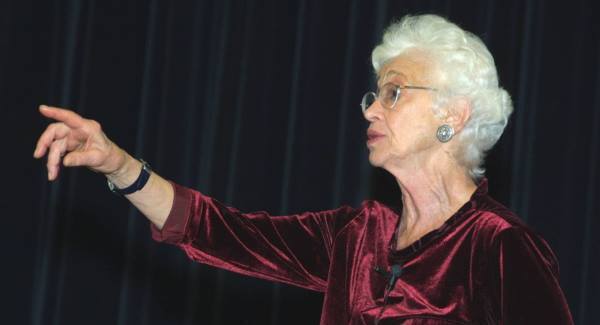
Naomi Feil has found a new way to care for the elderly — and she has transformed lives, writes Colette Sheridan.

Transforming the lives of the elderly through the medium of respect

REDUCING stress and enhancing dignity and happiness in disoriented elderly people is the goal of Naomi Feil, an American woman who has developed a model called Validation.

She practises Validation with residents of nursing homes and day care centres throughout the world as well as leading workshops in this method which is all about respecting the elderly, communicating with them and accepting that their brains change as they age.

Feil recently led a revelatory Validation workshop at the Brookfield Health Sciences Complex at UCC. Over 100 delegates attended, most of whom were female. They comprised nursing home carers, home carers, nurses, students of nursing, psychology and social work. Feil, aged 82, frail looking but mentally sharp, engaged in role play to demonstrate how Validation works. At one point, she held the face of a woman from the audience (representing a disoriented elderly person) in a way that a mother holds a baby’s face. She sang familiar old melodies to the woman. It was an example of connecting with someone by focusing on their comfort zone and tapping into their emotional memory.

Validation is a practical way of working with very old people that is built on an empathetic attitude and a holistic view of individuals. It’s about seeing the world through the confused elderly person’s eyes and understanding the meaning of their sometimes bizarre behaviour.

“If you don’t want to touch old people, you shouldn’t be working with them,” said Feil who developed the Validation method from 1963 to 1980 while working at Montefiore Home and at the School of Applied Social Sciences at Case Western Reserve University. It was a response to her dissatisfaction with traditional methods of working with severely disoriented elderly people.

Validation helps those diagnosed with Alzheimer’s Disease, dementia and general disorientation. Elderly people who are trying to ‘tie up loose ends’ by retreating into fantasy or confusion, are often brought closer to reality and security by practitioners of Validation.

Through careful listening, eye contact and touch, a Validation practitioner can build a sense of mutual respect and trust with the elderly person. Feelings and memories can be understood and interpreted. The techniques allow the carer to enter the elderly person’s inner world. It’s important to know the important elements of the older person’s life story.

Empathetic listening is vital as is maintaining respect throughout any dealings with the elderly. If an old lady says she wants to see her husband (who is dead), Feil says the carer’s response might take the form of asking the lady what her husband looked like. “Respect the person. She knows her husband is dead.”

What if an elderly person declares that they wish they were dead? Feil says that the wrong thing to say is ‘I know what you mean.’ You might be a 45-year-old carer. The old person might be 95. You don’t know what they mean. What you could say is ‘you don’t want to live anymore? What’s the worst thing about being alive?’ When the person has stopped crying, you can help them reminisce by asking them where they were born.” Lying to the elderly and patronising them is the antithesis of Validation.

With a growing elderly population, there is an onus on society to care for the old in a way that is respectful. Feil says that it’s quite normal for a very old person to lose their memory.

“That doesn’t make them diseased. It’s just brain deterioration. The brain goes through different phases during the life cycle. We accept that but not when it comes to old age. But it’s as normal as accepting wrinkles, no matter what creams you use. If a person is at the beginning stages of memory loss, accept them and do not say, ‘don’t you remember?’ or ‘I just told you that.’”

Feil says that Validation is practised a lot in Austria, Germany and Japan. “It’s not used so much in the US because American society is one where people are medicated. It can be very hard to listen to a person who is disoriented. You try and distract them and when that doesn’t work, you medicate them. You end up with nursing homes that are full of ‘living dead’ people. But that doesn’t have to happen.”

Elderly confused people can become angry in their latter years. Feil says this can be a result of them controlling their anger when they were younger.

“As a teenager, you need to express your anger; you need to rebel. If you don’t, feelings can come out later and you see old people losing their social control and swearing like they never did before.”

Feil says the appropriate response is to acknowledge the anger and let the person talk about whom or what makes them angry. It’s all about listening to the elderly confused person. Listening in a non-judgemental way is “a gift,” says Feil.

www.vfvalidation.org

More in this section

Cookie Policy Privacy Policy Brand Safety FAQ Help Contact Us Terms and Conditions

© Examiner Echo Group Limited













