Leith's gloom replaced by sunny Miami skies
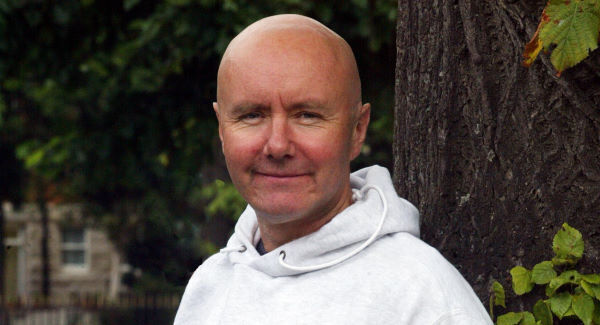
WHEN Irvine Welsh first moved to the United States over a decade ago, his curious brand of Edinburgh humour didn’t go down too well with Americans.
“My wife is always saying to me that I shouldn’t be so abusive to my friends,” he says with a mischievous smile when we first meet in a rooftop bar in Shoreditch overlooking London’s East End.
“People in America find the humour we have over here very wounding... the irony and slagging off culture is something they don’t get in the US.”
We’re discussing these nimble but important cultural differences that exist across the Atlantic because Welsh has finally written his first all-American-novel, The Sex Lives of Siamese Twins. The two chief narrators are women, another precedent for the 55-year-old cult author.
Like many of the complex protagonists Welsh has created in the past, Lucy Brennan doesn’t do things by halves. The 33-year-old Boston born fitness instructor lives in South Beach, Miami, Florida.
Each morning she rises at sunrise, where she immediately kicks into a regime of fanatical training.
The narrative begins with a surprised car jacking that almost resembles a scene from Tarintino’s Kill Bill. And when Lena Sorenson — an avant-garde artist, with a big heart, and an eating disorder — catches this kickboxing episode on her mobile phone, Lucy gets caught up in a local media storm. She becomes a small time celebrity of sorts. And becoming the leading presenter in a new weight loss reality-TV show seems like a real possibility.
But when these two characters finally meet again, circumstances have changed. Lucy ends up kidnapping Lena and subjecting her to several weeks of torture. Lucy holds her new victim to a strange demand: lose weight or stay a prisoner. In spite of the action packed storyline, the book is, I believe, one of Welsh’s weakest yet.
If Trainspotting and Skagboys both offered a disturbing insight into a drink-fuelled-paranoid-psychopath called Francis Begbie; or Filth brought the reader into the sick mind of the twisted-perverted sex-pest, Bruce Robertson, Welsh’s latest offering— without having a phonetic Scottish dialogue to lean on, or use to his advantage —just doesn’t move along with the same intensity. Moreover, his characters in this book don’t possess the same authority or dark humour that made much of his previous work so compelling and original.
Pubs have now been replaced by juice-bars; football chat with calorie-count-watch; and the ominous grey clouds that hang over Leith’s whacky drug fiends and dipsos, have been substituted for Miami skies, where bronze bodies hover by and flex their muscles in the sun.
As I read further into The Sex Lives of Siamese Twins, I longed for a mad laughing lunatic in an Edinburgh bar to take me away from this constant talk of gyms and fitness.
Some critics in the British broadsheets have lavished praise on the book. And, those closest to Welsh seem to think that Lorena and Lucy resemble his own personality.
“It’s interesting my wife said to me that these two characters are more like me than anything I’ve ever written,” he says.
“I was shocked when I first heard her say that. But I can see that now because I’m quite obsessive compulsive myself. And I do exercise endlessly.”
“Lucy’s mindset in this book is that you must have control over your life. And if you don’t, someone else will. That’s what drives her essentially. Because she has her own demons to wrestle with.”
Those demons stem from a rape that happened to Lucy when she was a teenager growing up in Boston. The scars of this event have given the tough-talking-foul-mouthed-trainer a low sense of self-esteem. And she appears to be unable to commit to an intimate long-term relationship. The book is filled with endless confessions from Lucy of random sexual encounters.“I do like the physicality of a novel,” says Welsh. “I think novels can sometimes be too much about the mind. We’ve got these minds, souls and all that. But we don’t understand the true nature of our existence. And we are all just bouncing around in this decaying parcel of flesh. And the physicality of that is quite a weird part of human existence. I suggest to Welsh that Lucy’s obsession with attaining a perfect physical appearance could almost be a metaphor for how the body is viewed in the internet age: where social network sites and endless online pornography has changed the way we now perceive what was once a very private concept.
“I think so,” says Welsh, nodding his head in agreement. “And for all the reasons that you’ve just stated. We are now bombarded with images of people. If you think back maybe 30 years ago, people put all their photos in a personal family album. And now if you’ve got a Facebook or Twitter page, the pictures are very much bound in by a public timeline, as well as the idea of your own mortality. We publicly kind of exhibit ourselves the way we didn’t before. And I think that has got devastating long terms psychological effects. We’ve created a very strange zoo, and I don’t think it really suits us as beings.”
Welsh was born in Leith in Scotland in 1958. He grew up on a council estate in north Edinburgh called Muirhouse.
“Most of the people I grew up with all came from the tenements in Leith, and people knew each other quite well, so there was a very strong sense of community, even though it was seen as a disadvantaged part of town. There was an old Celtic, storytelling tradition about the place. And people didn’t write their stories down. So I think for me, it was definitely a good grounding to become a storyteller in.”
Last year Welsh wrote a passionate article on his support for Scottish national unity. The piece also discussed the different facets of British identity.
“I think [Scottish Independence] is inevitable,” he says. “I’m not sure that it’s going to happen in the referendum in September, but long term it is inevitable. The union seems to be in decline. It was bound together through a focus on industrialisation and empire. And now we’re a post industrial and post imperial society. The welfare state is being dismantled. So everything that held people together is now being undermined. It seems to be that the countries are turning back towards their own respective nationalities again.”
Welsh claims an independent Scotland would, paradoxically, make the UK a more united place. “I’ve no problem being British. The problem is that the UK is an imperial state: it’s still founded on a monarchy and run by a very narrow public-school elite. The British establishment are worried about Scottish independence because if the Scots get rid of the House of Lords, the City of London, and the English public school system, I don’t think English people are going to put up with it either. That is the real fear for the establishment.”

CONNECT WITH US TODAY



Be the first to know the latest news and updates

















