Abortion doctor who delivered us unto evil
IT WAS July when a pregnant teenage girl walked into an abortion clinic in Delaware. She was with her aunt. They met Kermit Gosnell, a doctor who normally worked out of a centre in one of the poorest areas of Philadelphia.
The three discussed an abortion and agreed a fee of $1,500 (€1,100). But after an ultrasound, Gosnell told the aunt the 17-year-old was further along than she had said. The price rose to $2,500 (€1,800). Cash was paid, the girl was given pills to induce labour, and told to be at the Women’s Medical Center in Philadelphia the following morning.
When the girl arrived with her aunt, they might not have noticed the urine-stained walls, the bloody blankets, or the flea-infested cats. They would not have seen the foetuses, kept in glass jars in an office.
A second ultrasound was taken, and an age of 29.4 weeks recorded. The girl was seven to eight months’ pregnant. For 13 hours, the girl was left to labour and given drugs to induce delivery. She gave birth to a baby boy, who was 18 to 19 inches long, said staff member Kareema Cross, who estimated he was nearly the size of her own six-pound, six-ounce newborn daughter.
What happened next is just one of many horrifying stories that emerged in a report by a grand jury in the murder trial of Gosnell, and which will be told in a controversial movie being made by two Irish filmmakers who raised $2.2m (€1.6m) from crowd-sourcing.
The baby was breathing. While the mother was asleep, Gosnell “just slit the neck”, then put the body in a shoebox. The baby was still moving for seconds after.
There were other witnesses, staff members. The body was so big they photographed it. Said Cross: “I’m not sure who took the picture first, but when we saw this baby, it was — it was a shock to us because I never seen a baby that big that he had done. So it was — I knew something was wrong because everything, like you can see everything, the hair, eyes, everything.”
Cross said the doctor joked: “This baby is big enough to walk around with me or walk me to the bus stop.” This was Baby Boy A.
Gosnell was convicted last year of murdering three babies, including Baby Boy A, and performing multiple, illegal late-term terminations (over 24 weeks).
He was also convicted of the manslaughter of a woman who died after being pumped with drugs during an abortion.
Gosnell avoided the death penalty after agreeing not to appeal and was sentenced to life in prison.
Nine others, including Gosnell’s wife and staff members, pleaded guilty to various charges.
The Grand Jury hears testimony heavily weighted towards the prosecution. Nevertheless, it heard evidence from scores of witnesses who saw what went on inside the west Philadelphia Women’s Medical Center.
It concluded, in a seething 281-page report, that there were “untold numbers of babies — not feotuses in the womb, but live babies, born outside their mothers — whose brief lives ended in Gosnell’s filthy facility... The doctor, or his employees acting at his direction, deliberately killed them as part of the normal course of business. Gosnell’s staff testified about scores of gruesome killings of such born-alive infants carried out mainly by Gosnell... These killings became so routine that no-one could put an exact number on them.”
It was a lucrative business: the killing, the illegal, late-term abortions, the savings on sanitation — dirty instruments that spread venereal diseases; the failure to pay for ‘waste’ to be taken away; the low wages to untrained staff; and the cash payments.
Gosnell earned as much $10,000 (€7,300) to $15,000 (€11,000) a night, mostly in cash, for a few hours of work.
This does not include money he made as one of the top prescribers in the state of Oxycontin, the addictive pain medication. He ran a pill mill.
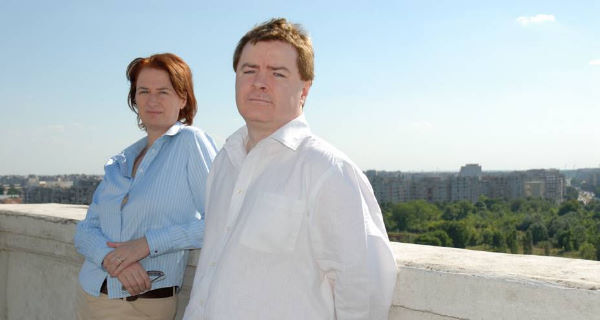
The Irish filmmakers, Phelim McAleer and Ann McElhinney, say Gosnell is perhaps the worst serial killer in United States history, but that his story has been ignored by big media and Hollywood because it’s about abortion, the most divisive subject in the country, which the ‘liberal media’ does not want to touch.
The Los Angeles-based husband-and-wife team fund-raised via crowdsourcing to make the made-for-television docudrama, which is based on the trial and the grand jury report. The fundraising was driven in large part by support from America’s massively popular right-wing talk-radio jocks, including Rush Limbaugh.
The trial heard how Gosnell delivered the live babies, then severed their spinal columns with scissors, killing them. Catering mostly to poor black people and immigrants, Gosnell got away with it for decades. According to the grand jury: “Gosnell’s technique of aborting pregnancies by inducing labour and delivery, while unnecessarily painful for the women, did not itself constitute a crime. What made his procedure criminal was that he routinely performed these abortions past the 24-week limit prescribed by law. Not only was this a crime in itself, it also meant that he was regularly delivering babies who had a reasonable chance of survival.
“Except Gosnell would not give them that chance. Pennsylvania law requires physicians to provide customary care for living babies outside the womb. Gosnell chose, instead, to slit their necks and store their bodies in various household containers, as if they were trash.”
Gosnell’s reckless treatment left women infected, sterilised, permanently maimed, close to death, and, in at least two cases, dead, the Grand Jury concluded. “While the evidence before the grand jury supports only a limited number of murder charges, it is without challenge that Kermit Gosnell, under the pretext of providing medical care, routinely killed viable babies and irreparably damaged women.”
This was all largely ignored by the media in the US: many Americans have not heard of Gosnell, says McAleer
As with their previous films, Fracknation, which supports fracking, and Not Evil Just Wrong, a reply to Al Gore and his global-warming warnings, McAleer and McElhinney are partisan, against what they believe is a massive, leftist bias in the US media.
The story of the now 73-year-old Philadelphia abortion doctor has been ignored, says McAleer.
Last April, McAleer attended the trial for three days and was astonished to see the rows of empty seats reserved for the media, and only three local journalists present.
McAleer said: “Americans have a huge appetite for films about serial killers. There have been four movies about Ted Bundy, five about the Zodiac killer, three about John Wayne Gacy and one about Jodie Arias. Kermit Gosnell killed more than them all put together.
“He’s a fascinating monster — a hoarder, mad man and megalomaniac. He’s a black man who is racist against blacks and Hispanics. He is a real-life Hannibal Lecter and we are going to tell the story. This will be the film that Hollywood and the liberal media don’t want people to see.”
McAleer said the case was ignored because there is a consensus that abortion should not be portrayed in a bad light. Coverage was scant, he says, particularly compared to another trial at the time, of a young woman, Jodie Arias, who was convicted of the murder of her boyfriend. There was blanket coverage of Arias, particularly on the cable news channels.
Gosnell’s trial was hardly covered by the national media, provoking a debate that got as much column inches as the details of the case. It became a predictable right-, left-wing knockabout, with those on the right concluding much the same as McAleer, that the media decision-makers are liberal and pro-choice.
But other reasons have been suggested for the lack of coverage on the network television stations and cable channels: there were no images because Pennsylvania does not allow cameras in its court rooms; it was too gruesome for prime time; the judge had put in place a gag order, limiting coverage ahead of the trial; the victims were poor blacks and immigrants, not in the television audience demographic.
These reasons say much about the cynicism of news in the US, and are alternatives to the charge that it was ignored because it was a story about abortion.
McAleer, 46, from Co Tyrone, is a former journalist with the Sunday Times, in Dublin, and a correspondent with the Financial Times, based in Bucharest in Romania. McElhinney, from Donegal, is best known in Ireland for Tristan’s Mum, a documentary shown on RTÉ about Tristan Drowse, who was adopted by an Irish couple but abandoned two years later.
In McAleer and McElhinney’s short time in the US, they have certainly shaken things up.
FrackNation was made in response to criticism, in documentaries and other media, of fracking, a method of extracting natural gas from deep underground by using massive amounts of liquid, often water, to crack open rock formations.
If there were residents opposed to fracking in their areas, who claimed their water supplies had been contaminated, the two Irish filmmakers found residents who were very much supportive.
Fracking has made the US energy independent.
McAleer and McElhinney also went after Al Gore, questioning many of the facts in An Inconvenient Truth, the former vice-president’s film on global warming.
McAleer and McElhinney are favourites of the right-wing, with the launch of crowdsourcing for the Gosnell film leading to appearances on more than half a dozen of the hugely popular talk radio shows, all right wing, as well as the infamous Glenn Beck’s internet television channel.
They are among the most popular speakers at Republican gatherings.
The campaign to raise the money began controversially, as McAleer says Kickstarter, the major player in crowd-sourcing, effectively censored the filmmakers.
An opinion piece in the New York Post, by McAleer, repeated the charge, while it has gained traction across different media.
Again, there is more shade to the story.
Correspondence between the filmmakers and Kickstarter reveals the funding site objected to the line “thousands of babies” murdered by Gosnell. This was not acceptable to the filmmakers.
There was also a dispute over a rider stating that Kickstarter could suspend, or pull, a project at any stage, something the company says has been standard for a year.
Whatever the back story to the funding, McAleer and McElhinney went with a rival, indiegogo.com.
And whatever the reasons for the lack of coverage of Gosnell’s grisly tale, McAleer and McElhinney want to make a movie.
“It’s going to be a crime drama,” said McAleer, but with a flavour of the wider issues of media coverage and, crucially, abortion.
Stories have emerged of insanitary conditions in other abortion clinics, while the debate over late-term abortions is back, front-and-centre.
Following the 2009 murder of Dr George Tiller, in Wichita, Kansas, there are now only four doctors in the entire US who are known publicly to offer late-term abortions, up to 24 weeks.
It is not known how many doctors do late-term abortions in the twilight or dark. Gosnell was known throughout the north-east; women came from a score of states, mainly through whispers ‘underground’.
Pro-choice advocates say that what went on in the Gosnell clinic is the opposite to safe, early abortion, or even safe, late-term abortion.
If the women had access to properly funded support and advice, and abortions, at an early stage, Gosnell would not have been able to operate, it is argued. In short, he was a backstreet butcher of the kind that would mushroom if safe abortions were not available.
In the aftermath of the trial — and even before — states had begun pushing for tighter controls on abortion clinics, and higher standards and more inspections. On the latter, both sides of the abortion divide agree.
This has led directly to the shutting down of nine clinics in Pennsylvania, mainly because they could not afford to upgrade their premises.
Some states, like Texas, have cut to 20 weeks the legal limit for abortions.
One of the disturbing aspects of the case was the lack of supervision by health authorities and the fact that warnings about Gosnell were never followed up.
There were no inspections of the clinic, from 1993 to the day it was raided in early 2010. After details emerged of what was going on in the centre, eleven state workers were fired for failing to follow up on complaints.
Indeed, the raid was carried out not as part of an investigation into Gosnell’s abortion business, but into his role as one of the largest prescribers of drugs in the state.
It was only when a detective started making inquires after hearing about the death of a woman at the clinic, a few months earlier, that an investigation began into what was happening.
Yet records held in Philadelphia, documenting dangerous practices, reach back to the 1980s, even the 1970s.
For decades, Gosnell did not staff his facility with licensed or qualified employees. He never properly monitored women under sedation. He botched surgeries and then failed to summon emergency aid.
And he killed babies.
CONNECT WITH US TODAY



Be the first to know the latest news and updates

















