Novelist Edmund White: My years as an American in Paris
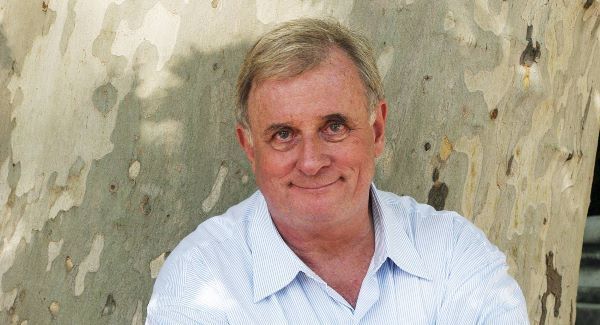
FEW can match Edmund White â who was praised by novelist Vladimir Nabokov â for precision and humour in writing.
White, an American, ponders the French in his latest book, Inside a Pearl: My Years in Paris, which is a memoir of the years he lived by the Seine. He arrived in the summer of 1983 and stayed for 15 years.
âI hadnât anticipated little etiquette things would disturb people,â he says. âFor instance, in France you canât really ask somebody âwhat do you doâ? Or you canât ask them âwhere are you from?â, suggesting theyâre not from Paris. Because people get their back up very easily, if youâre suggesting they have a provincial accent. Or, if youâre too curious about what kind of work they do, because either they donât work, and that seems sad to them, or they work at a job that they think is inferior to their talent. You end up having to talk about the movies a lot.â
Inside a Pearl is a trove of insights into the French psyche and their peccadilloes. Table manners have a childish importance. Everything is politicised, even a judgement on a building. When the Louvre pyramid opened, White could tell who was Socialist or Gaullist, based on whether they liked or disliked the building. It was the only successful project of the François Mitterrand building spree. Mitterrand was obsessed, says White, with building monuments to himself.
French life, White says, hangs on the possibility of seduction, on the unsaid (le non-dit). In conversation, the French interrupt constantly, which played havoc with Whiteâs early attempts to complete a structured sentence in French, during dinner-party conversations. It didnât help that his language teacher was bats. She âlost itâ one day in the classroom, pleading with her students to turn the tables and ask her questions instead.
When a fellow student of Whiteâs asked her to tell them about Normandy, he writes: âthe teacher leapt into action. She drew a cow on the chalkboard and said, âOh, Normandy is famous for its butter.â Then, she drew a fish: âAnd for its fishing industry.â She drew a bed: âA fourth of all hospital beds are for the mentally ill.â She wrote âÂŒâ on the blackboard and, for emphasis, repeated, âLa maladie mentale. I myself have had electroshock treatments,â then wrote, âTraitements par Ă©lectrochocsâ.â
White says the French donât have much of a sense of humour. âThe way we, in the English-speaking world, especially in the UK and Ireland, are always taking the piss out of everybody â they donât like that. In England, there is a lot of rough teasing among friends, and the French donât go for that. This is kind of barbaric, to be generalising like this, but self-deprecation doesnât occur to the French much. They bristle and take offence if you tease them,â White says.
One of the delights of Inside a Pearl is the light it shines on other cultures, too. White writes that Americans eat âasparagus with knives and forks, instead of with their fingers, as civilised peopleâ do.
Unlike the French, who are reticent about their private lives and upbringing, Americans, writes White, âlike to bray our secrets to complete strangers on a plane or at the next table.â
He marvels, also, at the French reverence for rational thought â they can discard a prejudice easily, and replace it with a better, more evolved idea.
Americans struggle, he says, to change their minds. The French canât understand the mania Americans have for opening restaurants. In France, says White, a chef is the son of a chef. No one would willingly saddle themselves with the unending toil and financial woes of a restaurant.
The French are in the shadow of their north-eastern neighbours, he says. âThey have an inferiority complex towards the Germans. Theyâre very impressed by serious German music and by German philosophy. It sort of ruined their own writing. The French were always known for their clarity, until the mid-20th century. Then, they came under the fatal spell of Heidegger. They became much more obscure in their writing. Michel Foucault, who was a friend of mine, once said to me that people looked down on his later writing, because it was too clear.â
During a visit to Paris, in 1981, Foucault and a mutual friend, Gilles Barbedette, who was one of Whiteâs translators, scoffed at White when he told them about this mysterious new illness, called AIDS, that was felling gay men, blacks and drug addicts.
âOh no,â they said, âyouâre so gullible. A disease that only kills gays and blacks and drug addicts? Why not child molesters, too? Thatâs too perfect.â
White, who left New York for Paris partly for âan AIDS holidayâ, discovered, in 1985, that he had contracted HIV. He knew, before he took the test in Switzerland, that the results would be positive, having notched up 3,000 gay lovers over a 20-year period. He buckled under the news: âI pulled the covers over my head for a year.â Miraculously, he was a âslow progressorâ, which has ensured his survival.
Foucault is one of dozens of celebrities who wander the corridors of Inside the Pearl, including ex-pats like Peggy Guggenheim, Elizabeth Taylor, Spike Lee, Raymond Carver, and French luminaries, such as the film director, Louis Malle and Yves Saint Laurent, âwho seemed to be heavily dopedâ when White met him for a Vogue magazine interview. He says he never stumbled across Samuel Beckett in the city, although he did meet Barbara Bray, Beckettâs long-time translator.
âShe was absolutely charming and ageless. She looked like a young woman, although she must have been 75 or 80 at that point. I said to her, âPeople say that you were Beckettâs mistress.â She said, âYes, people do say thatâ,â White says.
White, who will be one of the headliners at next weekâs Dublin Writersâ Festival, has a soft spot for Ireland, ever since a porter at the Shelbourne Hotel, in St Stephenâs Green, addressed him knowingly: âAnd would you be the writer?â People would never recognise a writer in America, he says. But thereâs a bit of glitter to everyone in Ireland, he says.
âI met SĂ©amus Heaney many times, but I remember seeing him in London, at the hotel where I was staying. He had just won the Nobel Prize for Literature. We were both having breakfast and I said, âWhatâs it like to be so famous?â He said, âOh, well. Everybodyâs famous in Irelandâ.â
*
Calling all parents & young ones (6+)! Come meet this bird on Sat 17 May @TheArkDublin @chrisjudge #DWF2014 pic.twitter.com/KwTNAjKsjf
— International Literature Festival Dublin (@ILFDublin) May 14, 2014















