Sturgill Simpson keeps it country for Kilkenny Roots Festival
SINCE 1998, Kilkenny Roots Festival has run over the May Bank Holiday weekend. Performers such as Ray LaMontagne, Alabama Shakes, Ryan Adams, Hurray for the Riff Raff, John Grant, Amanda Shires and James Vincent McMorrow have all played the festival early in their careers, giving roots music fans an opportunity to witness them close up, before they were catapulted to widespread recognition.
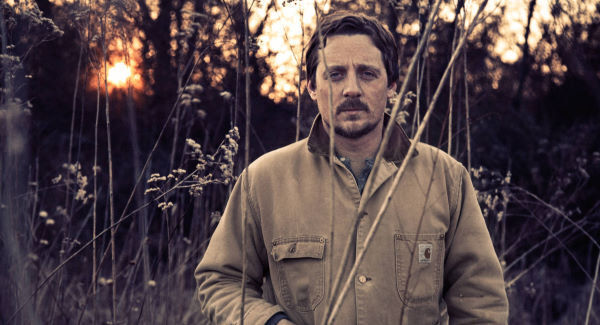
Kentucky songwriter and country singer Sturgill Simpson will play two shows in Kilkenny this weekend. Formerly the leader of Sunday Valley, a band that made waves Stateside about a decade ago, Simpson’s debut solo record, High Top Mountain, came out last year and he’s ready to release his sophomore album, Metamodern Sounds in Country Music on May 13.
High Top Mountain has earned Simpson favourable comparisons to some of country music’s earliest stars. The Washington Post says his songs contain all the love, loneliness, good times and dread that define country music.
Referring to his debut, Simpson says: “that was an effort to make a very traditional bare-boned, or what we call in America ‘Hard Country’ record, akin to ones made by guys like Vern Godsin and George Jones. I just wanted to make a record that encapsulated the country music that I was raised on by my grandfather.”
Produced by Dave Cobb in Nashville, High Top Mountain features on piano, Hargus “Pig” Robbins, a stellar session musician and Country Music Hall of Famer, who has played on records by the likes of Bob Dylan, Loretta Lynn, Neil Young, George Jones, Merle Haggard and Alan Jackson. “It was great for me,” says Simpson. “By far, it was the most impressive display of musicianship I’ve ever witnessed in my life. He sat there and on the first take he just played the actual perfect thing.”
‘Old King Coal’ is one of the stand-out tracks on Simpson’s debut. It’s a slow, moody country ballad, chronicling the advantages and disadvantages of coal mining in his native eastern Kentucky. “My grandfather, my great-grandfather and my mother’s brother were all coal miners,” he says. “So in that community you get to see both sides of the coin of the industry. It’s a very polarising topic in America. The song is more about the hardships I observed as a small child, as I watched the industry pull out of the region and what was left in its wake. It was really the only job provider. It created a small community and small businesses, and then the coal left. It all went to strip-mining and they didn’t need the same labour force anymore. When the big industries pulled out, it levelled an entire region in a matter of years. It’s really sad.”
Stepping out on to the stage of The Grand Ole Opry for the first time has to be a landmark in any country music artist’s career. Sturgill Simpson made his debut at the famed Nashville theatre last August and in the audience was one Dood Fraley, his 82-year-old grandfather.
“Honestly, having him there to see that probably meant more to me than the actual physical act of playing on the Opry,” says Simpson. “My grandfather grew up during the Depression in coal camps, in eastern Kentucky, in unimaginable poverty. He told me that every Saturday night the Opry is what everybody looked forward to... In his mind, nothing could have represented me making it more that being on the Opry — yeah, in his head it was the bee’s knees.”
Sturgill Simpson’s music has been described as hillbilly soul, hard-boiled country and honky-tonk, drawing comparisons with legendary figures like Waylon Jennings and Buck Owens — a far cry from much of the saccharine coated pop-country, emanating from Nashville.
“That’s a different approach and I guess a different ultimate goal,” says Simpson.
“In mainstream country, they don’t want to depress people or make them think about things that may cause them to think about humanity. It’s geared more towards... let’s have a good time, everybody party. And that’s great. I think a lot of people really like that, and the industry creates a lot of jobs for a lot of people that aren’t even on the stage. It puts food on tables. But it’s not an avenue I want to pursue.
“At the risk of sounding clichéd, I just want to make art and connect with people.”
Sturgill’s forthcoming release, Metamodern Sounds in Country Music, finds him looking for inspiration in different places, this time out. “It’s a little bit of a departure,” he reveals. “It’s still very much a country record but I just wanted to explore a few themes outside the conventional realm of what most people interpret country music to be. At its core, it’s really about the struggle of life and everyone celebrating that together. So I guess I just wanted to make a socially conscious country record.
“It may very well culminate into what could be termed career suicide,” he laughs.
*
Further information: www.kilkennyroots.com
Barrence Whitfield and The Savages: A full-throttle soul screamer in the spirit of Little Richard, Wilson Pickett and Solomon Burke.
John Blek and The Rats: A six-piece group from Cork city. A second album is in the pipeline, a follow-up to Leave Your Love at the Door, from 2013.
John Doe: A founder member of the much praised LA punk band X. His musical performances and compositions span the rock, country and folk music genres.
The Webb Sisters: Charley and Hattie Webb have recorded three albums and performed as backing singers for Leonard Cohen’s live shows.















