In The Light of Morning
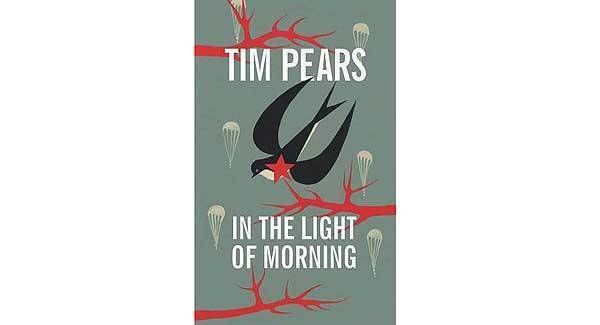
A carefully paced novel set in Yugoslavia in 1944, In the Light of Morning follows the youthful and idealistic Lieutenant Tom Freedman, an Oxford linguist recruited into a conflict which is one part liberation struggle and one part civil war. The âreflectiveâ Freedman is the sort of man in favour with the âback-room boysâ. However, it is exactly this thoughtfulness which leaves his cloistered, academic sense of identity vulnerable to the political and sexual challenges he is about to face.
Though this is the first historical novel from an author best known for stories of familial discord, Pears has misplaced none of his ability to conjure affecting and realistic scenarios. There is no sentimentality here. There is no shying away from the horrors of war or the depravities suffered by its participants. Personal betrayals fly as readily as bullets. Trust is a concept tested in safe-houses and by stolen hearts in a heavily forested battleground occupied by the Third Reich and patrolled by the Crna Roka, or Black Hand, a kind of Slovenian Black-and-Tans recruited from âcriminals and thugsâ.
Thus it is a true viperâs nest that Freedman parachutes into alongside farmer turned radioman Sid Dixon and the career-military Major Farwell, the latter of whom regards it all as a bit of a jape. They are part of the final Allied push to liberate Europe and they quickly connect with a group of Titoâs partisan saboteurs on a mission to destroy German supply lines by wrecking railway tracks and collapsing tunnels.
Yet the demolition which occurs takes with it more of the green lieutenantâs preconceptions and ideals than it does the old Hapsburg infrastructure. In this way the story owes a debt of inspiration to the experiences of the authorâs father, Bill Pears, whose time as a British advisor in this so-called âsideshowâ eventually led to a post-war spiritual conversion. Like him, Freedmanâs journey leads to conclusions about himself and his mission of a variety that he cannot readily accept.
The authorâs depiction of this psychological turmoil is delicate and respectful.
Indeed, the characterâs sexual awakening, the pivot around which the whole novel turns, is handled with a care that elevates In The Light of Morning from Boysâ Own adventure to a fine novel with wide appeal, a war story in which external violence and internal realisations echo each other again and again.
A case in point is the love triangle which develops between Freedman, Marija â an older, once married woman â and Jovan, a charismatic partisan modelled on Milovan Dilas, the bold resistance fighter who later became Titoâs deputy president before falling out of favour due to radical beliefs. Their complicated dance reflects the crossroads at which Slovenia finds itself as the war concludes, a country torn between western promises, a sensual native vitality, and the red-starred allure of eastern Socialism.
Pears paints the Slovenian landscape in an economical fashion which, like a solider itself, serves the story above all else.
âHow a partisan loves the mist out of which and into which he comes and goes, a deadly ghost,â he writes.
âHow he loves the fog that muffles his approach, the dusk into which he retreats, the falling rain that covers his tracks.â
Such sequences lend In The Light of Morning an experiential quality. The reader feels as though they are on the ground with Freedman throughout, their own loyalties, though never their attention, constantly tested as the charactersâ allegiances twist and turn until the very end.















