Balance is the key to healthy eating
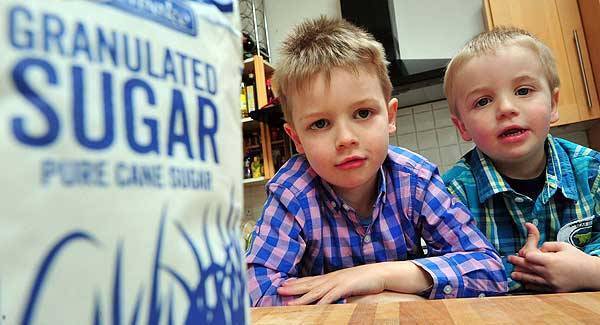
“PLEEEASE, Mom, just one treat. PLEASE”. He’s five, he’s loud and he wants his fix. It’s day one of our attempt to slash sugar intake for one month.
“What about a lovely rice cake?” I offer. But his mother’s sickly sweet smile ain’t working. “I’ll only take a chocolate treat,” he pouts.
His brother, aged two, pipes up: “Me want treat too, Mama. PLEEEEEASE.”
It’s my fault for teaching them that the magic word will get you what you want. But not this time.
“How about some raspberries?” I offer brightly.
Indignation, outrage and possible withdrawal symptoms raise his voice to new decibels. It’s going to be a long month.
Our family detox is based on the latest expert advice. Under World Health Organisation guidelines, adults may be advised to cut the sugar in their diets by half, with experts such as Professor Shrinath Reddy, a cardiologist at the Harvard School of Public Health, agreeing. He says there is “overwhelming evidence about sugar consumption links to obesity, diabetes and even cardiovascular disease”.
The Irish stats make grim reading. One in four adults — (24% of men; 26% of women) is obese, & one in 10 of five to 12-year-olds is overweight and a further one in 10 obese, according to the 2006 Irish Universities Nutrition Alliance National Children’s Food Survey.
There are many serious health implications for children who are overweight or obese, says consultant dietitian Aveen Bannon. These include childhood diabetes and high blood pressure, as well as low mood and self-esteem.
Children who are overweight are less likely to exercise, exacerbating the issue.
Sugar is everywhere. Not just the seven teaspoons in a Snickers or more than six teaspoons in a glass of cranberry juice. Bannon explains: “An average teaspoon of sugar is about 5g. The EU guidelines state that if a product is high in sugar it means that the food contains more than 15g of total sugars per 100g, which is approximately 3tsp of sugar.”
So a food considered low in sugar has less than 5g or 1tsp of sugar per 100g . Bannon says these are good references when reading labels for cereals, drinks, confectionery and baked products.
“For example, a can of cola contains about 8tsp of sugar, a milk chocolate bar about 6tsp and a 40g sugar frosted bowl of cereal about 3tsp before you add any milk,” she says.
You need to consider whether the sugar is an added sugar or present naturally in the food. Added sugar is what we really want to reduce, as it has no vitamin or mineral benefit, explains Bannon, whereas foods such as milk that offer calcium, protein and vitamins contain the natural sugar lactose.
“Fruit, which has so many benefits, contains the natural sugar fructose. So when looking at a food label it can be a good idea to check if the sugar content comes from added sugars or is naturally present. We still need to watch our overall sugar intake but it is the added sugars we need to really avoid,” she advises.
Look at any food label — from your bread to your ketchup — and it’s likely there’s one ingredient, probably close to the top of the list, that ends in ‘ose’. Glucose, lactose, sucrose, fructose, high-fructose corn syrup — it’s all sugar.
Refined sugar has uses, but they are limited, says Bannon. Medically-speaking it is important for treating hypoglycemic episodes as well as increasing water absorption in the gut when someone is severely dehydrated. However, for most of us, refined sugars have little nutritional value.
More and more scientific research is denouncing sugar, from the trailblazing British scientist and author of Pure, White and Deadly, John Yudkin, who proved sugar was bad for us in 1972, to anti-sugar experts such as American Dr Robert H Lustig, who wrote Fat Chance: Beating the Odds Against Sugar, Processed Food, Obesity, and Disease in 2012.
Lustig debunks myths about diet (mainly that to lose weight you have to burn more calories than you take in. This just isn’t how the body works, he says) and uses the global epidemic of obese six-month-olds to state his case against sugar.
His lecture on YouTube has over 4m hits and is well worth a watch. === In the video clip, he says fructose is a toxin and its detrimental effects are the same as alcohol, such as hypertension and hepatic dysfunction, because sugar is the same as ethanol (or pure alcohol). He shows a can of cola is the same as a can of beer, without the buzz, because alcohol is metabolised in the brain; fructose is metabolised mainly in the liver. And I wouldn’t give my precious children a can of Carlsberg, now would I?
The more I learn, the more I want to cut down on the sweet white stuff. Monday to Friday, anyway, and we’ll go with the flow at weekends. We try to include the boys, Culann and Finn, in the decision-making.
For example, for breakfast, our old routine was porridge/cereal every second day. On the new plan, it’s porridge or eggs on weekdays and they get to choose whatever they want on the weekend.
The first Saturday, I stuck to the deal and wound up making mounds of pancakes with chocolate spread. Me and my big mouth.
We don’t ever keep fizzy drinks in the house, but we used to give the boys watered- down fruit juice with most meals — we substituted that for milk or water with a slice of fresh lemon or lime. We had bowls of fruit and nuts for dessert instead of cake or ice cream. We threw away lots of junk from the cupboards — sticky sweets and licky lollies and noxious coloured jellies and buckets of stuff from Halloween, plus multiple selection boxes.
When we dined out, instead of a dessert each, we ordered one to share. It was plenty and it was fun sparring with spoons for the last bit.
Rice cakes became perfectly acceptable treat offerings, as did cashew nuts and popcorn and chopped-up fruit. We still had hot chocolate as a Saturday-night treat but smaller portions and a lot less marshmallows.
The month went easily enough and will hopefully be a lifelong effort. Zero tolerance probably won’t stay, but we will certainly strive to be more aware and just not buy the baddies in the first place. For my part, I cut out added sugar — such as my spoon in coffee. I won’t say I didn’t fill the biscuit jar — what if I have visitors? Sure you can’t dip a rice cake. But I did purchase biscuits I knew I wouldn’t scoff myself, like Jaffas, and made sure the boys didn’t know they were there. That first week, though, I’d have done time for a chocolate Hobnob.
I had a drawer in work full of nom-noms for that 3 o’clock slump, I gave them all away. Farewell Toblerone, we had our fun but the relationship wasn’t good for either of us — it was eating you up and making a pig out of me. I did keep a packet of chocolate I knew wouldn’t tempt me (those Cadbury Splats meant nothing, I swear!) and I wasn’t above slinking off to a chocoholic I knew was good for an odd Topic bar.
And husband, whose only (food) vice is a Tayto and peanut butter sandwich, admitted those selection boxes ended up in his workplace and his gob. The son of a dietitian, he’s always been aware of his diet, but he has stopped drinking so much fruit juice.
A month later, the scales say I’m 4lb lighter. But that could be the stress of finding new hiding places for the Jaffa cakes. The boys don’t ask for chocolate bars at home any more, for the simple reason that the bars are not in the house. Porridge is accepted as law, even if Culann does get to put a splodge of honey in his. Finn prefers banana and I stir a spoon of milled seeds in too.
We’ve introduced eggs to our breakfast repertoire and they love their fruit — grapes and strawberries are favourites.
I didn’t notice much change in behaviour — they were still full of mischief and mayhem, just like little boys should be. It is only after a trip to the cinema when they come home with bellies full of jellies I see what sugar does — turns them into little loons, bouncing around the house like pinballs, hyper two hours after bedtime. The bottom line is the boys will be healthier and have a better chance at dodging the obese bullet if we set them up with good eating habits now. A little of everything is ok, even moderation.
As a nation, we love our chocolate. We get through 198 bars per person a year, according to Leatherhead Food Research, with only the Swiss beating us as top consumers.
As we’re wired to seek out our mother’s breast, nature’s introduction to nurture and nutrition is super-sweet breast milk, it’s no wonder we’re inclined to a sweet tooth.
The hardest thing during our detox was trying to get others on board. We found it tough to continue the no-treats diktat when we were out. Asking an uncle not to give Finn a second biscuit was met with a “For God’s sake, they’re only small.” The biscuit or the child, I’m not sure which he meant.
Later when I asked if it was ok to give his 10-year-old daughter dessert, “Eh, yeah, we’re NICE to our kids,” he said and proceeded to relay with mirth the madness I was up to with the one-biscuit policy.
I didn’t even mention his cholesterol tablets. Sometimes, I’m too sweet for my own good.
Aveen Bannon is a consultant dietitian and mother of three and believes it’s all about balance. “There’s no such thing as good or bad foods, just a good or bad diet,” she says.
“The child needs to regulate themselves because you won’t be there all the time — so they should know if they’re at a party, one or two jellies is fine but not the whole bag.”
Bannon has advice for meal times. With children’s appetites varying, you shouldn’t force them to finish their entire meals, rather encourage them to try everything and if they don’t finish it, offer something else. She also says they don’t do desserts in her house.
If children are asking for a treat, she suggests delay tactics, or offering a glass of water instead.
Another good tip is let the child pick the dinner and help make it.
The new food pyramid for children suggests that if eating foods that are high in sugar, fat or salt, the portion needs to be controlled. The servings provided are equivalent to approximately 100 calories, for example:
* 4 squares of chocolate, 1 chocolate biscuit or 2 plain biscuits
* 1 small cup cake (no icing), Half or 1 cereal bar (check the label)
Half can or 200ml sugary drink, 1 bag lower-fat crisps
* 1 scoop of vanilla ice-cream, 1 plain mini-muffin
Dublin Nutrition Centre. www.dnc.ie

CONNECT WITH US TODAY



Be the first to know the latest news and updates









