2% of mothers give birth suddenly
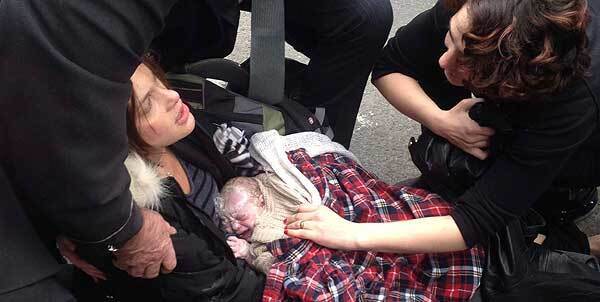
Is there anything more dramatic than a sudden birth? Following last week’s New York story Arlene Harris looks at ‘precipitous birth’ and talks to a woman who had a swift labour.

2% of mothers give birth suddenly

POLLY MCCOURT made headlines last week when she went into labour on the side of a busy New York street. By the time her Irish husband, Cian McCourt, arrived on the scene, his new daughter Illa Isabelle had been born on East 68th Street surrounded by a group of around 50 well-wishers.

Giving birth on the footpath in one of the world’s busiest cities is not how most women would imagine their ideal labour, but sometimes there isn’t a choice and although rare, 2% of mothers deliver their baby in a most unexpected fashion.

Social care worker, Tricia Nugent has two children, Saoirse (2) and Liam (14-months). She went into labour with her son a week early and when she started having contractions at home was convinced it would be hours before her baby actually arrived.

“My parents arrived at 9am and although my surges were a minute and a half apart, they were only lasting about 19 seconds so I didn’t think they were long enough to be effective,” says the Dublin woman.

“But about 45 minutes later we decided to go to the hospital as they had begun to get pretty tough.”

As Tricia’s husband tried to get his wife to hospital before the baby arrived, the clock was ticking and the impending arrival was beginning to make his presence felt.

“We finally reached the Coombe car park and Will ran in to tell them the baby was coming in the car,” recalls the 33-year-old. “By this point Liam’s head was out and two minutes later, he was born.”

“It was an amazing experience — I had delayed cord clamping and skin-to-skin in the back of the car. They the midwives wrapped myself and Liam in heated blankets and I was put on a trolley and brought into the delivery suite. Although it was very rushed, I was calm throughout and, hands-down, it was the most incredible experience of my life.”

Tracy Donegan, midwife and Author of The Irish Better Birth Book, says while this isn’t a very common occurrence it does happen and mother and baby need to be well cared for after the event.

“Lots of mums fantasise about having short labours but this kind of birth can be very intense and quite frightening as the sensations can feel like one long contraction instead of having a resting period between the sensations,” she says.

“This kind of birth is known as a precipitous birth and is usually defined as a labour lasting less than three hours but only 2% of mums will experience it.

“Unfortunately it’s difficult to predict in a first time mum – it’s something that just happens to some women and is more likely if mum has had a previous precipitous birth.”

“She says while most babies who are born suddenly will be healthy, there are associated risks to the mother and her new infant.

“He or she may be a bit ‘shocked’ from the experience,” she says.

““Also, some babies may need extra stimulation to encourage them to breathe and the new mother may have more perineal injury as the tissues haven’t had time to stretch and expand.”

But while little can be done to predict a precipitous labour in a first-time mother, if a woman has a history of speedy deliveries, precautions are usually put in place to minimise the risk of another occurrence.

“Some maternity units will recommend an early induction to avoid an unplanned out-of-hospital birth but induction also comes with risks and should be discussed thoroughly,” says Donegan.

“Some mums will opt for home birth but we are likely to see more roadside births in Ireland if smaller regional maternity units are closed in the future as mums will have greater distances to travel.”

¦ For more information visit www.gentlebirth.ie

Birthing alone

The American College of Nurse-Midwives has a step-by-step plan for women who give birth before help arrives:

¦ Stay calm — babies who arrive quickly usually deliver with ease.

¦ Guide baby out gently.

¦ If the umbilical cord is around your baby’s neck, either ease it over his head slowly, or loosen it enough to form a loop, so that the rest of his body can slip through. When he’s fully out, don’t pull the cord, and don’t try to tie-off or cut the cord. Leave it attached to your baby until help arrives.

¦ Stay where you are until you deliver the placenta, which should arrive shortly. Leave the placenta attached to the cord, too — medical personnel will take care of it.

¦ Dry your baby immediately. Then, rest him on your tummy, skin-to-skin, and warm him with your body heat. Cover yourself and your baby with a dry blanket.

¦ Ease mucus or amniotic fluid from his nostrils by gently running your fingers down the sides of his nose. If your baby doesn’t cry spontaneously, stimulate him by firmly rubbing up and down his back.

¦ While you’re waiting for medical help, try to get your baby to nurse — but only if you can keep the umbilical cord slack, not taut (sometimes, if the placenta is still inside you, the cord won’t be long enough to allow you to bring your baby to your breast). Besides offering comfort and security, this will prompt your body to release more oxytocin, which will help the placenta separate and be delivered.

More in this section

Cookie Policy Privacy Policy Brand Safety FAQ Help Contact Us Terms and Conditions

© Examiner Echo Group Limited













