A dystopian tour de force
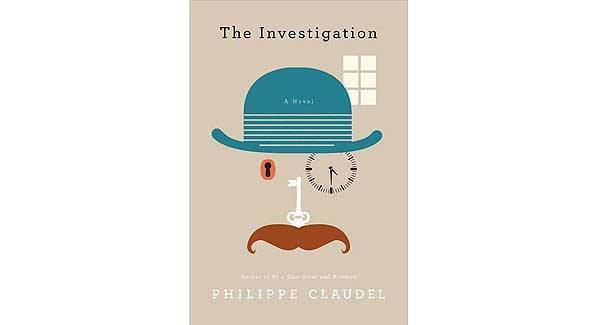
The Investigation

A dystopian tour de force

In Philippe Claudel’s latest novel to make the jaunt from French into English, the Investigator, the book’s main protagonist, arrives by train in a strange town, intent on making some sense of what has been deemed an excessive number of suicides — 23 in all, though one of them may have been simply an accident. From the beginning, everything seems off. There is no car waiting to collect him, no taxis to be had. The weather offers all four seasons in a day, and time keeps a peculiar flexibility. Then, stopping at a bar, he is offered a foreshadowing glimpse of what might lie ahead: the bartender cannot serve the drink he requests because the computerised register will be unable to recognise the order.

Worse is to follow.

Exhausted from a long and desperate day, he takes shelter in what appears to be the town’s only hotel. It is a disturbing place, run by a Giantess and defined by odd proportions and endless discomfort. The situation descends into further absurdity at breakfast, when he is denied food while the entire dining room feasts on wonderful cuisine. And his resulting tantrum draws trouble, in the shape of a smiling Policeman.

Slowly, the Investigator learns that everything is run by the Enterprise, a mysterious conglomerate that keeps its world ticking along at a clockwork pace. Every move is monitored, logic frequently loses out to protocol, employees are identified purely by their dutiful function: the Guard, the Watchman, the Manager. And the sense of surreality builds until the Investigator’s very mind is at stake.

“I feel I’ve been living in a kind of nightmare since I set foot in this town,” he says, when challenged by the Policeman to explain his actions, “or, rather, that I’m the victim of some gigantic hoax.”

Dealing with varying levels of employee draws nothing but blanks, as each denies even the least awareness of the suicides. This, and the copious misfortunes that follow, encourages laughter as a last-gasp effort at preserving some modicum of sanity.

While The Investigation presents an unwavering Orwellian dystopia, with more than a hint of the Great and Powerful Oz as well as farcical elements reminiscent of Beckett and Ionesco, the dominating influence is clearly that of Franz Kafka’s The Castle. But Claudel is far too accomplished a writer to churn out some flippant pastiche. As the story builds, the sense of absurdity heightens until the psyche is exposed, and the deepest questions must be asked, if not answered.

The result stands as a richly allegorical commentary on such enormous themes as the dangers of globalisation, the loss of individuality, and humankind’s increasing lean toward automata. In the past 15 years, Claudel has established himself as one of French literature’s most compelling voices. Author of such beautifully measured novels as Grey Souls, Brodeck’s Report and the utterly heartbreaking Monsieur Linh and His Child, his talents have been recognised with such major honours as the Prix Goncourt and the Independent Foreign Fiction Prize. He is also an acclaimed film-maker, most notably for his writing and direction of the 2009 BAFTA-winning, I’ve Loved You So Long.

An artist’s nature is often restless, and The Investigation represents a significant change of direction for Claudel. And if, at times, its ambition inclines toward overreach, the result is still a considerable achievement of the imagination.

x

More in this section

Cookie Policy Privacy Policy Brand Safety FAQ Help Contact Us Terms and Conditions

© Examiner Echo Group Limited













