An over-the-top denigration of the environmental movement
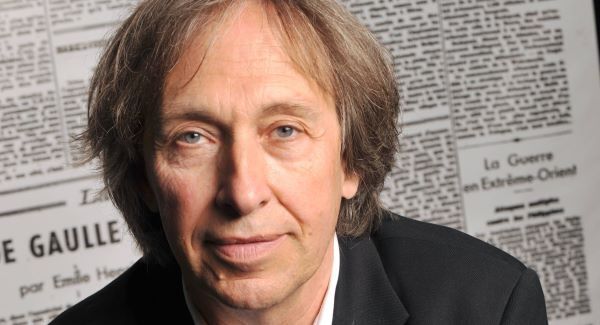
In this book he turns his attention to the ecology movement which he describes as the sole truly original force of the past half-century. One that has won the battle of ideas after the failure of its predecessors Marxism and ‘Third-world-ism’. One that is triumphant, by capillary action, at the UN, in governments and in our schools.
He recognises that in caring for our environment, we are contributing to our own fulfilment. That saving nature is also a way of saving ourselves. But this book is a relentless tirade against the environmental movement which he sees as offering nothing but predictions of catastrophe and which wallows in self hatred about the human world.
He thinks science has fought religion, only to become a new religion in turn. That if Catholicism asked us to sacrifice present joys for the sake of gaining eternal life and if Marxism asked us to forget bourgeois happiness so as to embrace a classless society, then Ecology calls us to adopt a rigorous diet in the name of future generations.
The concept of original sin returns in a less noble greenhouse gas form. Our very act of breathing and our every action is polluting the planet in a manner which needs to be atoned for.
In making us accountable for everything that happens to the planet, the prophets of this new religion make us feel accountable for nothing. Responsibility can only go so far without turning into an abstraction. The enormity of the diagnosis and the absurd inadequacy of the remedies on offer only reflects the triumph of guilt in the western world. Rather than raising a salutary fear that could mobilise us, these prophets raise a deleterious fear that weakens us. We have passed from an age of revolutions to an ‘age of catastrophes’. The doom mongers who are pedalling such tales seek to bring people to heel but they are ignored with a polite but growing indifference.
He thinks the ecology of disaster has ended up being a disaster for ecology. The gloomy prophesying fails to convince as it goes to extremes. Political discourse runs out of steam when it indulges in exaggeration. Instead of waking us up, apocalyptic discourse is putting us to sleep. The new regressive avant-gardes denigrate rather than invent. They fail to see that history also surprises us with its good sides, they neglect ‘the fecundity of the unexpected’.
Bruckner argues for an alternative approach based on the belief that the remedy to environmental problems may come from the source of the disease. That we should appeal to the human instinct for progress, rather than trying to marshall people into a retreat. That industrial and technological development can transform finite resource limits into a wealth of new inventions.
The choice is not just between returning to the age of scarcity or maintaining the age of gluttony which characterised the debt bubble that built up over the last 30 years. Instead we can move into a new ‘age of duly considered desires’, where the benefits of consumption are spread more widely rather than abolished. Where we move from a property economy to a rental economy. Where we avoid limiting human progress while at the same time diminishing its collateral damage on the environment.
It is a pity that it is only at the very end of the book that the author turns to such a positive and progressive note. He seems to suffer many of the failings that he is so willing to ascribe to others and his argument is undermined by his over-the-top denigration of the environmental movement. Accusing others of using negative messaging is a bit comical when that plank is so visible in your own eye.
That failing is a pity, because if he put aside his stereotyping he might realise that most environmentalists have already come to the same conclusions that he seems to think he alone has arrived at. Having spent decades trying to get the balance right in explaining the environmental threats we face, environmental campaigners know more than anyone else that panic alarms do not work on their own.
Bruckner is pushing a well worn argument that the environmental movement is defined by a divide between what are known as ‘realos’ and ‘fundi’s’. But in a world where there are plenty of enemies to green thinking, who are well financed by those interested in keeping the status quo, I think his fire is being wasted. The real enemy is not within.
The fact that the great earth scientist James Lovelock loves nuclear and hates wind power does not undermine the respect I have for his underlying work. The fact that the UK environmentalist Mark Lynas is now a campaigner for genetically modified foods might lead me to question some of his analysis but not his intentions. You can differ on the method that you want the environment protected when you share the same motive for finding a more balanced way of us living in this world.
This book has all the swagger and verve you would expect from a leading Parisian philosopher. It is as if all the ‘bon mots’ and clever analogies from a thousand coffee table discussions have been wrapped up in one supposedly daring dust cover. I would be happy to recommend people to read it, just to get to the positive message in the closing chapters. I only wish the author had given up some of his own scepticism and apocalyptic language and spent more time writing about those ‘duly considered desires’ that he fleetingly touches upon at the end.
Eamon Ryan is a leader of the Green Party and was a minister in the last government.
To buy this book click here.















