Ruth Rendell: A life of crime still paying after 50 years
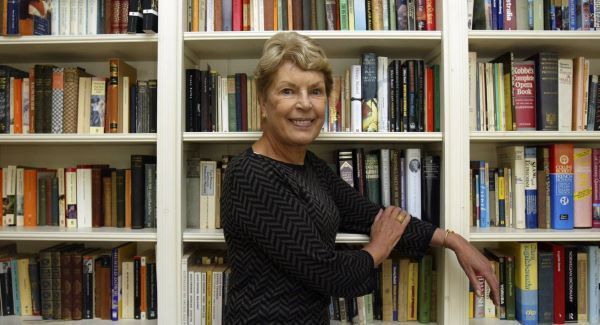
The 83-year-old rises at 6am. After breakfast and a work-out, she writes for three hours, before attending the House of Lords four afternoons a week (sheâs a Labour life peer) and working for charity (she campaigns against female genital mutilation).
Her busy social life includes the theatre, cinema and opera.
Her fitness regime consists of Pilates classes once or twice a week, a Pilates machine at home, a cross-trainer, and walking. She has given up high- and low-impact aerobics, and eats fish but not meat.
âIâm careful about keeping myself fit and thin, or as thin as I can manage,â she says.
The sprightly octogenarian, who releases one book a year, as Ruth Rendell or Barbara Vine (her other pen-name), has no plans to slow down or retire, as her hero, former Chief Inspector Reginald Wexford (played by the late George Baker in the TV series), has done.
Next year will mark the 50th anniversary of the publication of her first Wexford novel, From Doon With Death.
In the last three Wexford books, the inspector has been retired, but still in the loop of investigations, as he tries not to interfere, but offers help. He hasnât kept up with the times, but still has a great gut instinct.
âHeâs not high-tech, but, then, nor am I,â Rendell says, although she is much more au fait with technology than her fictional detective.
Rendell has three iPods, an iPhone, three computers â plus another one in the House of Lords â and a number of memory sticks.
In her 24th Wexford novel, No Manâs Nightingale, Wexford is asked to investigate the murder of a female vicar strangled in the vicarage in Kingsmarkham.
The suspects, twists and red herrings are classic Rendell, but itâs also the genial detectiveâs relationship with his wife, Dora, that is such a joy to read, how they rub along together in harmony without any hint of slushiness, yet clearly in love.
âI didnât want to have one of these detectives who leave their wives and go and live in one room somewhere, and sometimes they get back together and sometimes they donât,â she says.
âI didnât want to do that with Wexford. I wanted him to have a long and happy marriage. I wanted it to grow.â
The fictional relationship is a far cry from Rendellâs parents, who were constantly warring.
âThey were just extremely incompatible, very different kinds of people.
âThey didnât get on. I donât think either of them knew what they were doing,â she says.
âI think both of them thought that marriage was the be-all and end-all of existence and that it was going to be so romantic and dramatic and wonderful and, of course, it wasnât, it isnât. They were bitterly disappointed.â
An only child, Rendell grew up in Essex, but had an unhappy childhood because of the fighting between her parents, who were both teachers.
âTo say the arguments made my life a misery would be very strong, but it wasnât very happy at home,â she says.
Rendellâs marriage to Don Rendell, who died in 1999, also had its ups and downs. The couple divorced in 1975, then reunited and remarried two years later.
Itâs an issue she wonât discuss.
They met when she was a reporter at the Chigwell Times and he was her boss.
Their son, Simon, is a psychiatric social worker in Colorado and she has two grown-up grandchildren.
For now, writing is her priority. In her latest book, the murdered vicar is a single woman of mixed race, which opens up all sorts of possibilities for prejudices and racism, ideal material to create a string of suspects.
Rendell hasnât known many female vicars and isnât religious, but just wanted the victim to be unusual, she reflects.
âI never was religious, really, but Iâm very interested in religion. I call myself an agnostic. Iâm open to change. Iâm the same sort of person, although much less aggressive, as Richard Dawkins,â she says, referring to the professor and bestselling author of The God Delusion, who recently caused controversy when he wrote on Twitter that all the worldâs Muslims had won fewer Nobel Prizes than Trinity College, Cambridge.
âIâm open to be converted if I can have proof of the existence of God,â she says.
Rendell is an advocate of gay marriage, and was delighted when the British governmentâs same-sex marriage bill was given assent by the House of Lords in July.
âGay people have been terribly treated. My last Barbara Vine book was about the relations of gay people in the world and I was delighted to say that we got gay marriage.
âWhen the bill passed, everybody burst into song, singing âIâm Getting Married In The Morningâ.â
But sheâs fed up that the Lords is becoming increasingly overcrowded.
âAt the moment, itâs extremely crowded and when I go back in October it will be worse. Itâs getting to the point where you canât sit down in the chamber if thereâs anything people want to attend.â
Are too many people being given peerages?
âWell, itâs all very well to say that, but who would we take them away from? I donât care for people who are given peerages who have paid for them. I think it happens and I donât like that. But Iâm very pleased that Doreen Lawrence is coming in,â she says.
Rendell no longer writes as many Barbara Vine books, which tend to be darker, psychological thrillers, with more complex subject matter.
She doesnât read much crime fiction and only has one friend, PD James, in the genre.
âWe are very good friends. We do a fundraising event together, where we go on stage and talk to each other for about 40 minutes and then open it up to questions.
âWe never rehearse it and itâs sometimes quite funny,â Rendell says.
As for TV crime dramas, she prefers Morse and Lewis to The Killing and other Scandinavian dramas.
âIâve tried them, but I donât like them. They donât do anything for me,â she says.
Sheâs confident Wexford will return to the screen, but not before the memories of George Baker have faded.
âYou have to get to that time when the majority of television viewers only vaguely remember seeing George, but who would be quite prepared to see a new Wexford.
âI donât think Iâll ever kill him off, because I seem to have managed to find a way of making him there, offering his services and advice, if itâs needed.â
Looking back, she never imagined heâd still be going strong almost half a century on.
âBut, then, I donât think much about the future, which is quite a useful gift. Will I still be here in 10 yearsâ time? I wouldnât think so, but I might be â just about, clinging on by the skin of my teeth.â
And still using that cross-trainer, no doubt.
Buy this book















