No longer invincible? Are superhero films under threat?
It’s almost 10 years since Pixar’s The Incredibles brilliantly skewered the clichés of the superhero genre, lampooning the gaudy costumes, the characters’ penchant for inappropriately timed monologues, and the indestructibility of the heroes themselves, even when faced when the most impossible of odds.
If ever a superhero flick was crying out for a sequel, it’s The Incredibles, but writer-director Brad Bird — while not ruling it out — has yet to commit to another tale. It’s hardly because there’s no room in the schedules for yet another superhero flick: In the decade since The Incredibles appeared, and particularly in the last couple of years, movie audiences have been spoiled for choice when it comes to caped crusaders.
This summer alone we’ve had Iron Man 3, The Wolverine, and the Superman reboot Man of Steel. Kick-Ass 2, released later this month, at least has the merit of being a spoof of sorts about teenage wannabe superheroes, but Thor: The Dark World (another sequel) will arrive in November, taking itself and its Norse demi-gods very seriously indeed. And then there’s Percy Jackson: Sea of Monsters (released this month and, yep, another sequel), in which modern teenagers do battle with the original super-heroes, those of Greek mythology.
It’s fair to say that, spoiled or otherwise, there remains a significant Irish appetite for the superhero movie. Man of Steel has so far pulled in €2,474,427 at the Irish box office this summer, while Iron Man 3 generated €2,831,379. They’re pretty good figures for the domestic Irish market, especially when compared to recent releases, such as Before Midnight (€68,706) and Behind the Candelabra (€234,242), both of which were almost universally lauded by Irish film critics.
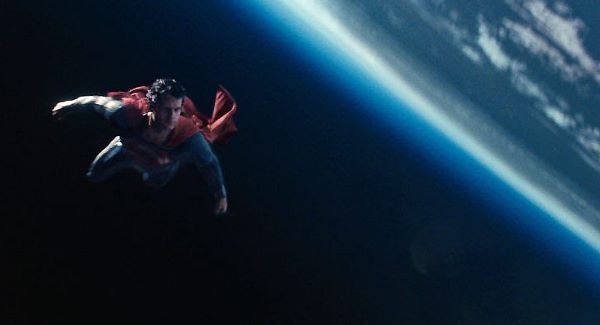
So far so good for the superhero movie, at least if we’re talking about bottom lines. The quality of the offerings, however, is not even. Iron Man 3, starring Hollywood’s current top earner, Robert Downey Jr, was a fun blockbuster that provided plenty of spills and thrills but also revelled in parodying both its previous outings and the superhero genre itself. Man of Steel, on the other hand, despite its vaunted status as a reboot of the most famous superhero of all, was little more than a CGI-saturated punch-fest that grew increasingly monotonous as its overly long running time wore on.
That monotony is due in part to the appeal of the superhero character for its target demographic, the 16-year-old boy (and those men of all ages who secretly revel in their arrested development). Essentially, the joy of Superman or Captain America is that he can never be beaten; that even if he is a downtrodden geek or nerd in his day-to-day persona, he is indestructible power personified (and irresistible to the ladies, natch) when he dons his uniform and soars off to save the day.
That simplicity, of purpose and effect, has its roots in Superman’s original caped crusader incarnation, during the Great Depression of the 1930s. Captain America, who debuted in 1941, suited up in the red-white-and-blue and went off to war to fight the Nazis. Batman first appeared around this time too, in 1939.
At a time of severe economic depression, in the shadow of a looming external threat, comic books addressed the craving for an indestructible individual who could rise above the confusion to offer moral clarity and a decisive physical presence. It’s a heroic narrative that can be traced back to the myths of Greece, and the travails of Hercules, Theseus, et al; it’s also a narrative that chimes with America’s belief in the pioneer spirit, the idea — as articulated in the enduring American love affair with the Western movie genre — that the individual can make a difference and impose civilisation on chaos.
The global recession and America’s never-ending ‘War on Terror’ have recreated some of the conditions in which the original superheroes were nurtured, which in part explains why they are now flitting in and out of our multiplexes on an almost constant basis. It’s also true that Hollywood is currently entrenched in a very conservative commercial model, putting almost all of its chips on the tried and tested. Remakes and sequels will dominate over the next couple of years, including some very big titles indeed: Jurassic Park 4, Pirates of the Caribbean 5, and Star Wars 7 are just some of the money-spinners on their way in the next couple of years. The second and third part of The Hobbit are in the can, and then there’s the third and fourth instalments of The Hunger Games, Smurfs 3, and — sure to be a classic of the animated squeaky-voiced chipmunk subgenre — Alvin and the Chipmunks 4.
It’s easy to be cynical, but there are factors other than financial involved in the superhero movie boom. The current generation of moviemakers have been weaned on the concept of the blockbuster that first appeared in the 1970s with Jaws and Star Wars, a generation inspired by the ‘high concept’ box office success of director/ producers such as Michael Bay. It’s also true that while superhero movies have been with us for some time, it’s only now that filmmakers have the capacity, particularly with the advances of CGI, to do justice to the heroes’ supernatural abilities.
A surfeit of special effects do not a good film make, of course, but the mixed reviews for Man of Steel, for example, haven’t prevented its makers from planning the inevitable sequel, which was announced at last month’s Comic-Con International in San Diego. Thebig twist? Superman will be joined by Batman, who was himself the subject of a recent three-movie reboot by director Christopher Nolan, a trilogy that came to a shuddering end with last year’s bombastic The Dark Knight Rises.
Will Superman and Batman join forces in an Avengers Assemble set-up? Will the two superheroes go toe-to-toe in a slugfest designed to settle for once and for all (until the spin-off sequel) who is the greatest of the caped crusaders? Does anyone out there really care?
The answer to the last question is a resounding yes. Hollywood being a movie-making machine not renowned for letting the cash-cow go until the very last drop has been winkled dry, the next couple of years will see an onslaught of superhero movies. In 2014 alone we’ll be offered Captain America: The Winter Soldier (sequel), The Amazing Spider-Man 2 (yep, a sequel to a series that’s already been rebooted), X-Men: Days of Future Past (apparently a sequel of sorts, but who really knows what’s going on in the X-Men universe these days?), Guardians of the Galaxy (sequel), Robocop (a reboot of the 1987 sci-fi super-cop cult classic), and — oh yes! — Stretch Armstrong.
Meanwhile, Avengers Assemble 2, Fantastic Four 3, and the Man of Steel sequel are already slated for 2015, along with the first appearance of the Marvel hero Ant-Man. And if you’re hoping that the superhero frenzy is likely to run out of steam in a couple of years time, be aware that The Amazing Spider-Man 3 has already booked its release date for May 4, 2018.
By then, it’s possible that the current craze for big-budget superhero flicks may have collapsed under the weight of its own expectations. One movie costing $150m might be reasonably expected to earn a profit in any given summer; two or three might well do so too, albeit at diminishing returns. But five, six, or eight heavyweight contenders, all scrapping for your hard-earned money whilst offering very similar fare in different disguises? Even the Man of Steel himself might crumble under the weight of those projections.














