A woman of mettle: how Iron Lady rose to power
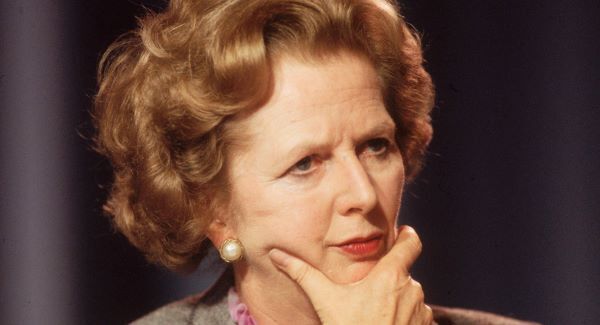
First volume of Margaret Thatcher’s authorised biography is predictably flattering, but not a hagiography, says Shaun Connolly

A woman of mettle: how Iron Lady rose to power

HOW soon can you speak ill of the dead? That question flooded social media sites on the announcement of the death of Margaret Thatcher, but never occurred to Charles Moore.

It is not hard to see why the former Daily Telegraph editor was anointed, in 1997, by Baroness Thatcher to be her posthumous biographer — his adoration of her drips from the pages, but, while a devotee, he is capable of casting a critical eye across her motives, tactics and outcomes.

Unparalleled access to her private papers, confidantes, and state archives give freshness to the well-known story of how the daughter of a provincial grocer became a global political icon/hate figure.

We are used to defining the fabled ‘Iron Lady’ in ‘black and white’ terms — a cross between Elizabeth I and Henry V, her shrieking battle cry for England and St George forever ringing in ours ears. On European integration: “No! No! No!” On the reasons for refusing political status to the Provisional IRA hunger strikers in the Maze: “Crime is crime is crime”. On early victories in the Falklands War: “Just rejoice at that news and congratulate our forces and the marines. Rejoice.”

So, it is unusual, perhaps unsettling, when the ‘black and white’ is interspersed with colour — even turquoise. Writing to her sister, Muriel, the young and stylish Margaret Roberts gushes: “I decided to buy a really nice undie-set to go under my turquoise chiffon blouse.”

Blimey! Maggie in her undies — pass the smelling salts, Denis.

Always more comfortable in the company of men, Margaret ‘left’ her mother behind early: “I loved her dearly, but after I was 15, we had nothing more to say to each other.”

After being dumped by a dashing military man at Oxford, Margaret mastered the art of gaining the upperhand with the opposite sex.

A later relationship was ended with the post-war austerity air of waste-not-want-not: dreading the thought of becoming a farmer’s wife, Margaret passed the chap onto Muriel, who then enjoyed a long marriage with him.

Lucky with the men politics threw her way (until Michael ‘Tarzan’ Heseltine committed regicide in 1990 and toppled the true blue Tory Queen), she met Denis when he gave her a lift home from a failed pitch to become the local Conservative candidate.

She was not impressed; this was no love match to begin with, but it developed into a deep bond, and his constant support would be essential for her rise to power. That rise nearly failed on launch, when Denis had a nervous breakdown in 1964, partly due to an inability to deal with the amount of time his wife devoted to her first ministerial job.

He left and went to South Africa for an indefinite break, and both realised that he might not return. Interesting he chose South Africa: a racist, white-minority-ruled Apartheid police state was more relaxing for him than staying home with his wife.

Luckily for her, he returned, because it was unthinkable a divorced woman could have become Tory leader in 1975.

The misogyny of the time was obstacle enough for Thatcher, but men underestimated her and believed they could use her as a stalking-horse pawn to oust Ted Heath, and end his chaotic rule over the party, as none of the old-boy, gentlemen patrician grandees were prepared to get their hands dirty by triggering an election.

But the stalking horse could not be tamed and Thatcher’s momentum made her unstoppable. Then Labour prime minister, Jim Callaghan, patronised Thatcher, and if he had called an expected election in autumn 1978, he would have likely won and Thatcher would have been dumped as a novelty experiment.

But Callaghan’s caution got the better of him, and a winter of strikes overwhelmed his exhausted government and Thatcher swept to power in May, 1979.

Thatcher was, by 1982, the most unpopular PM since polling began, and drunk Argentine military junta ruler, Leopoldo Galtieri, then invaded the Falklands and tested the mettle of the lady who claimed to be made of iron.

Even here, in her pomp, as she dispatched the Task Force to retake the far-away islands, the other great hurdle to her Tory leadership emerged again — class.

When loyalist Alan Clark insisted Thatcher would “think imperially” and use the force she had let set sail, grandee Nick Budgen haughtily warned: “Don’t bet on that, she is governed only by what the Americans want. At heart, she is just a vulgar, middle-class Reaganite.”

In the end, Budgen had little to fear, especially when Thatcher electrified a meeting by silencing defeatist talk that Britain could do little in response to the invasion, by declaring: “We could bomb Buenos Aires, if nothing else.”

Luckily, the Argentine capital remained untouched, but nearly 1,000 men died in the battle for the Falklands, and it is in that conflict’s immediate aftermath that Moore closes his first volume, with Thatcher at her zenith.

Though, tellingly, he notes victory may herald trouble for volume two: “In her mind, it helped to create the dangerous idea that she acted best when she acted alone.”

As one would expect from Moore’s political leanings, his attitude to Thatcher’s economic slash-and-burn policies is glowing, but he can surprise, as with his analysis of the key first-term Tory flagship policy of letting council tenants buy their homes, which he acknowledges led to disastrous property bubbles and a housing shortage that still plagues Britain today.

Moore gets Thatcher right on Ireland: she had no historical grasp, and only saw a British security situation that needed to be contained to stop her being embarrassed abroad.

Despite Thatcher’s public insistence she would never talk to terrorists, she opened back channels to the Provisional IRA during the hunger strikes of 1980 and 1981 (as she would, again, just before being toppled in 1990).

As she faced down the whirlwind of worldwide condemnation triggered by the hunger strikes, Thatcher even remarked: “You have to hand it to some of these IRA boys,” whom she believed were prepared to die on the orders of their leaders.

Willing to use her feminine charm to get ahead in a man’s world — in the context of the times, that was normal — Thatcher was no feminist role model, but did rail against being labelled, always preferring to be called Britain’s first scientist prime minister, rather than its first female one.

An up-and-coming Thatcher dismissed a newspaper invitation, in the late 1960s, to write a piece on women in politics, observing waspishly: “They’ve been around since Eve, you know.”

Adam and Eve saw us banished from Eden, and Thatcher, along with her soul mate, Ronald Reagan (though many might dispute whether either had a soul), ripped apart the post-war consensus that social inclusion, and Keynesian interventionist economics, went hand in hand to create a greater good.

The pair remade the world in their own image, to such an extent that when ‘New’ versions of the US Democrats and British Labour, under Bill Clinton and Tony Blair, took over in the 1990s, they lacked the will or conviction to unleash a counter revolution, and deregulated and deindustrialised along Thacherite lines, leading to the financial collapse of 2008.

To that extent, we all remain Thatcher’s ungrateful children.

Given her misunderstanding of Ireland, and the way she and the Republican movement fed off their mutual loathing of each other to energise and activate their core supporters, it is deeply ironic that the second volume of Moore’s biography will echo Sinn Féin’s ethos, as it rejoices in the title: Herself Alone.

- Margaret Thatcher,The Authorised Biography, Volume One: Not For Turning by Charles Charles Moore, Allen Lane, €33.99

More in this section

Cookie Policy Privacy Policy Brand Safety FAQ Help Contact Us Terms and Conditions

© Examiner Echo Group Limited













